
APEL
No reviews yet
Apel stands for Animative Particle Engine Library and is used for complex particle animations, all without the need to major in linear algebra. It provides a straightforward interface and rich in documentation for developers.
Fabric is a mod loader for versions 1.14+ of Minecraft, particularly popular for client side and optimization mods.
Community voices
Reviews
Click once to include, again to exclude, again to clear
No reviews yet. Be the first to review this project!
Get it on
Available Platforms
 Modrinth
Compatibility
Supported Environments
Required on the server. Installing it on the client adds functionality.
About
Project Details
For authors
Embed Badge
If you're the author of this project, you can embed a live badge anywhere that supports HTML or Markdown. It updates automatically whenever ratings change.
Use HTML for any page that supports it, or Markdown for README files and Markdown-based descriptions.
Identifiers
Platform IDs
About
Description

Apel stands for Animative Particle Engine Library. Its goal is to give the developer a huge productivity boost by incorporating a powerful animation engine that allows for the management of complex particle animations. Thus the library aims to provide:
 To put it simply. APEL allows you to fully make these animations with very few lines of code:
The key strengths of APEL are specifically:
- Ease Of Use: The library cuts down the components into its simplest roots. This provides a straightforward and easy to use developer interface, so any developer can use.
- Flexiblity: Another goal is to make the library as flexible as it can be without ruining the other goal factors. The library allows for composing complex scenes without additional syntactic sugar involved.
- Rich Documentation: Our team aims for detailed documentation that clearly explains how each feature works. We actively work on improving it, and documentation can be read from java docs or from the markdown documents in github.
- High Performance: Since the library is meant to be used for creating intricate particle scenes, the library is very optimised and performance friendly.

Developers
This section is for developers using APEL as a library.
- In your
gradle.propertiesfile, add this line:apel_version=0.1.5+1.21.8 - In
build.gradle, find the top-levelrepositoriesblock, and add these lines if you haven't installed any other dependency mods from modrinth:repositories { // ... maven { url = "https://api.modrinth.com/maven" } } - Also in
build.gradle, add the dependency under the dependencies block:dependencies { // ... modImplementation "maven.modrinth:apel:${project.apel_version}" // ... } - Refresh gradle (in IntelliJ IDEA, press the gradle icon with a rotate sub-icon)
- Try to either type
Apeland let your IDE autocomplete it, or importnet.mcbrincie.apel.Apel. If all steps are done, everything should work as expected.
Players
Download the mod via your usual means and place it in your mods folder.
 For a regular particle polygon that moves in a line from one point to another, rotates around the Y axis, and loops by animating between 3 sides to 30 sides, the code looks like this (not a straightforward first example, but showcases the possibilities):
AtomicBoolean reverse = new AtomicBoolean(false);

ParticlePolygon polygon = ParticlePolygon.builder()
  .particleEffect(ParticleTypes.END_ROD)
  .sides(3)
  .scale(3.0f)
  .amount(100)
  .beforeDraw((data, obj) -> {
    if (data.getCurrentStep() <= 15) {
      return;
    }
    boolean isStepZero = data.getCurrentStep() % 15 == 0;
    int sides = ApelUtils.getValueFromEasingCurve(obj.getSides());
    if (isStepZero && !reverse.get()) {
      obj.setSides(sides + 1);
      if (sides >= 30) {
        reverse.set(true);
      }
    } else if (isStepZero && reverse.get()) {
        obj.setSides(sides - 1);
        if (sides == 4) {
          reverse.set(false);
        }
    }
    Vector3f newRot = ApelUtils.getValueFromEasingCurve(obj.getRotation()).add(0, 0.002f, 0);
    obj.setRotation(newRot);
})
  .build();

LinearAnimator linearAnimator = LinearAnimator.builder()
  .endpoint(new Vector3f())
  .endpoint(new Vector3f(10, 0, 0))
  .particleObject(polygon)
  .delay(1)
  .stepsForAllSegments(1000)
  .build();

ApelServerRenderer renderer = ApelServerRenderer.client((ServerWorld) world);
linearAnimator.beginAnimation(renderer);
We define the particle object (ParticlePolygon) with the particle effect to use, the sides of the polygon, the size of the polygon, and the number of particles to use on the polygon.
After that we use the library's ability to modify the object before each frame is rendered. This is via a lambda function that receives some context and the object to be rendered. This example modifies the number of sides on the polygon by checking what step the animation is on, and using that to determine the number of sides the polygon should have. It also shows how to increment the rotation (expressed in Euler angles per axis), in this case a slight rotation around the y-axis on each tick.
Note: We extract the value using ApelUtils.getValueFromEasingCurve for rotation and the number of sides, in our case we know this is not a null value so it works perfectly fine
We then create a linear path animator and supply it with the delay in ticks between frames, the starting position of the line, the ending position of the line, the particle object to use, and the number of rendering steps for the animation.
Finally, we play the linear path animator and supply it with a renderer instance for server-side rendering.
Note
The mod may be required to be installed client-side depending on if the developer chooses to use Apel's client-side renderer, which optimises the particles way more than the server-side renderer although it requires that people need the client mod to be installed. If they don't choose client-side renderer then no need for the client mod

Screenshots
Gallery
-
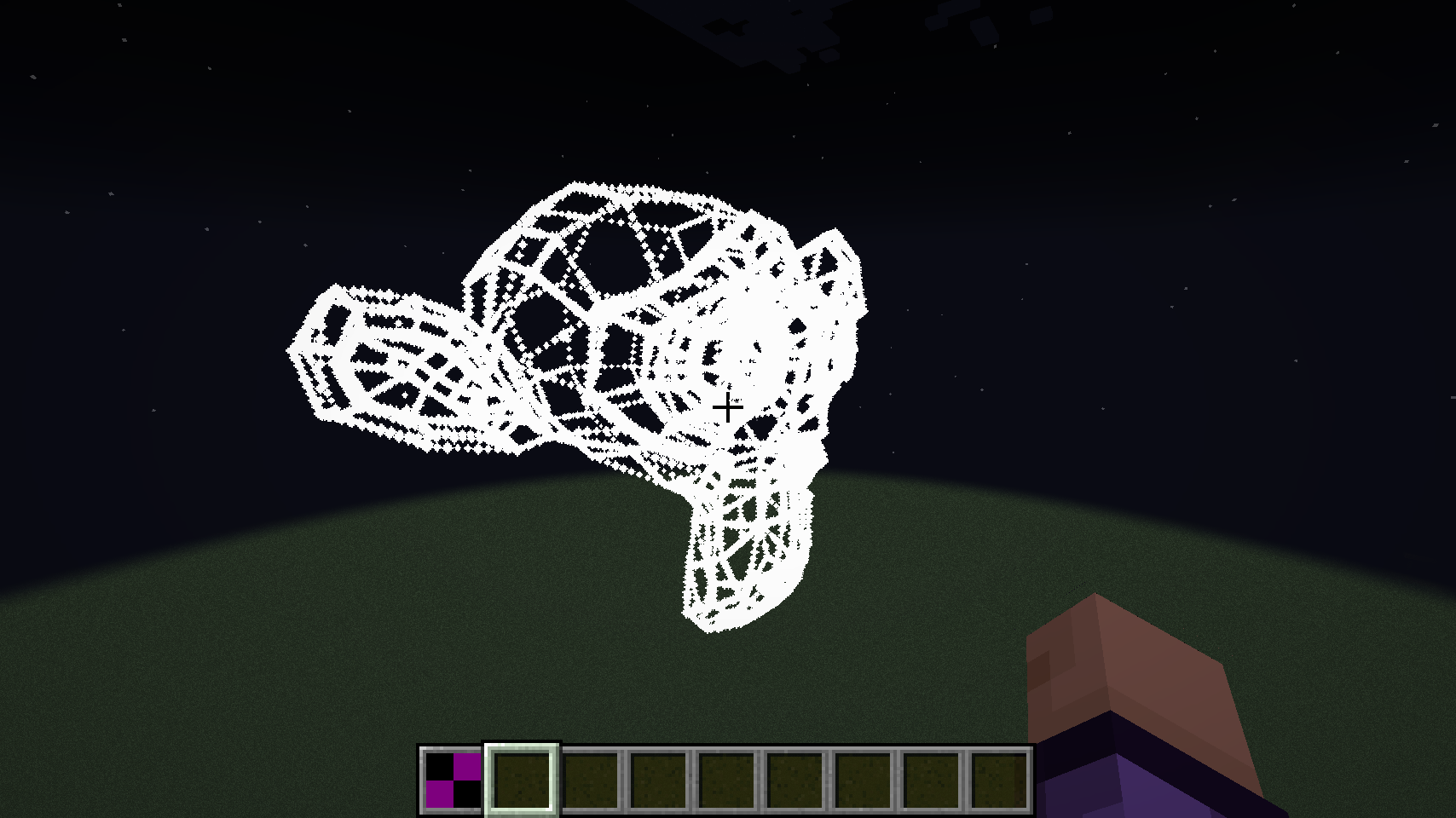 APEL Particle Model Showcases the ability to import 3D model and display it in particles
 -
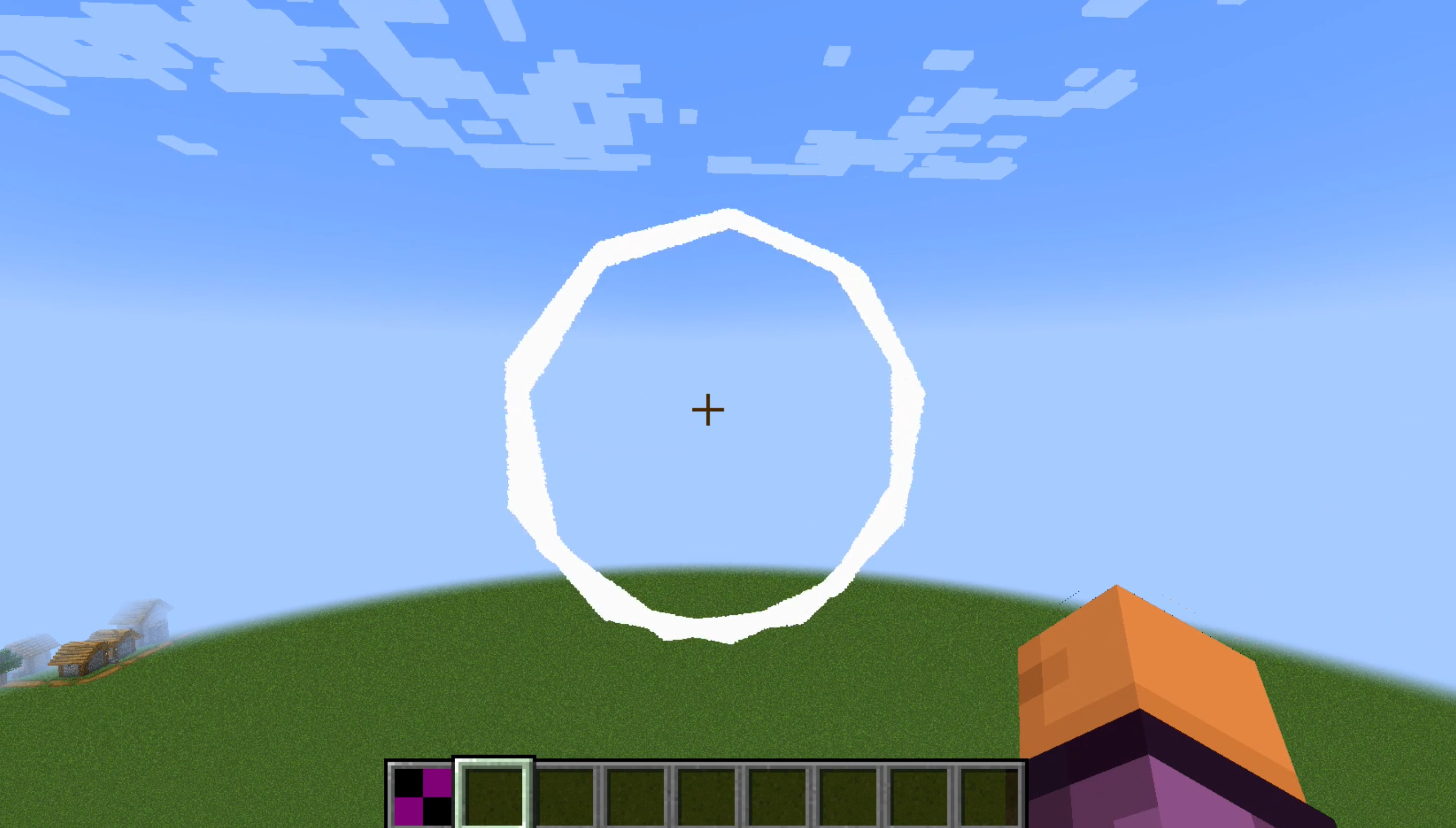 APEL Regular Polygon Particle Object This is in action the regular polygon particle object
 -
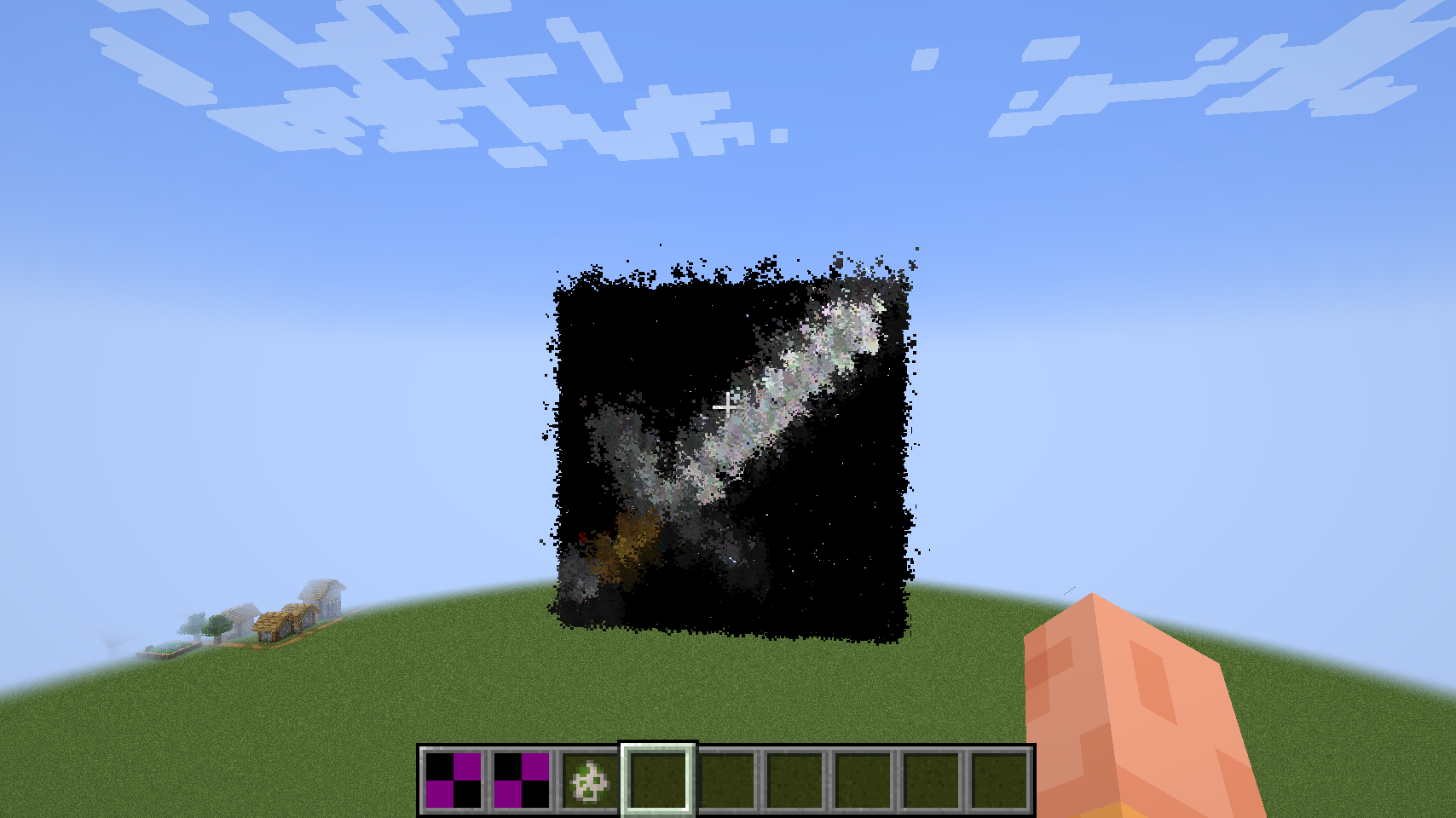 APEL ParticleMedia Showcases the ability to display images and videos in particles. In this example its a 80x80 due to how new of a feature it is, prominent optimizations will be carried out for this soon
 -
 APEL Cone Particle Object This is in action the particle cone object with 5000 particles
 -
 APEL Complex Animation This is a complicated example of the capabilities of the library
 -
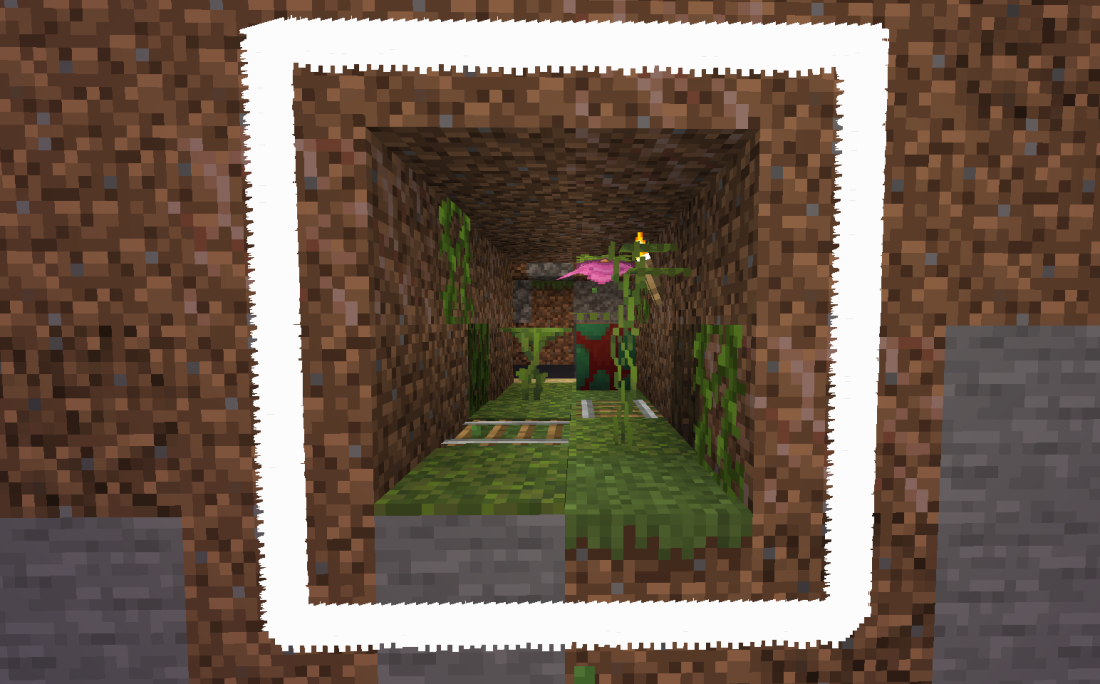 APEL Quad Particle Object Here is a cute example of the quad particle object making quite a cool frame for a build
 -
 APEL Particle Triangle Object A simple example that features the particle triangle object which allows for modifying the vertices
 -
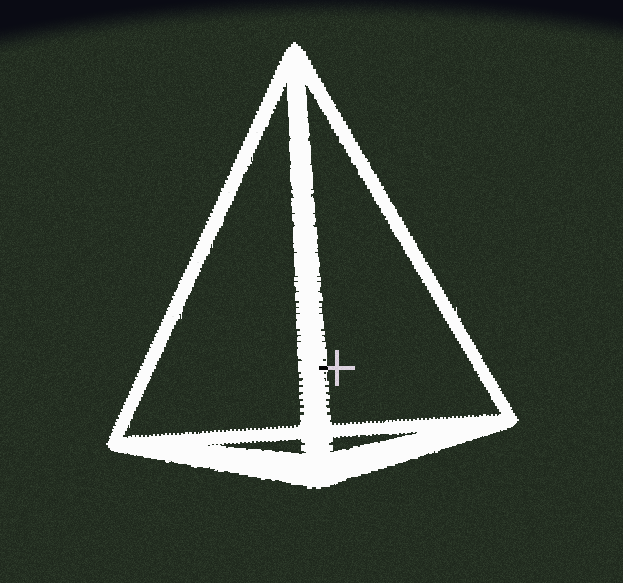 APEL Particle Tetrahedron Object This is the particle tetrahedron object which allows for modifying the individual vertices that compose it (it basically is a 3D triangle)
 -
 APEL Particle Sphere Object This is a simple example of the particle sphere which rotates around itself
 -
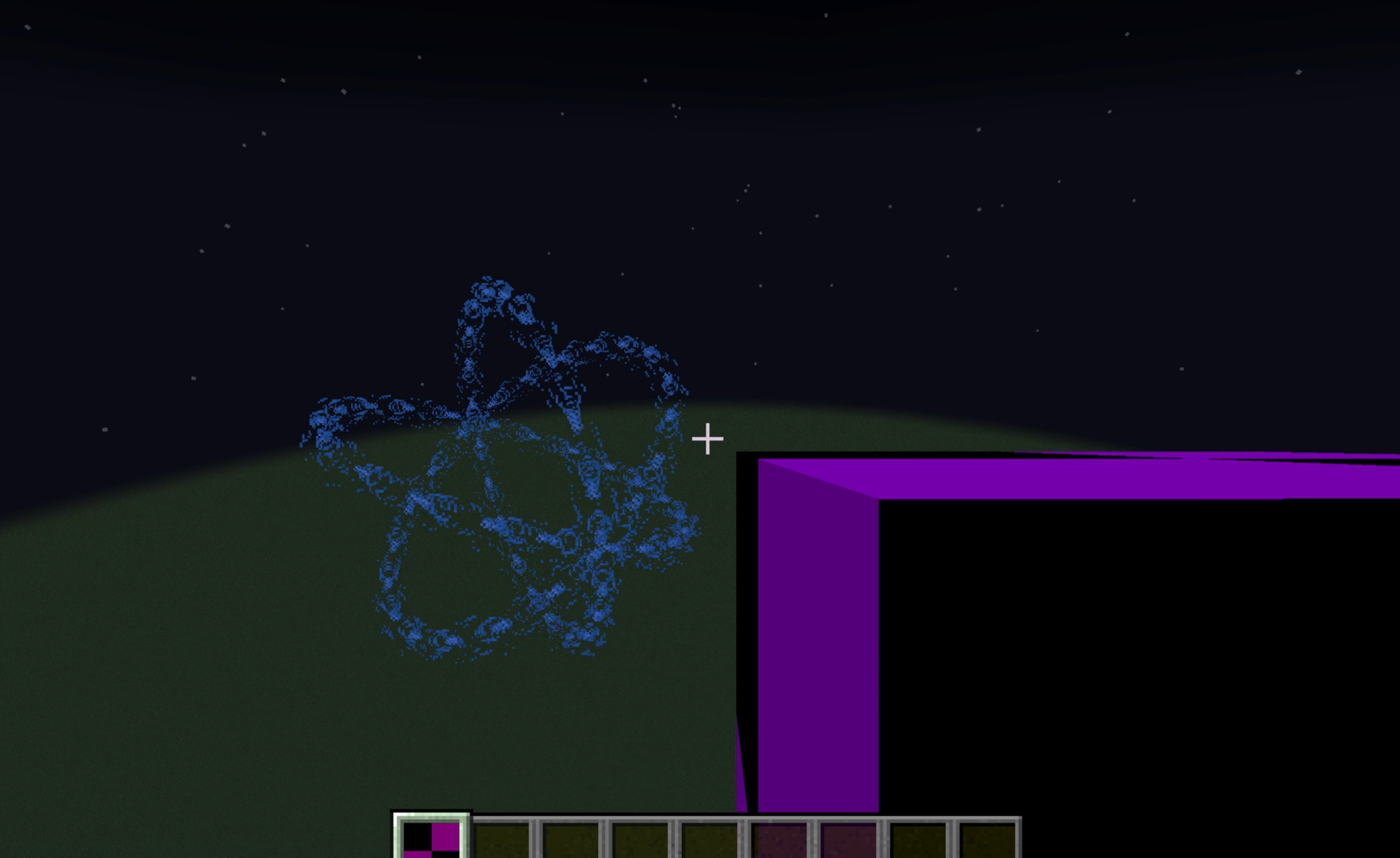 APEL Circular Path Animator Here is in action the circular path animator which has particle points that follow its trajectory
Versions
Files
Relations
Project Relations
More like this
Similar Mods
Suggestions use data such as tags, dependencies, dependents, descriptions, titles, and more to rank how much they overlap with this mod.
On ModDex
Community snapshot
By the numbers
Statistics

Want to reach Minecraft players?
We're looking for a server hosting partner to feature here and other parts of the site. Interested? Send us a message!
Get in touchGet it on
Available Platforms
On ModDex
Community snapshot
By the numbers