Community listing page, reviews here may not be monitored by the author.

Community voices
Reviews
No reviews yet. Be the first to review this project!
Get it on
Available Platforms
About
Project Details
For authors
Embed Badge
If you're the author of this project, you can embed a live badge anywhere that supports HTML or Markdown. It updates automatically whenever ratings change.
Use HTML for any page that supports it, or Markdown for README files and Markdown-based descriptions.
Identifiers
Platform IDs
Resources
External Links
About
Description

Coloured water that is still water.



-2f6f8f?style=for-the-badge)
Loaders: Fabric • Minecraft: 26.2 • Side: Client & Server

The fluid is expensive. The colour is free.
A fluid is a registry entry, a block, a bucket, a tag membership, and a compatibility surface with every mob, boat, sponge, fishing rod and waterlogged stair in the game. A colour is three integers a renderer multiplies into a quad it was going to draw anyway.
So hydrarium registers zero fluids and zero blocks. Tinted water is minecraft:water;
tinted ice is minecraft:ice; tinted snow is minecraft:snow. Same tags, same buckets, same
swimming, same sponges, same waterlogged stairs. The colour is a side-channel the renderer reads
and nothing else in the game has to know about.
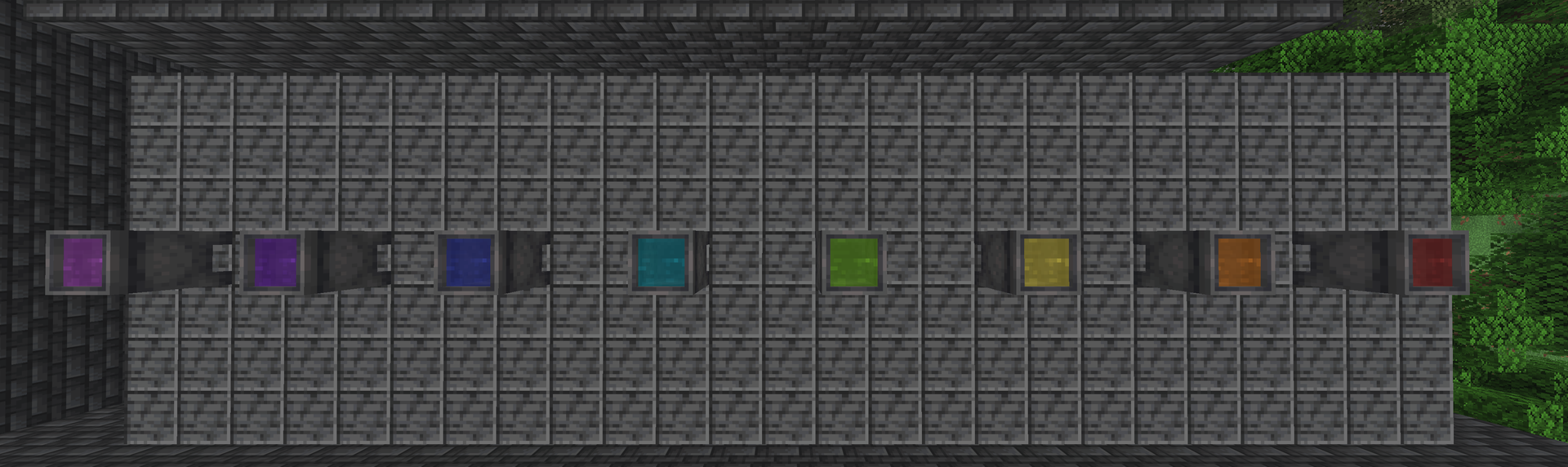
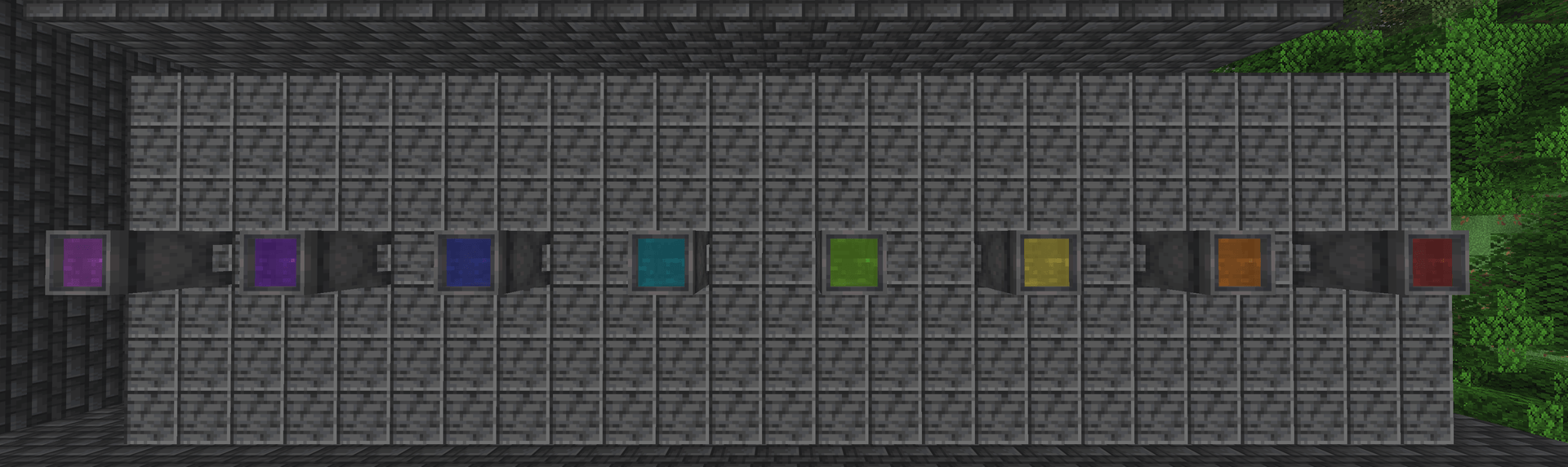
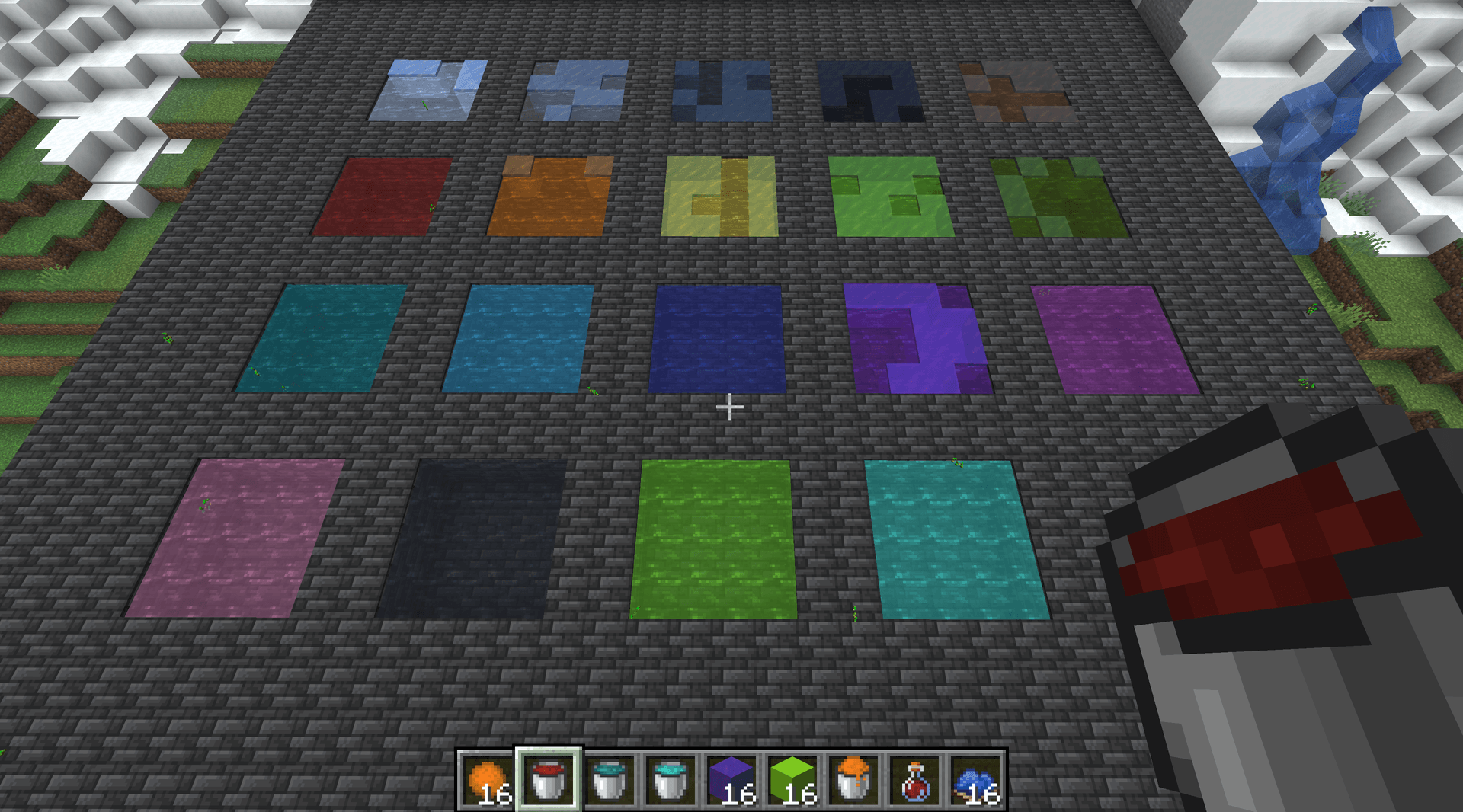
It ships nineteen waters: the sixteen dye colours, plus ash_slurry, irradiated and
lumewater, which carry behaviour as well as colour. A consumer mod adds its own by shipping
one JSON file — no Java.

They are water, all the way down — Tinted water is
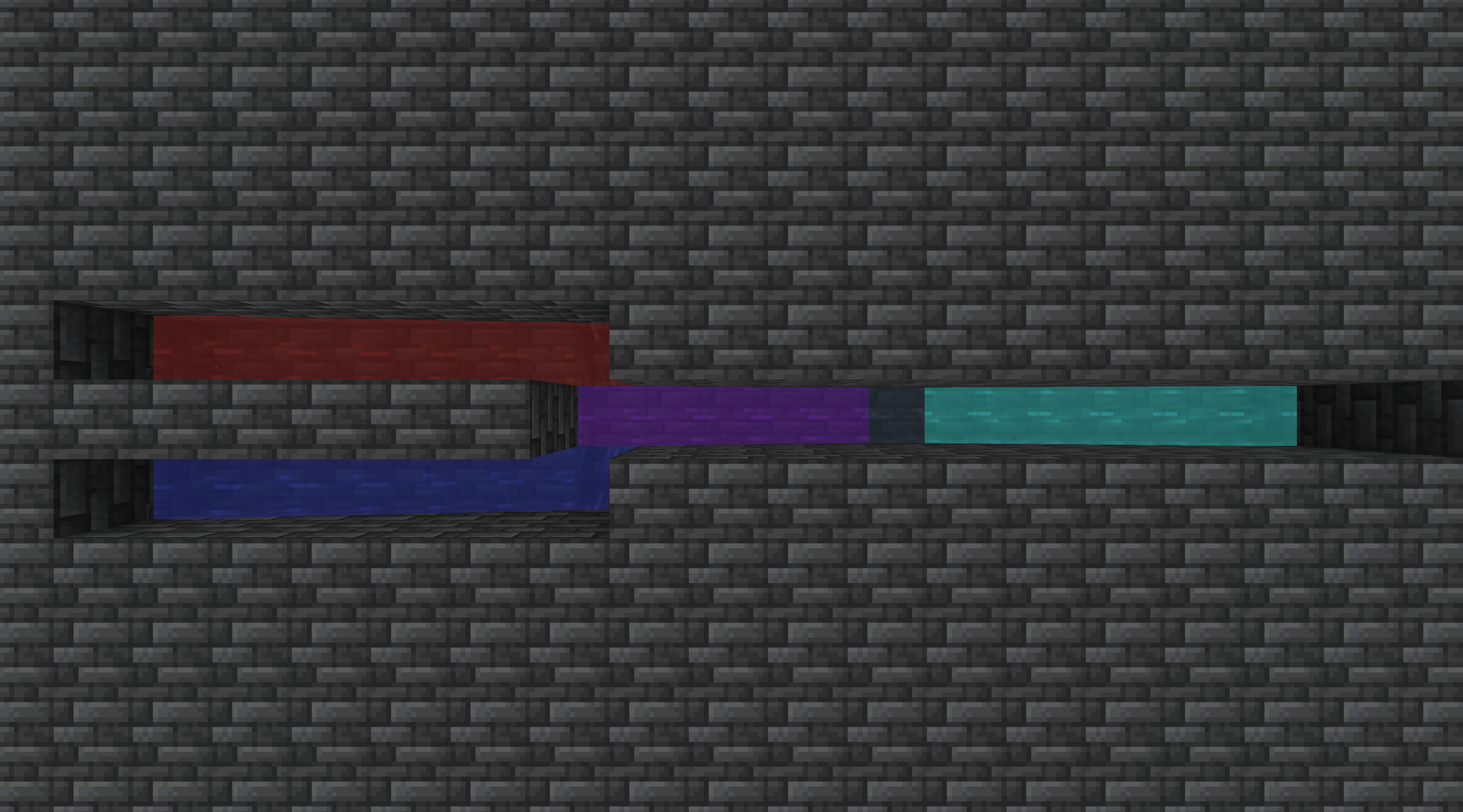
minecraft:water. It flows, it drowns you, a sponge soaks it up, a boat floats on it, a stair waterlogs in it, and a fishing rod works in it — because none of that is code this mod wrote.They flow, and they blend on the way — Red pouring into blue makes purple, decided by vanilla's own dye recipes. A pair with no recipe muddies to grey rather than guessing at one.
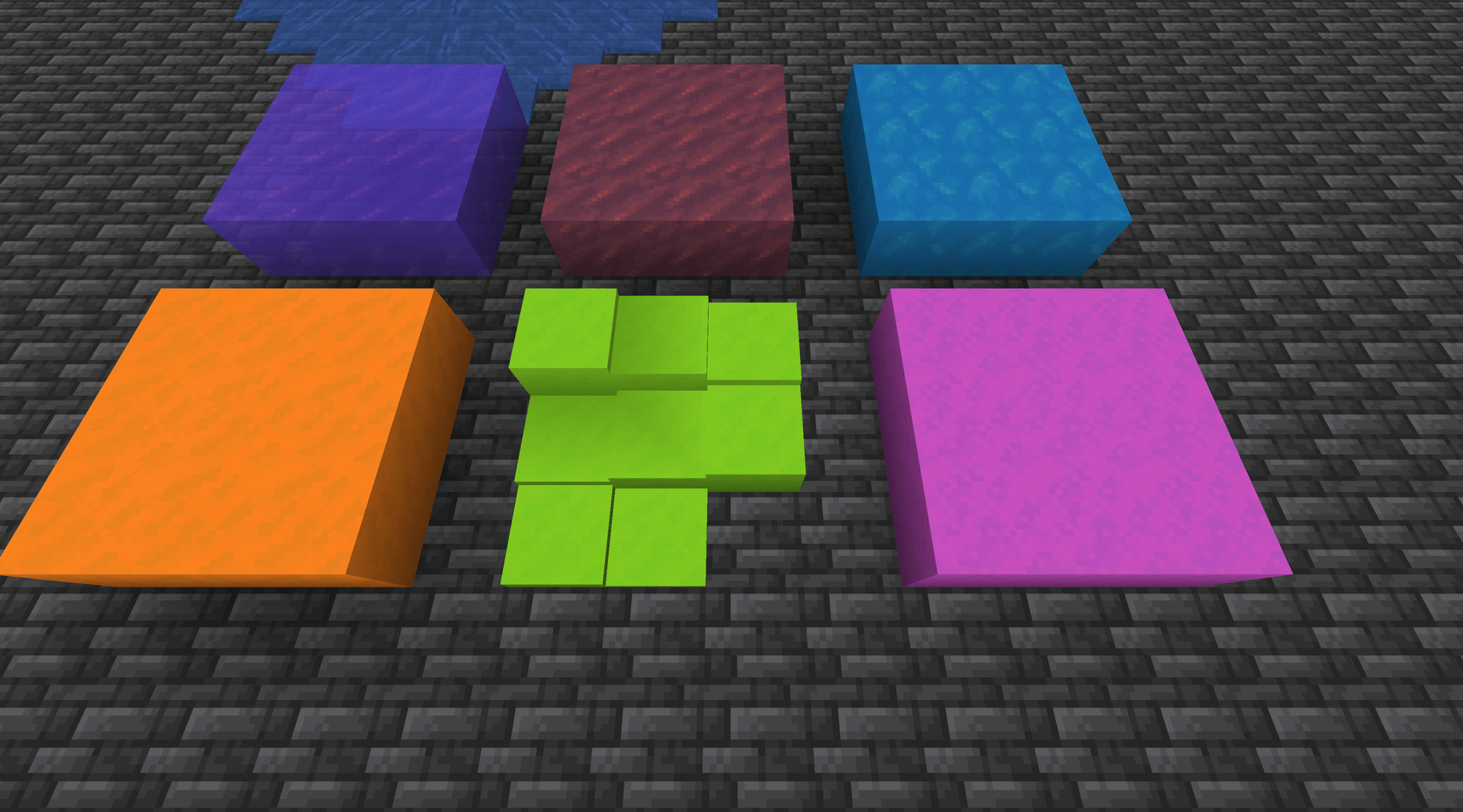
They freeze and they melt — Ice, packed ice, blue ice, snow, snow layers and powder snow all keep the colour of the water they came from, and melting gives it back. Break ice without silk touch and it turns back into the water it was.
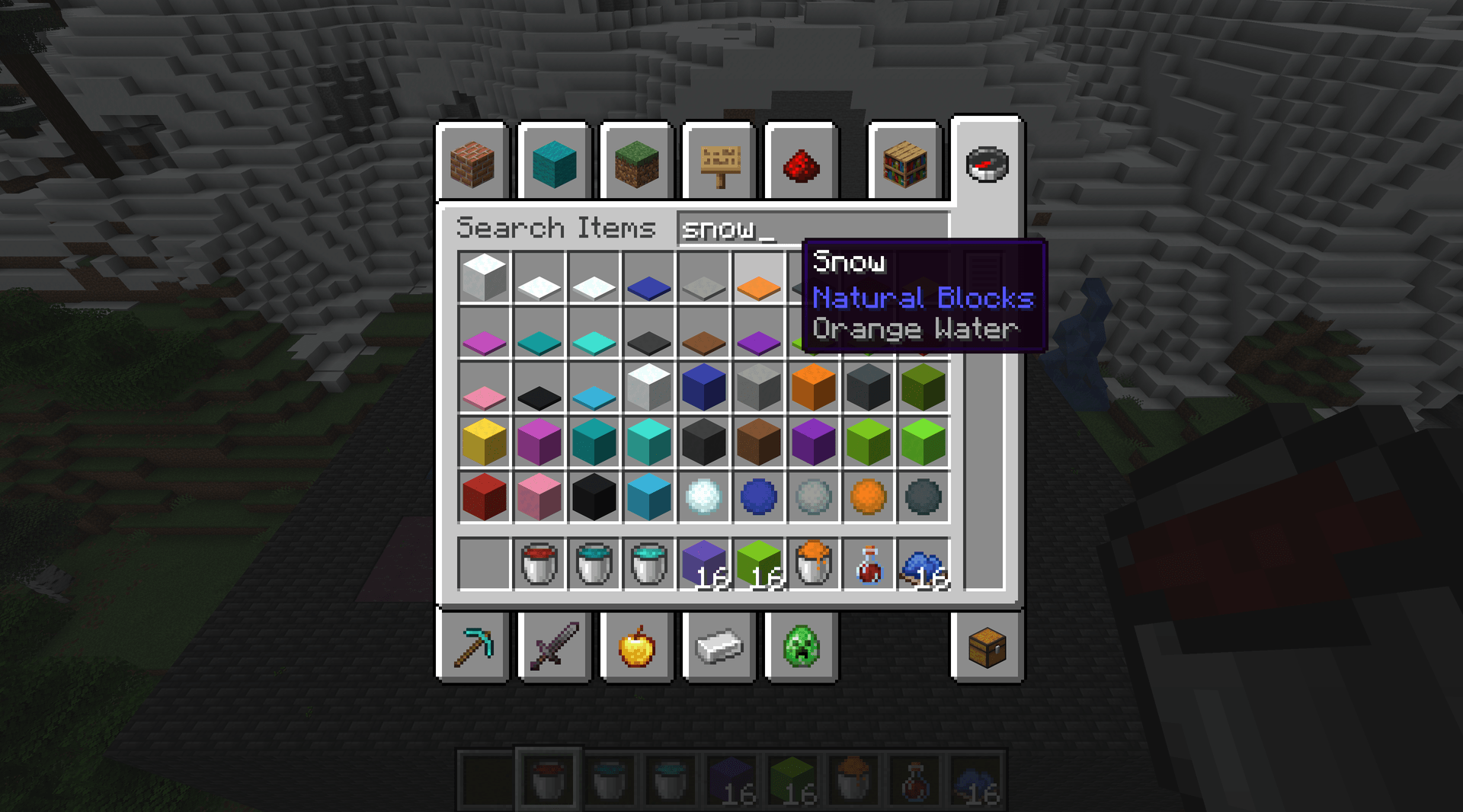
They fit in things — Buckets, bottles, cauldrons and powder-snow buckets carry the colour, and a bucket's tooltip names its water. A dye dropped in a cauldron colours it; that cauldron then fills coloured bottles and buckets.
An untinted world stores no bytes — Colour lives in a sparse per-position field, persisted in the chunk and synced only to whoever is watching it. A whole biome made of one water costs one catalogue row and nothing per position.
Nothing has to know — A world saved with a consumer mod's waters and loaded without that mod shows plain water at those positions — and gets the colour back when the mod returns.

All /water subcommands need permission level 2.
/water give <targets> <water> [<count>] |
buckets, stamped with a water |
/water fill <from> <to> <water> |
repaint water that is already there; it places nothing. Ice and snow included — the only way to paint a frozen lake that was never tinted water |
/water clear <from> <to> |
take the paint off again |
/water at <pos> |
what water is here, which layer said so, and which block it is in |
Paint the source, not the stream. A source block holds the colour you give it; a flowing cell derives its colour from whatever feeds it, and re-derives it the next time it ticks.

A consumer mod writes no Java. Ship one file in your own jar:
assets/<your mod id>/hydrarium/catalogue.jsonThe path is keyed on your mod id, which is what puts your water ids in your namespace. hydrarium's own nineteen are read through this same scanner from this same path in hydrarium's own jar — there is no private path for the built-ins.
{
  "waters": [
    { "id": "lumewater", "tint": 4251856, "effect": "glow", "biome_strength": 0.1 },
    { "id": "brine",     "tint": 7385292, "dye": "light_blue" }
  ],
  "biomes": [
    { "biome": "yourmod:glow_sea", "water": "yourmod:lumewater" }
  ]
}
waters declares colours:
| field | ||
|---|---|---|
id |
required | path only; the namespace is your mod id |
tint |
required | a plain 0xRRGGBB written as a decimal integer |
effect |
optional | one of none, glow, ash, decay. An unknown name costs that water its behaviour, keeps its colour, and logs — it never fails the catalogue |
biome_strength |
optional, default 0.25 |
how much of the biome's own water colour bleeds in. 0 is this colour exactly, everywhere; 1 is vanilla's straight multiply |
dye |
optional | the dye this water is. Naming one of the sixteen puts this water into dye mixing without it having to be named after a dye. A water with no dye muddies to grey against anything but itself |
biomes says which biome is made of which water, and stores nothing — an entire
planet's green ocean is one row here and not one byte in any chunk. A biome row may name a
water some other mod's catalogue declared; the whole scan resolves before any of it is
wired.
Effects are a closed set in Java on purpose. A tint is a number, so a new colour is a row; an effect is code. A catalogue may choose from the set and parameterise it, which is what keeps "a consumer writes no Java" true rather than nearly true.
Resolution order
A position's colour is decided in three layers, and /water at reports which one answered:
- the field — a per-position entry, sparse, persisted in the chunk and synced to whoever is watching it. The only layer that costs bytes.
- the biome — a catalogue row. Costs nothing per position.
- vanilla — ordinary water, in the ordinary way.

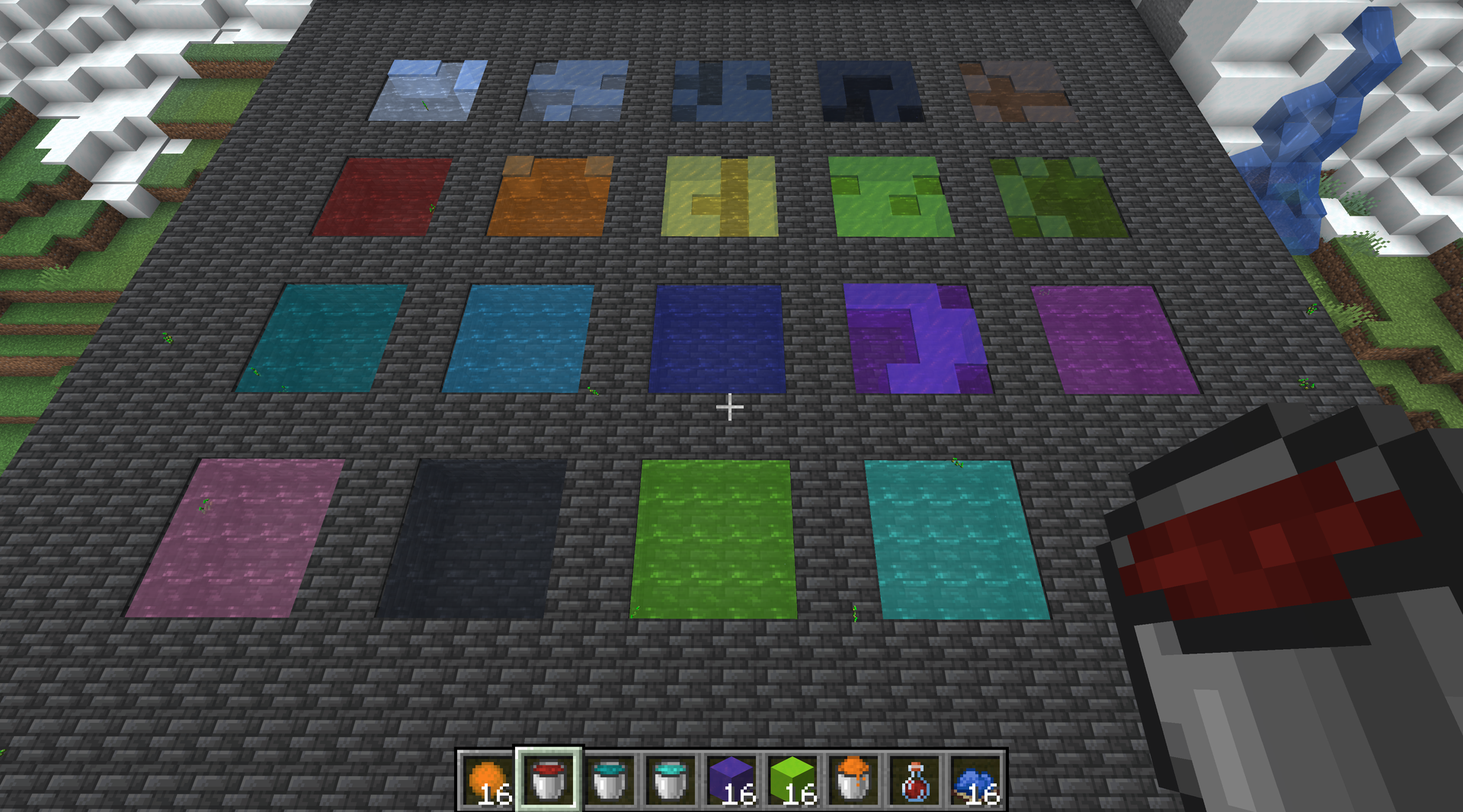
<sub>The nineteen built-in waters. Every one of them is `minecraft:water`.</sub>
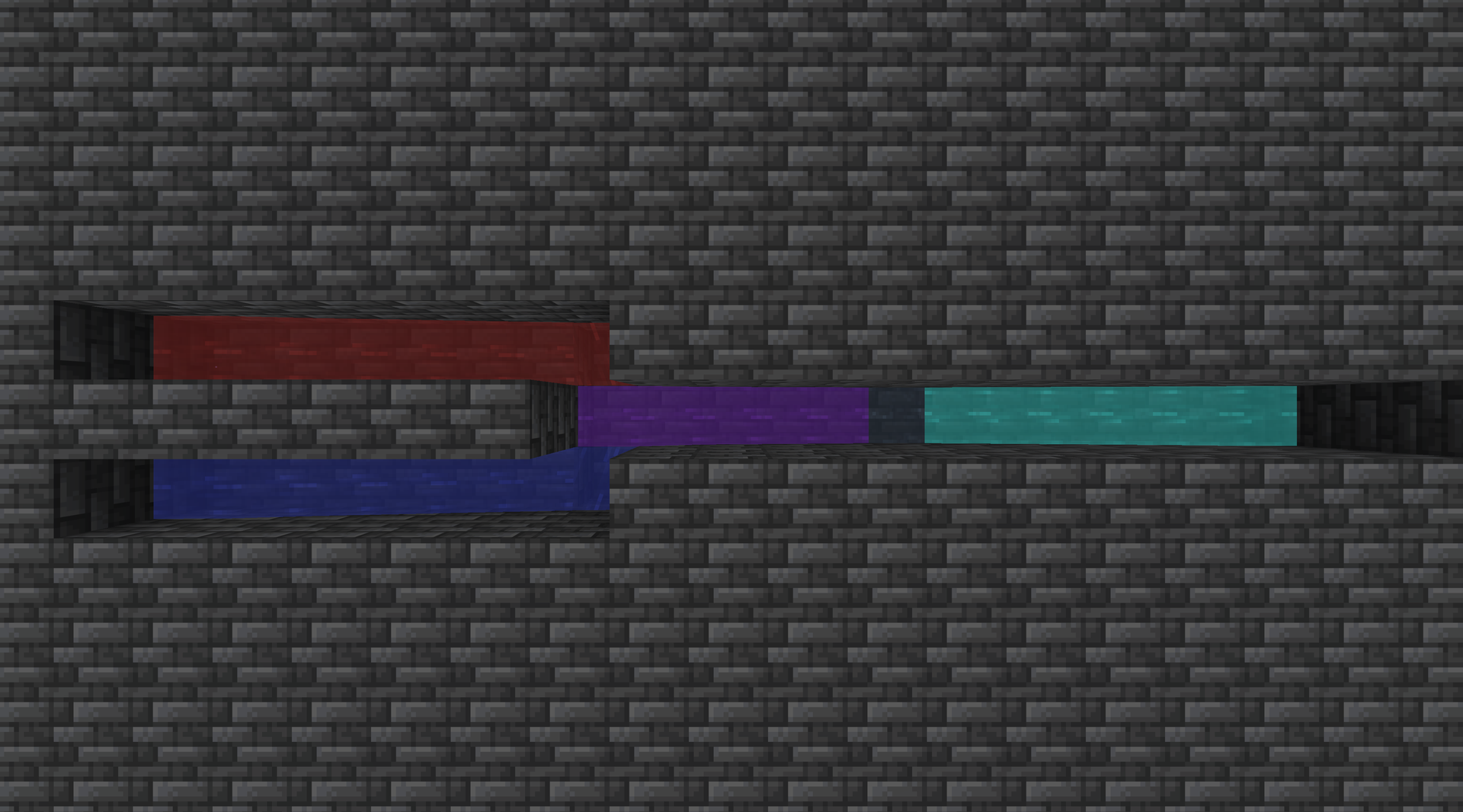
<sub>A red stream and a blue stream meet, and everything downstream runs purple.</sub>
<sub>Ice, packed ice, blue ice, snow, snow layers and powder snow, each keeping the colour of the water it froze from.</sub>
<sub>A cauldron holds a colour, and fills bottles and buckets with it.</sub>
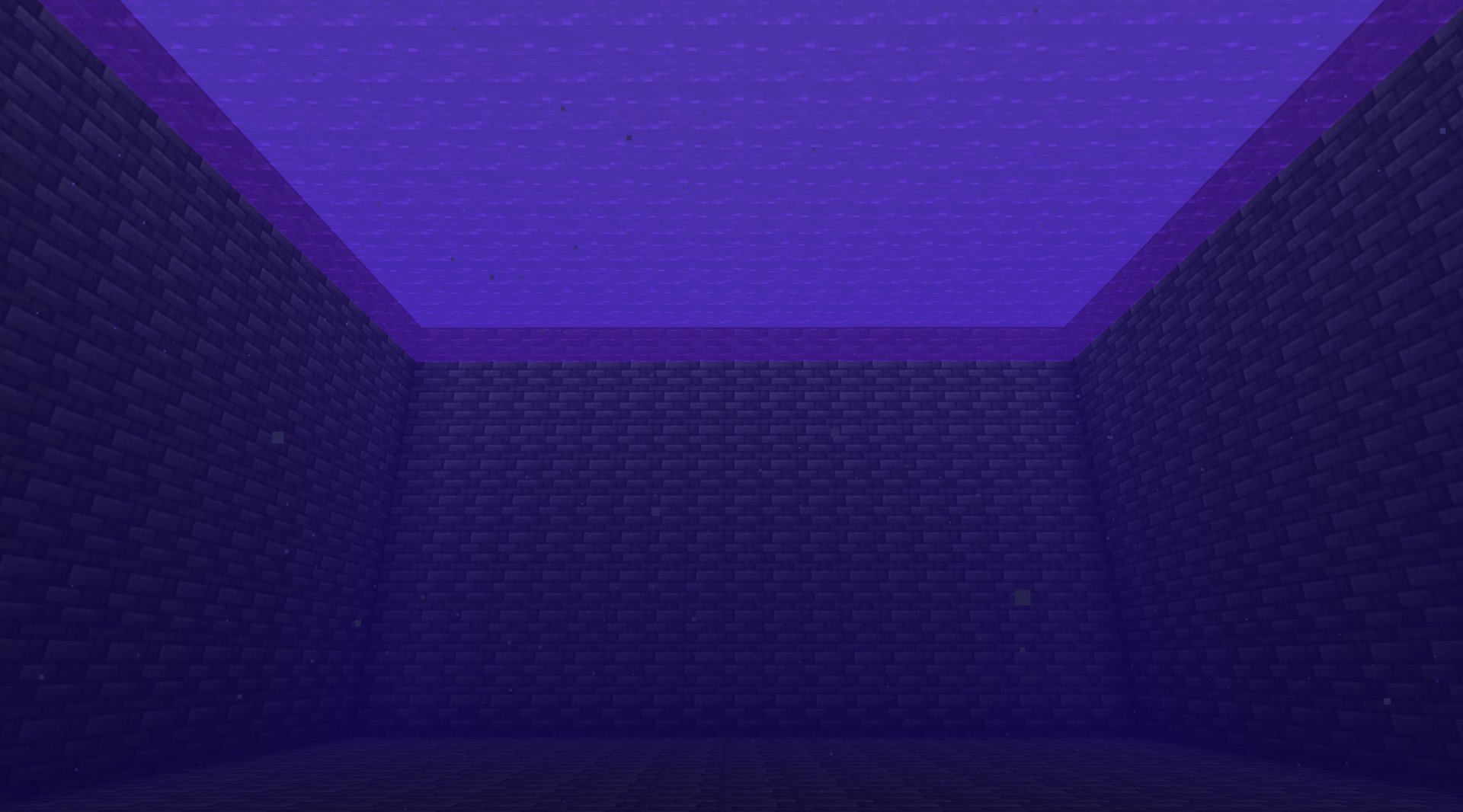
<sub>Under the surface the fog goes with it — a purple pool does not look blue from inside.</sub>
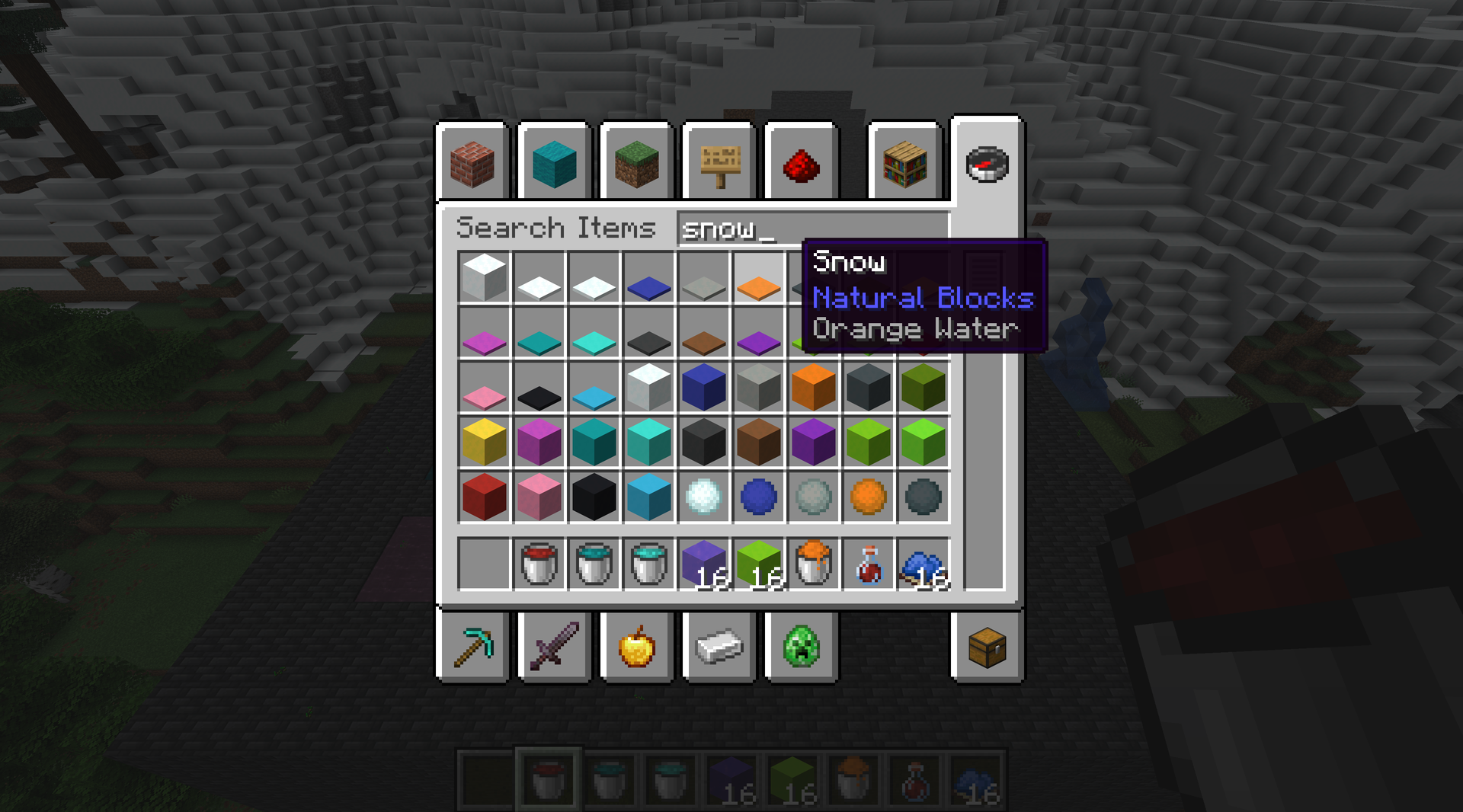
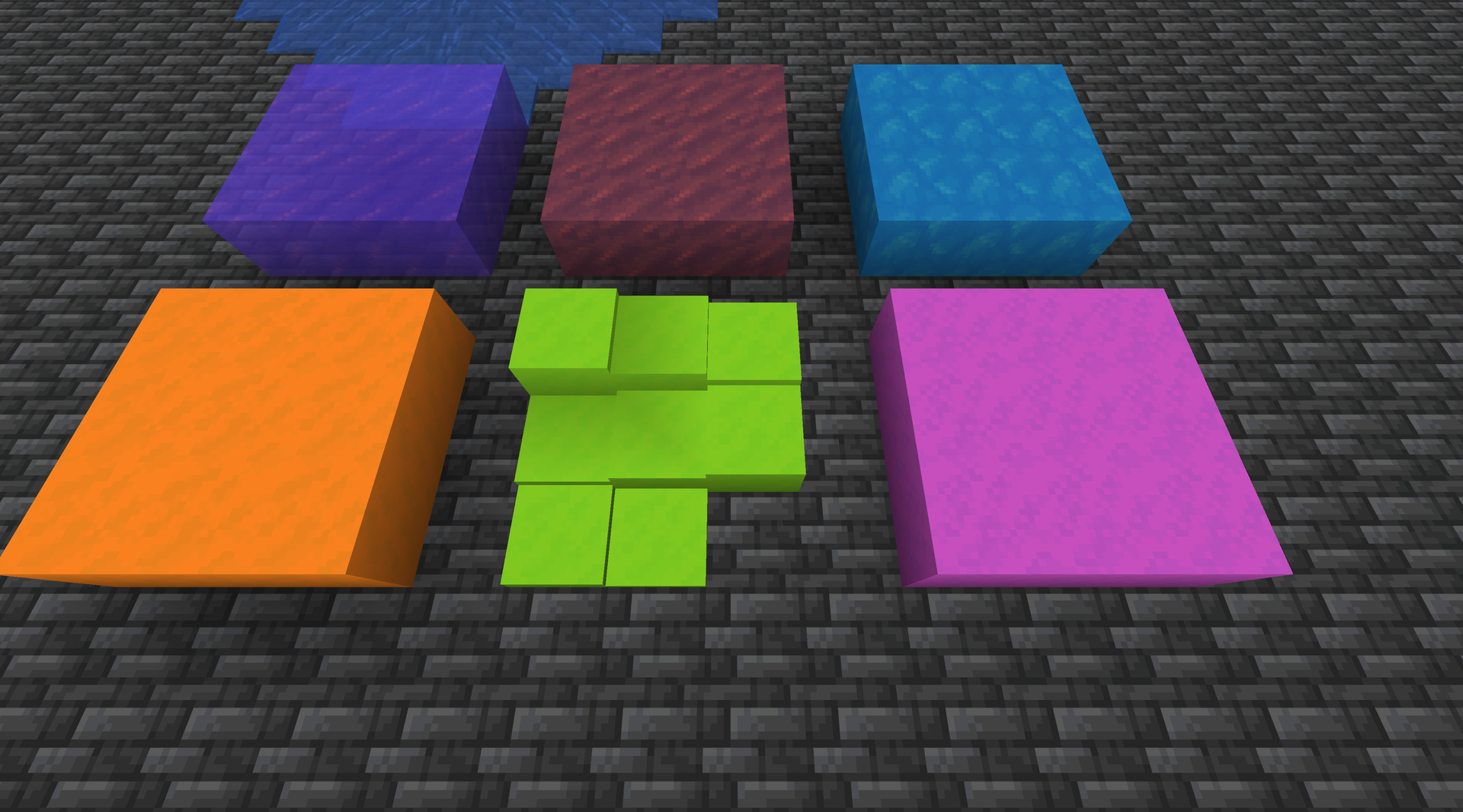
<sub>Buckets, bottles, ice, snow blocks and snowballs all carry their water's colour.</sub>

Required
| Mod | Version | Notes |
|---|---|---|
| Fabric Loader | >=0.19.3 | |
| Fabric API | — | Data attachments, fluid rendering, block colours, chunk lifecycle |
| Java | 25 |

| Mod | Conflict | Workaround |
|---|---|---|
| Resource packs that retexture the water bucket | hydrarium overrides eight files under assets/minecraft/items/ — the buckets and the frozen items — to give their colour somewhere to land. It is the only place this mod writes outside its own namespace. |
|
| Load hydrarium above the pack, or drop the pack's bucket item models. | ||
| Mods that replace water's fluid model | The colour arrives through FluidRenderingRegistry. A mod that registers its own model for minecraft:water after hydrarium wins, and tinted water draws plain. |
|
| None yet. Report it and it can be looked at. |

- Install Fabric Loader 0.19.3 or newer, on Java 25.
- Drop
hydrarium.jarand Fabric API intomods/. - Launch. There is nothing to configure.
Install it on both sides for a server: the field is stored and mixed server-side and drawn client-side, and a client without it simply sees ordinary water.

export JAVA_HOME=".../jdk-25"

./gradlew build                  # the jar, in build/libs/
./gradlew test                   # 40 assertions, no game bootstrap
./gradlew runClient              # playtest
./gradlew runServer -Psmoke      # 29 in-world checks, then it halts
Minecraft, loader and Fabric API versions come from the com.mattmc.mcmod convention plugin,
not from this repo. CLAUDE.md has the rest of the build surface, and what breaks silently.

Does this add a new fluid?
No — and that is the whole design. Adding a fluid means adding a block, a bucket, tag memberships, and a compatibility surface with every mob, boat and sponge in the game. Tinted water is minecraft:water wearing a colour, so all of that keeps working for free.
My water is the wrong colour. Why?
Run /water at <pos>. It names the layer that answered — the per-position field, a biome row, or vanilla — and the block it is in, which matters because red ice and red water look nearly the same from above.
I painted a stream and it went back to normal.
Paint the source, not the stream. A source block holds a colour; a flowing cell derives one from whatever feeds it, and re-derives it the next time it ticks. Paint the source and let the wave carry it.
What happens to a world if I remove the mod?
Nothing breaks. Those positions are ordinary water, ice and snow, and they render as ordinary water, ice and snow. Put the mod back and the colour is still there.
Two red and two blue snowballs made a grey snow block. Bug?
A decision, and a pinned one. A crafting grid has no level and so no recipe book to ask about dye mixing, so the grid muddies to grey where two red and two blue sources would make purple.

Built on Fabric and Fabric API.
The sixteen dye colours are vanilla's own DyeColor values and the mixing table is vanilla's
own dye recipes — so red water is the same red as a red bed.

Source-available, not redistributable. Play with it, modify it for your own use, send
patches. Re-uploading it or bundling it into a modpack needs written permission. See
LICENSE for the exact terms.
Issues and patches welcome.
Screenshots
Gallery
-
 cauldrons.png cauldrons.png
 -
 frozen.png frozen.png
 -
 items.png items.png
 -
 mixing.png mixing.png
 -
 palette.png palette.png
 -
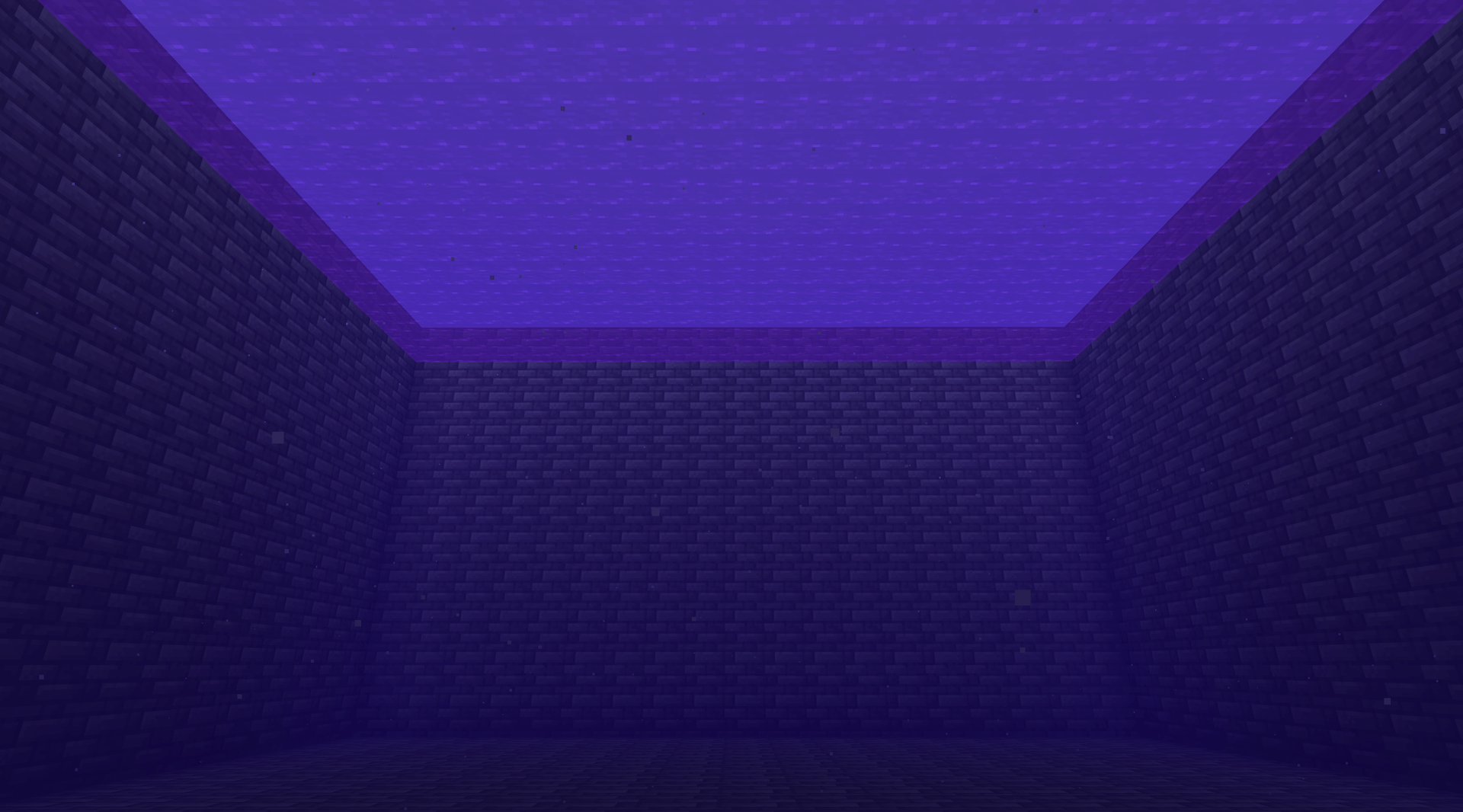 underwater.png underwater.png
Versions
Files
Relations
Project Relations
More like this
Similar Mods
Suggestions use data such as tags, dependencies, dependents, descriptions, titles, and more to rank how much they overlap with this mod.
On ModDex
Community snapshot
By the numbers
Statistics
Want to reach Minecraft players?
We're looking for a server hosting partner to feature here and other parts of the site. Interested? Send us a message!
Get in touchGet it on
Available Platforms
On ModDex
Community snapshot
By the numbers
Statistics
Resources