Community listing page, reviews here may not be monitored by the author.
Lumina World

No reviews yet
Slabs, quarter-blocks and layered materials that break Minecraft's block grid, plus an eight-zone body with injuries, splints, scars and fate dice. Every system switchable with a game rule.
Community voices
Reviews
No reviews yet. Be the first to review this project!
Get it on
Available Platforms
About
Project Details
For authors
Embed Badge
If you're the author of this project, you can embed a live badge anywhere that supports HTML or Markdown. It updates automatically whenever ratings change.
Use HTML for any page that supports it, or Markdown for README files and Markdown-based descriptions.
Identifiers
Platform IDs
Resources
External Links
About
Description
Lumina
Minecraft 1.21.1 · Fabric · works with Sodium, Lithium and Iris
For the settings screen, add Mod Menu and Cloth Config. Both are optional: without them every switch is still a game rule.
Minecraft's world is built on a grid of whole blocks, and your body is a row of ten hearts. Lumina takes both apart.
A block space can hold two materials at once. A quarter of a block can stand upright or lie on its side. Sand can settle inside a slab, a flower can live in one, snow can cover a meadow without destroying it. And instead of one health bar you have eight body zones that are hurt, splinted and scarred one at a time.
| Blocks | 1259 |
| Items | 111 |
| Fluids | 6 |
| Status effects | 13 |
| Enchantments | 3 |
| Recipes | 1922 |
| Game rules | 49 |
| Creative tabs | 5 |
Two ways to play
Every behaviour is a game rule, changeable mid-game and saved with the world — and one row at the top of the settings screen sets them all at once.
- Normal play is the mod in any world: all of the content, without the stretched clock and the rules that want tending every day. This is what a new world starts on.
- Lumina is the whole rulebook, every switch on.
Either way each switch can still be moved on its own, so you can take the building half without the survival half, or the other way round. On a server, /luminamod playstyle does the same.
Building
- 296 host slabs, 403 corner blocks and 341 flights of stairs — one for nearly every full block that never got one. Not just models: a magma slab burns your feet, an ice slab is slippery, an ore slab pays out its experience, glass needs Silk Touch, leaves keep their biome colour, copper weathers and waxes, a log strips with an axe. Each shape has its own creative tab.
- Two materials in one block space. Stone below, oak above, mined as two halves that each drop the right thing. The outline, the cracks and the particles follow the half you are pointing at. A slab stood on its side fills the block vertically instead.
- Corners on any axis — a quarter can run along all three, and the spot you click decides which. Diagonal walls, rounded towers and sloped roofs without the staircase look.
- Loose material in layers: sand, red sand, gravel and clay, one to eight deep, the way snow is.
- Material inside other blocks — sand in an upright slab, a carpet in a corner, gravel in a bell. 27 kinds of host were taught to hold it, and they all keep working: the chest opens, the bell rings, and the footstep sound follows what you are standing on.
- Plants inside blocks, and snow that settles over flowers instead of destroying them.
- Light glass in 16 colours — glows, tints, does not block the view, works as slabs and corners.
- Wet ground that darkens outwards from water over about ten seconds, and dries back the same way.
- A placement preview that runs the real placement logic, so what you see is what you get.
- The mining core, a quarry that refills itself: inside a cube 16 blocks in every direction, mining works in stages, and every stage reverts two minutes later. The same wall can be worked again and again.
Slabs, corners and stairs are one system, not three: the mod reads every block model there is and works out for itself which shapes are missing. /luminamod cuts missing lists what still is — other mods' blocks included.
The body
Head, torso, two arms, two legs, two feet, each with its own health, each on its own gauge and all of them on one page behind the Open Body key. Where a blow lands decides what it costs, and armour counts only where it actually sits — a bare foot takes far more of a hit than a plated chest.
| Zone | While it is hurt |
|---|---|
| Head | Your view narrows and your sight distance shortens |
| Torso | Everything is harder; at zero, you die |
| Arms | Less reach, slower mining, weaker blows |
| Legs and feet | You move slower |
Nothing drops to zero effectiveness, so a bad fight is a setback rather than a lock-out.
- Instead of dying you go down. Two dice lie in front of you, a d10 and a d100, and you throw them by hand: 50 or higher is a success, three successes put you back on your feet, three failures do not. Dice are a finite stock, not a per-death allowance.
- Natural healing stops at half and never touches a ruined zone, which is what makes treatment worth carrying: a bandage restores, a splint is the only thing that makes a ruined limb work again, a salve heals more but slower, an aurium elixir most of all.
- Scars. A zone ruined and mended all the way back scars over: tougher afterwards, slower to heal, and a permanent record of what has happened to you.
- Crystal hearts are the only route to permanently more health, one crystal for each part of the body — and the aurium heart grants another fate die instead.
- Two enchantments for the zones: Warding thickens the piece it sits on and the rest of the body takes the difference; Evenness gives that choice up and pulls the whole spread flat.
- Hit zones run both ways — a thrown stone that catches a zombie in the head is worth half again.
Thirst, warmth, smell and clothing
- Thirst drains faster the harder you work, taking its cut of the same exhaustion vanilla already counts — so any mod that adds a strenuous action costs you water for free. Heat above 25 °C drains it faster, heavy armour faster still.
- Felt temperature, not biome temperature: the biome, the hour, how wet you are and what you are wearing. Both ends are dangerous, and both are answered by clothing.
- Smell builds up and draws attention you did not want. Soap is the answer, made from tallow and ash you render and burn yourself.
- Four clothing slots of their own, separate from armour — linen for heat, wool for temperate, fur for cold. It shows on the model and sits geometrically under armour.
- Body strength answers how the body is doing overall. It runs down with the day and comes back at a fire, in a bed and with a hot meal; tired is slower, worn out cannot run, and it never costs health.
Tools you have to earn
Almost nothing breaks bare-handed, and hitting a genuinely hard block hurts the arm you swung with — only hard ones, listed explicitly, so another mod's block is harmless by default.
The way out is three things you can get with nothing at all: plant fibre pulled from grass, loose stone knocked out of soil and throwable for a heart of damage, and the crude hand axe. Then the fire starter — two sticks and a flint, held against wood until it catches.
Time, fire and the world
- The day runs four times slower, everywhere and for everybody: one sun, one clock, one speed.
- Sleeping no longer teleports the clock. The night runs through at eight times speed while everyone is in bed, about a minute and a half — and a bed may be used at any hour: lie down at noon and you get up at dusk. Phantoms still arrive after three days awake, measured in world time.
- A lit campfire heals whoever sits by it, and sets alight whoever walks through it.
- On fire? Tap sneak, repeatedly and quickly, and you smother it.
- Felling, an enchantment for axes and the only way a tree comes down whole. The enchanting table never offers it, so it costs nothing there and crowds out no ordinary enchantment — chests and librarians have it. The canopy comes with the trunk and everything lands where the trunk stood, and only leaves that no standing tree still holds are taken.
Things the game never made sense of
- Water breaks a fall by how deep it is instead of clearing it outright: each block under you is worth about four blocks of falling, and five take any fall at all.
- Sand with nothing under it comes down — sand, gravel, concrete powder and anvils look down for themselves, about once a minute, so a cliff gives way rather than collapsing on the instant.
- Bread has to be baked. Three wheat make dough, and dough becomes bread over a fire.
- Everything stacks to sixty-four, except what wears out.
- Villagers restock with the day, instead of with a cap counted in days on a day four times as long.
- In Lumina, sleeping no longer clears the sky, and the weather keeps to the clock either way.
Crystals, fluids, metals and money
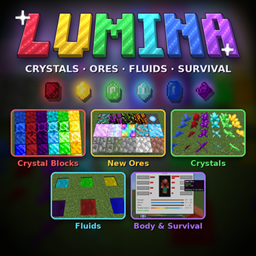
Six crystal families — noctis, gaia, solstral, zephyrium, glacium and aurium — each with a shard, a stone, a block, a growing bud, a molten form, a fluid and a heart. Buds push out clusters over time, and a full-grown cluster hurts whatever walks into it, so harvesting becomes a question of timing: early and safe, or late and worth more.
Every fluid does two different things, and they never overlap:
| Fluid | Standing in it | Drinking it |
|---|---|---|
| Gaia | plants nearby ripen faster | heals steadily |
| Aurium | ore shows through solid stone | blocks give up more |
| Glacium | chills everything around you | the cold closes in |
| Noctis | spoils what you handle | a mark the dark can follow |
| Solstral | heat that keeps the cold off | fire in the blood |
| Zephyrium | carries you further than a stride | pushes back what comes close |
Not every drink is a gift — two of them are things that happen to you, and the fluid does not say which in advance. Each comes with a bottle, a bucket and a cauldron of its own, and can be fluidlogged into blocks.
Seven metals — crytherium, emberium, irythium, oblivium, spectronis, toxenium and verdanite — each with ore, a raw form, an ingot and a block. Four ingots to a block, and iron follows the same rule now.
Metal and crystal melt in the Smeltery, a deepslate hearth with a glowing crucible and a smoking chimney: four raw metal at once become one molten block. The Casting Mould is where molten becomes something — an empty hand turns it between one cavity and four; pour in, watch it glow and smoke for ten seconds, and lift out a block or four ingots.
And aurium is money that can be made. The Minting Press stamps it, the Coin Scale changes it up into larger pieces and back down again:
| Piece | Worth |
|---|---|
| Splitter | the everyday coin |
| Aurium | 12 Splitter |
| Barren | 20 Aurium |
| Stamped Aurium Block | 4 Barren |
In a Lumina world only the Aurium Bank mints. Amethyst, diamond, emerald, gold and silver also come in pieces and clumps, with a bag to gather them — small change for gems.
Switching things off
Forty-nine switches, changeable while you play and saved with the world. The settings screen has all of them in eleven groups, and both playstyles in one row at the top; it comes with Mod Menu and Cloth Config, both optional. Underneath, each switch is a game rule, so a server sets them without a screen at all:
/gamerule luminaBodySystem false
Turn the body system off and every block stays. Turn the world clock off and a day is twenty minutes again. Nothing is all-or-nothing — but blocks, items and fluids are deliberately not switchable, because a registry entry that disappears takes the world with it.
Everything the mod can be told hangs off one name, /luminamod, so pressing tab after it lists the lot. All of it needs permission level 2.
Where the mod stands
Fully playable in survival — every block and shape, the body and survival systems, clothing, treatment, soap, the world clock, melting, casting, the minting press and the coin scale, and every crystal and metal item reachable without opening the creative inventory once.
Creative only for now: the mining core alone. It works exactly as described once placed, but has no recipe yet, so the first one has to come from the creative inventory.
Lumina is my own world, and this is the mod I write for it.
Screenshots
Gallery
-
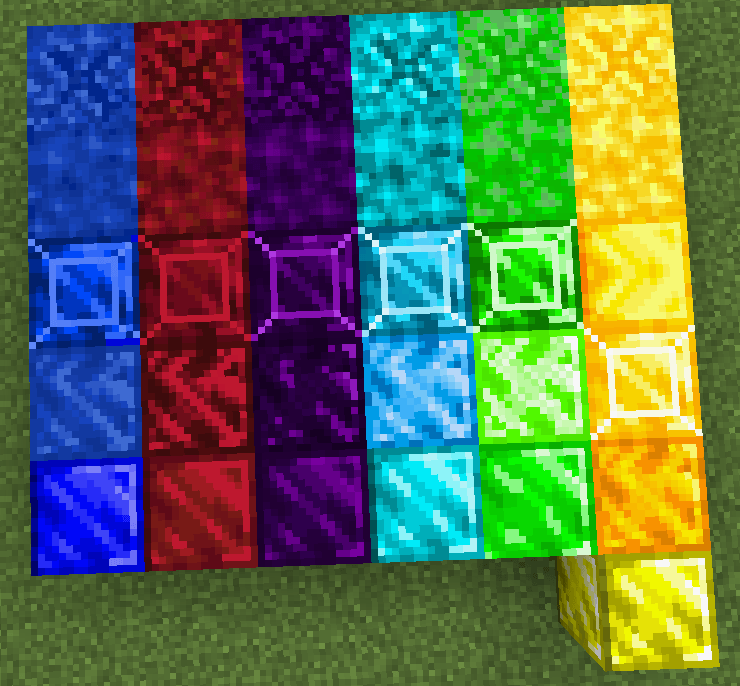 Crystal blocks
 -
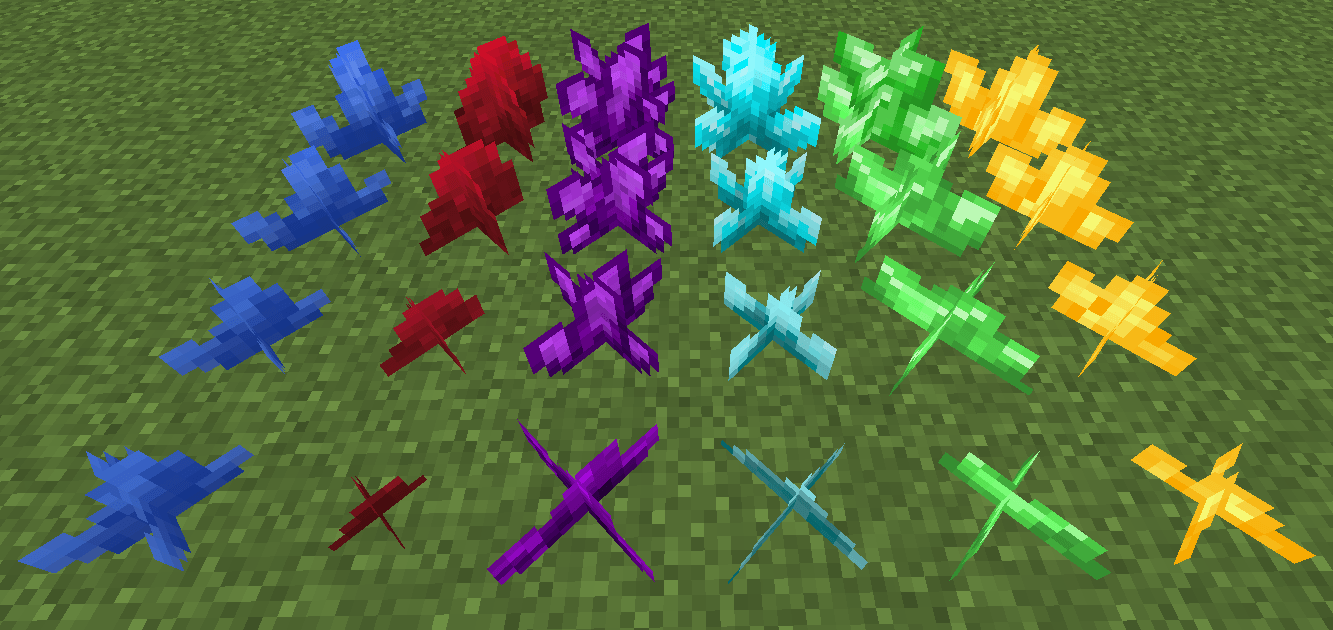 Crystals
 -
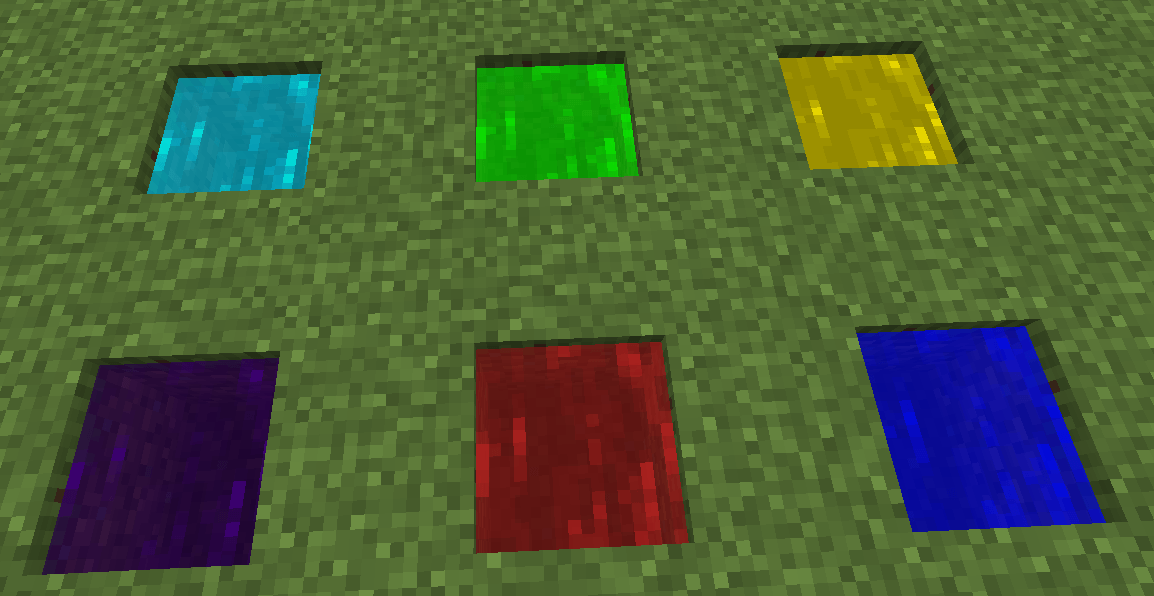 New Fluids
 -
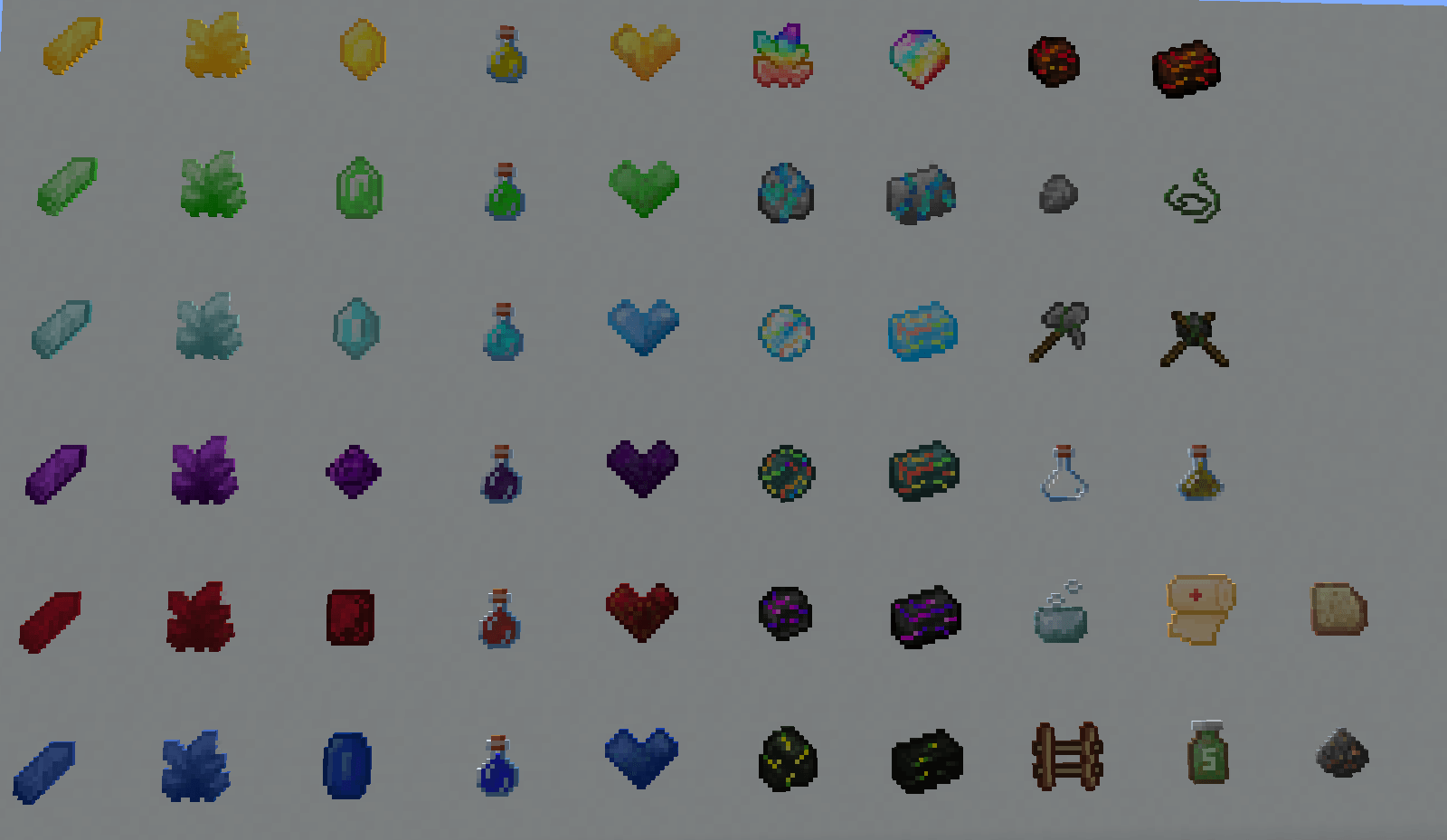 New Items
 -
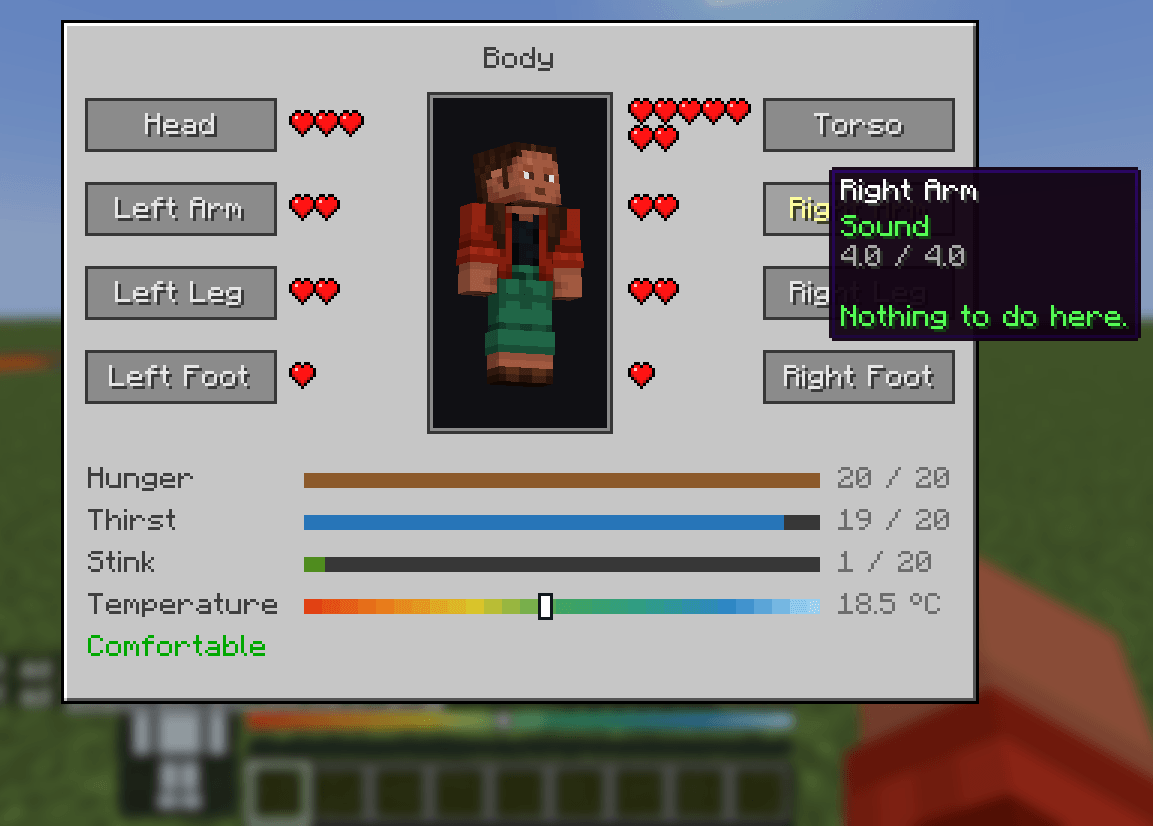 when you press b
 -
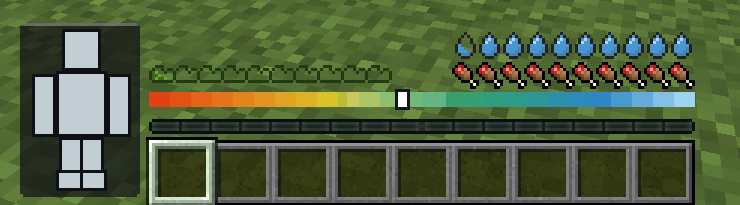 New HUD view in Survival mode
 -
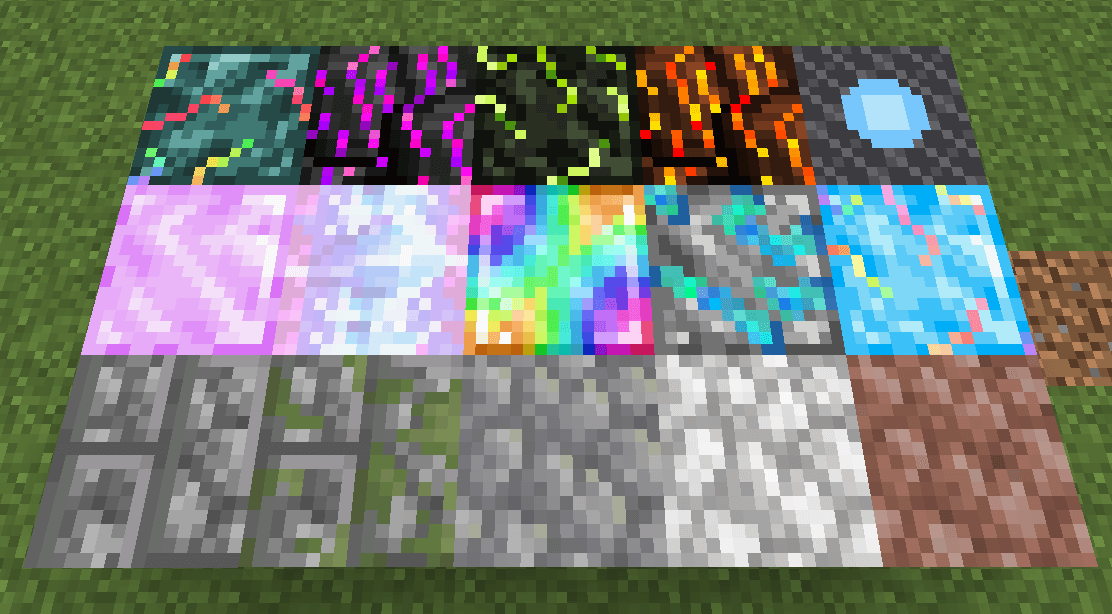 new ores and mining core block
 -
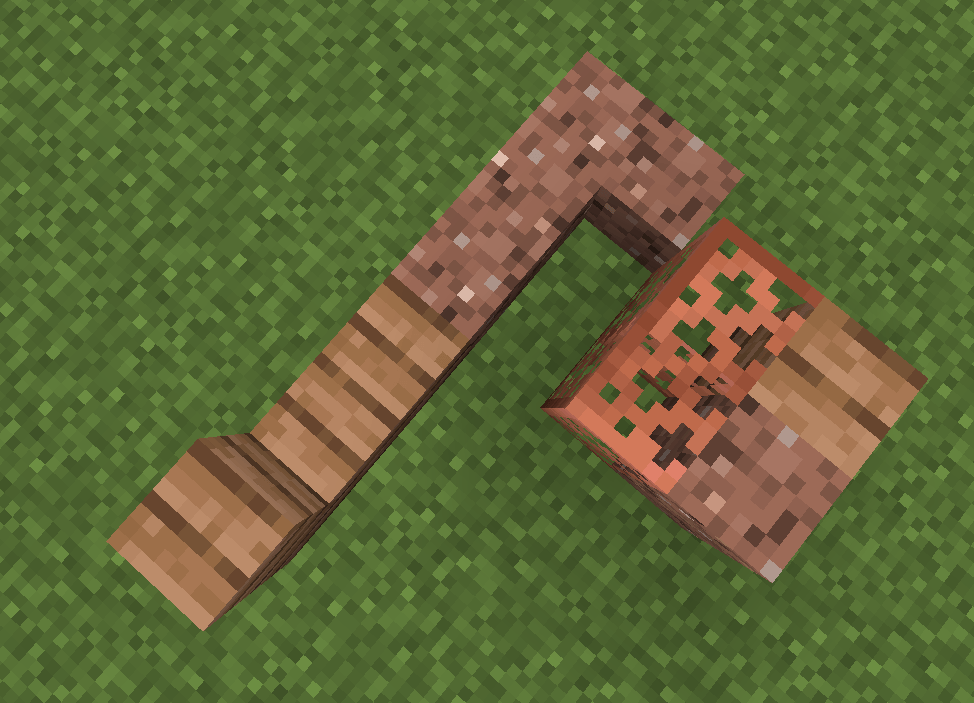 New slabs and corner blocks
 -
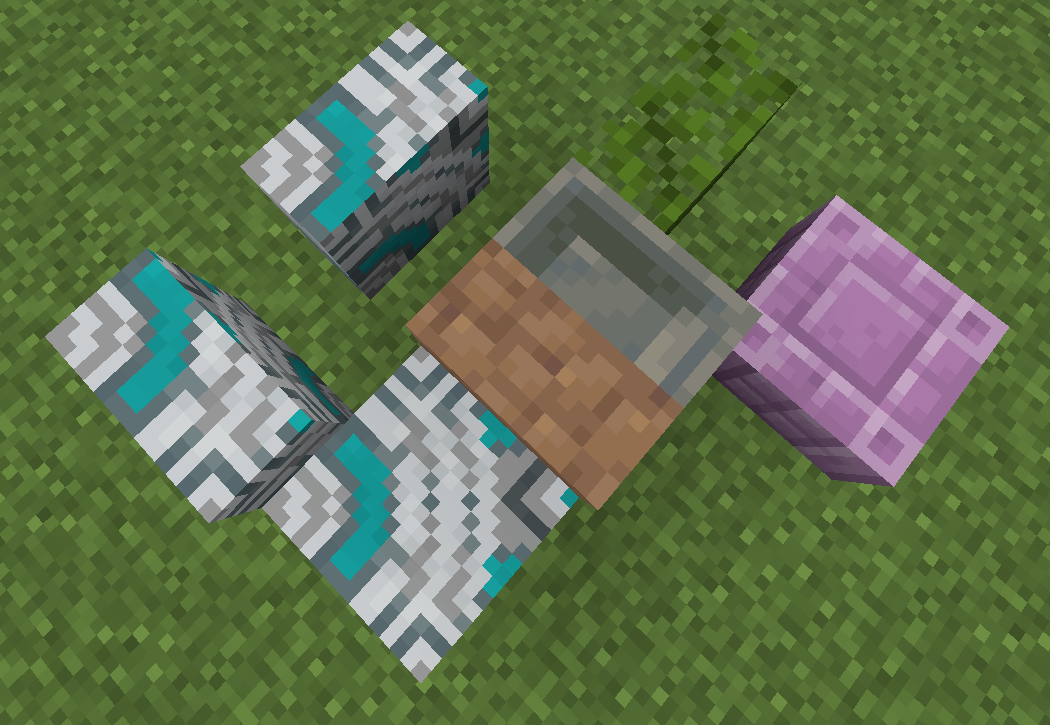 Slab versions are now available for every full block
 -
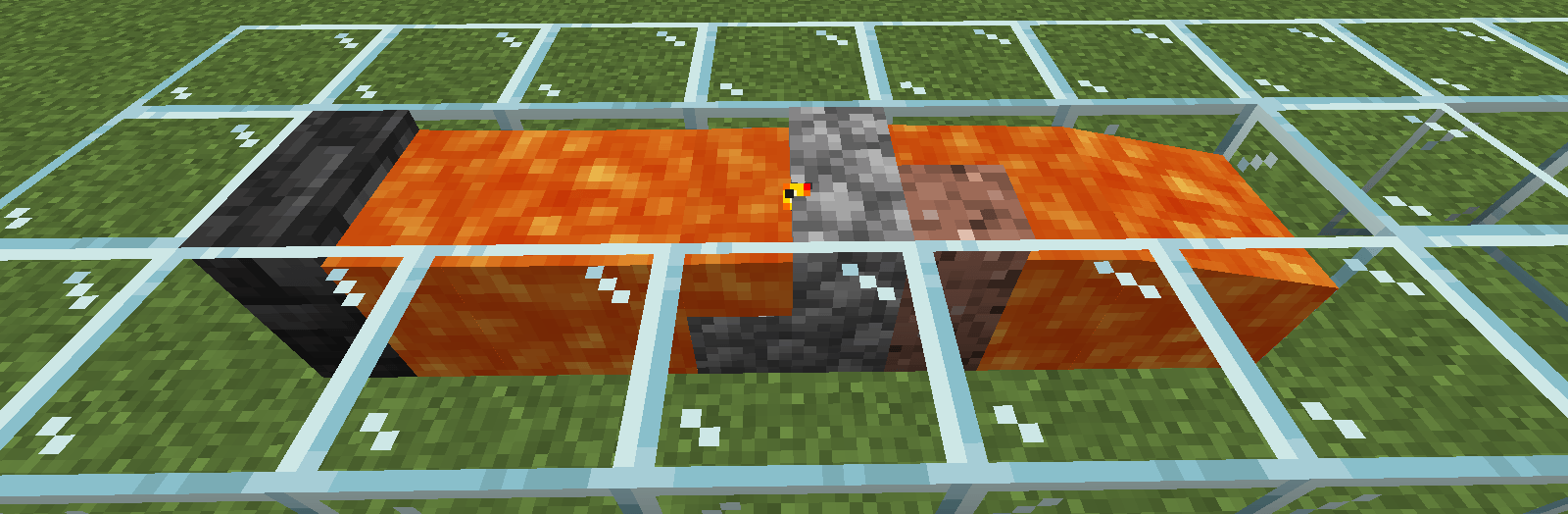 Liquids of any kind in non-full blocks
 -
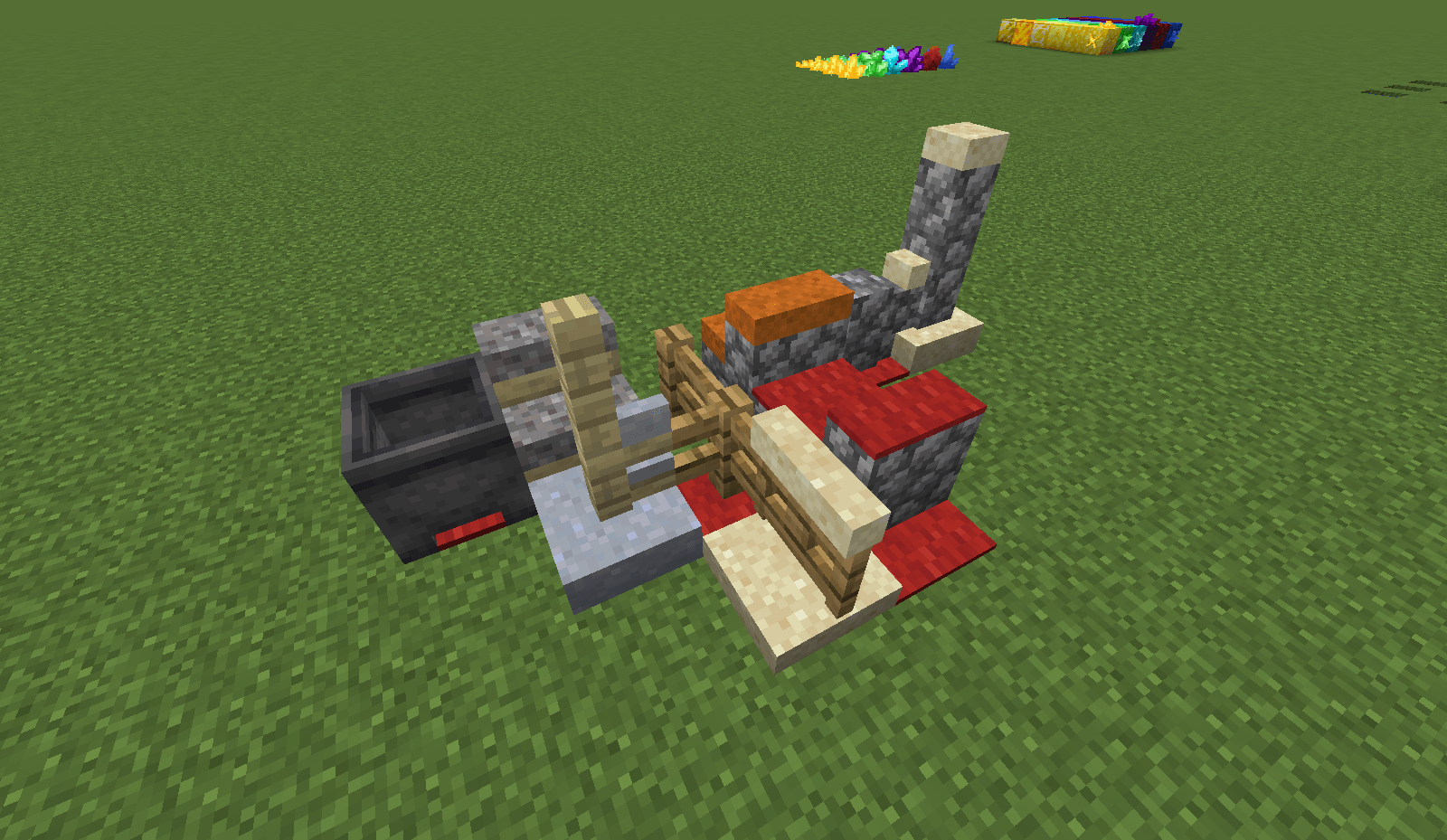 Place carpet and new layers of sand, gravel, and clay as blocks
 -
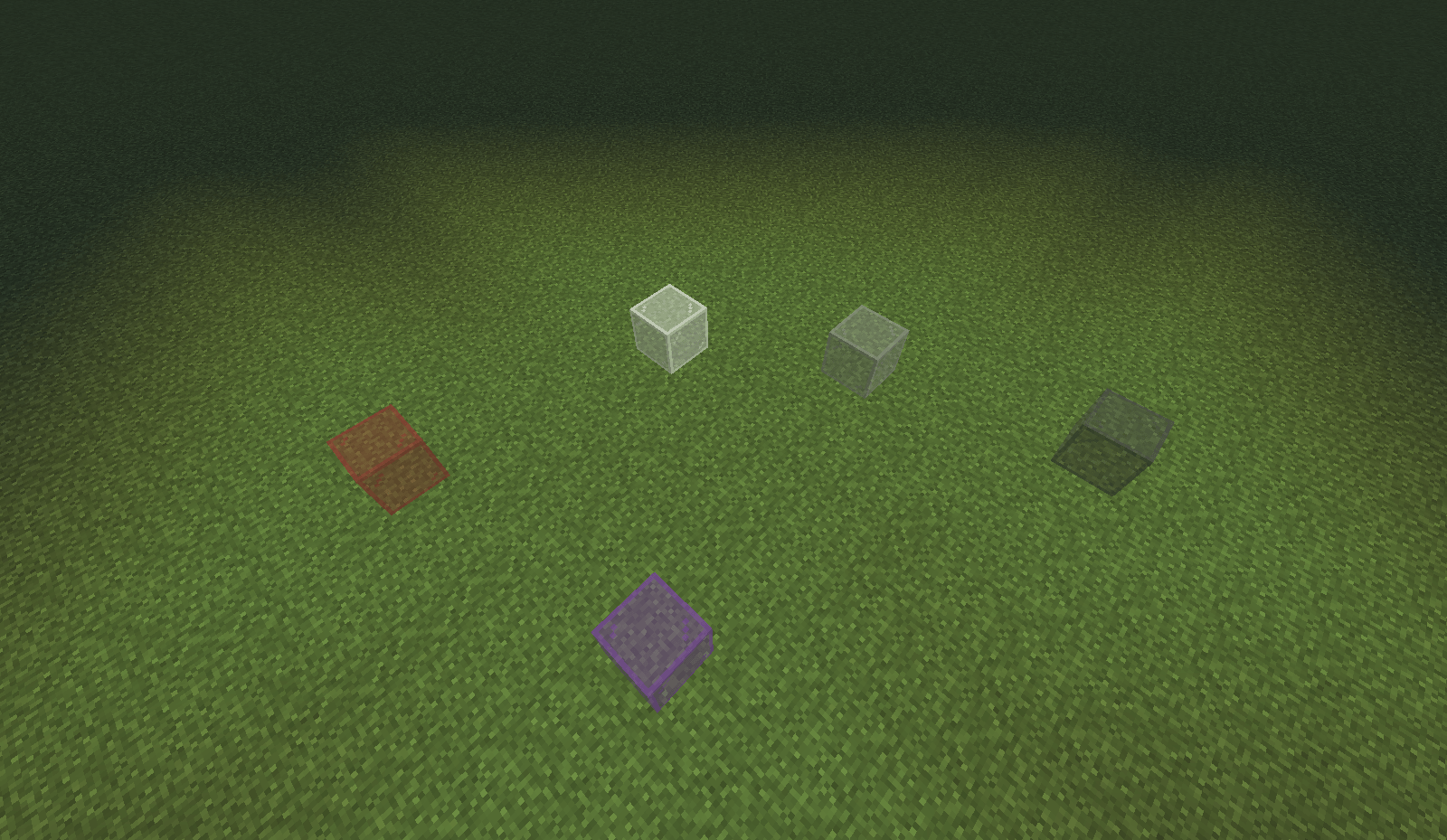 Light glass
 -
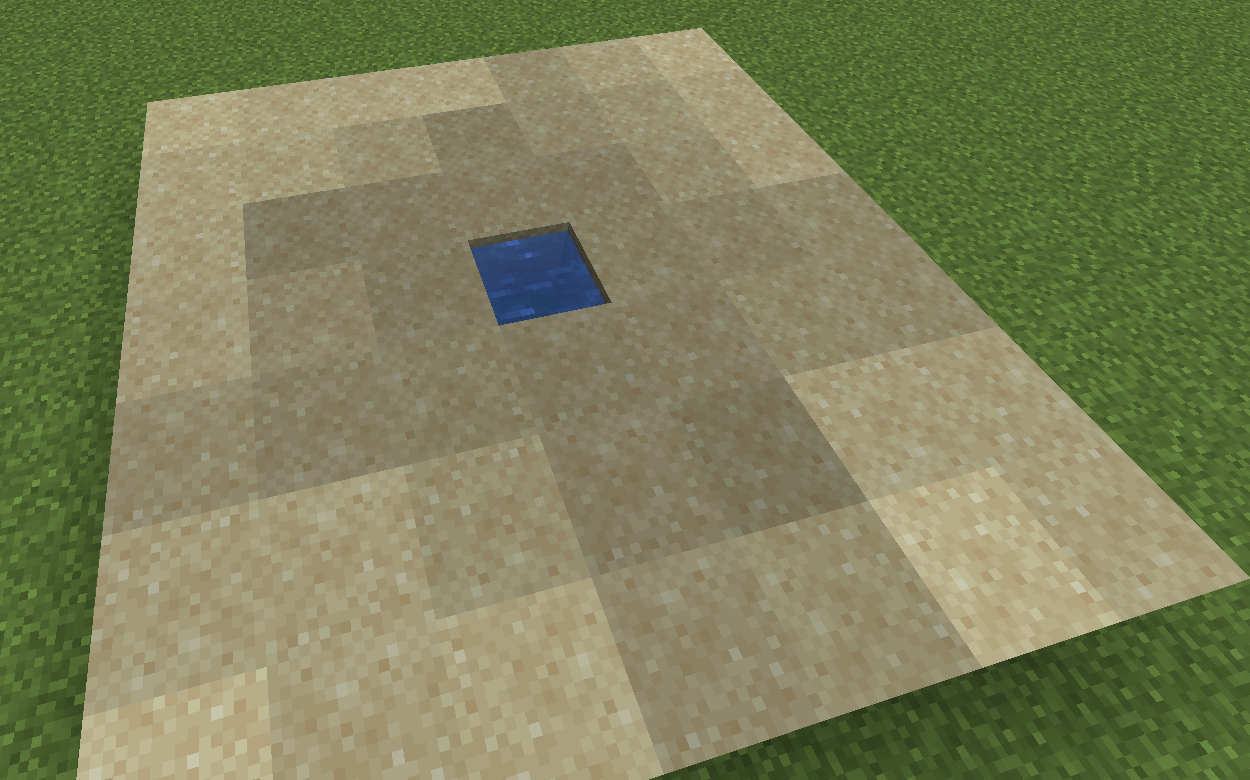 new water animation
Versions
Files
Relations
Project Relations
More like this
Similar Mods
Suggestions use data such as tags, dependencies, dependents, descriptions, titles, and more to rank how much they overlap with this mod.
On ModDex
Community snapshot
By the numbers
Statistics
Want to reach Minecraft players?
We're looking for a server hosting partner to feature here and other parts of the site. Interested? Send us a message!
Get in touchGet it on
Available Platforms
On ModDex
Community snapshot
By the numbers
Statistics
Resources