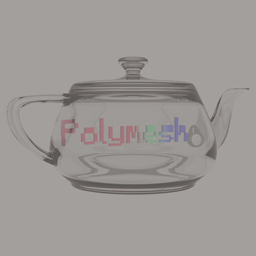
Polymesh
No reviews yet
Polymesh is a Forge/NeoForge 1.20.1 client runtime for rendering glTF 2.0 models from mod resources.
Community voices
Reviews
Click once to include, again to exclude, again to clear
No reviews yet. Be the first to review this project!
Get it on
Available Platforms
 CurseForge
 Modrinth
Compatibility
Supported Environments
About
Project Details
For authors
Embed Badge
If you're the author of this project, you can embed a live badge anywhere that supports HTML or Markdown. It updates automatically whenever ratings change.
Use HTML for any page that supports it, or Markdown for README files and Markdown-based descriptions.
Identifiers
Platform IDs
About
Description
Polymesh
Polymesh is a Forge/NeoForge 1.20.1 client runtime for rendering glTF 2.0 models from mod resources.
- Developer guide: docs/POLYMESH_PROJECT.md
- Releases: https://github.com/phe6/polymesh/releases
- Issues: https://github.com/phe6/polymesh/issues
Packaging
- Runtime library jar:
polymesh-1.0.0-forge.jar - Demo/test jar:
the_utah_teapot-1.0.0-forge.jar - CesiumMan proof jar:
cesium_man_demo-1.0.0-forge.jar - glTF assets are discovered under
assets/<modid>/models/gltf/*.gltfand*.glb.
Item Registration
Register the item normally, then register its glTF model during client setup:
PolymeshApi.registerItemRenderer(item, new ResourceLocation("mymod", "model_name"),
    GltfRenderOptions.builder()
        .scale(1.0f)
        .animationClip("Walk")
        .loopAnimation(true)
        .build());
The item still needs a custom renderer from initializeClient; return new GltfItemRenderer(theItem) there — it reads the model id and options registered above, so they live in exactly one place.
Runtime Notes
- Static non-skinned meshes are uploaded once to shared GPU buffers and reused by item instances.
- Skinned or morph-target item meshes use persistent VAO/VBO/EBO objects with dynamic vertex-buffer refreshes keyed by animation pose version. This avoids per-frame
VertexConsumertriangle emission and only recomputes deformed vertices when animation, skinning, or morph pose changes. - Normals from glTF are preserved. Missing normals are generated once at load time.
- Tangents from glTF are preserved. Missing tangents are generated when UVs are available for runtime data consumers.
- Embedded
.glbimages are registered as dynamic Minecraft textures during model load. - Resource reload clears GPU buffers and rebuilds loaded models.
- Item, entity, and block-entity renderers all share the same render backend (
PolymeshRenderer), which prefers the GPU static/animated paths and falls back to the CPU vertex-consumer path when needed (e.g. under an active shader pack). - glTF
extras, extension lists, node names, morph target names, and posed node transforms are kept available for game logic.
Supported Features
- glTF 2.0
.gltfwith relative buffers/images - binary
.glb - node hierarchy and TRS/matrix transforms
- materials with base color texture/factor and alpha modes
- skins, inverse bind matrices, morph targets, and animation channels for item rendering
- runtime node/bone lookup for attachment points, hitbox drivers, and gameplay code
- named morph target lookup and runtime morph weight overrides
- glTF
extrasmetadata on models, nodes, and materials
Demo Mods
teapotcontains the static Utah Teapot item plus a CesiumMan item.cesium-manis a minimal proof mod with only one animatedcesium_manitem backed byassets/cesium_man_demo/models/gltf/cesium_man.glb.
Shader Notes
Polymesh preserves the normals authored in the glTF asset and renders through vanilla-style entity render states. It does not claim shader-pack-side smooth-normal fixes; shader packs that derive lighting from their own geometry pipeline may still need shader-side support.
License
Polymesh — a glTF 2.0 model rendering library for Minecraft Forge/NeoForge 1.20.1 Copyright (C) 2026 Phe
This library is free software: you can redistribute it and/or modify it under the terms of the GNU Lesser General Public License as published by the Free Software Foundation, either version 3 of the License, or (at your option) any later version.
This library is distributed in the hope that it will be useful, but WITHOUT ANY WARRANTY; without even the implied warranty of MERCHANTABILITY or FITNESS FOR A PARTICULAR PURPOSE. See the GNU Lesser General Public License for more details.
You should have received a copy of the GNU Lesser General Public License along with this library (see LICENSE.LESSER and LICENSE). If not, see https://www.gnu.org/licenses/.
Bundled dependencies: jgltf (MIT) and Jackson (Apache-2.0) are repackaged inside the forge jar under their own licenses.
Polymesh
Polymesh is a Forge/NeoForge 1.20.1 client runtime for rendering glTF 2.0 models from mod resources.
- Developer guide: docs/POLYMESH_PROJECT.md
- Releases: https://github.com/phe6/polymesh/releases
- Issues: https://github.com/phe6/polymesh/issues
Packaging
- Runtime library jar:
polymesh-1.0.0-forge.jar - Demo/test jar:
the_utah_teapot-1.0.0-forge.jar - CesiumMan proof jar:
cesium_man_demo-1.0.0-forge.jar - glTF assets are discovered under
assets/<modid>/models/gltf/*.gltfand*.glb.
Item Registration
Register the item normally, then register its glTF model during client setup:
PolymeshApi.registerItemRenderer(item, new ResourceLocation("mymod", "model_name"),
    GltfRenderOptions.builder()
        .scale(1.0f)
        .animationClip("Walk")
        .loopAnimation(true)
        .build());
The item still needs a custom renderer from initializeClient; return new GltfItemRenderer(theItem) there — it reads the model id and options registered above, so they live in exactly one place.
Runtime Notes
- Static non-skinned meshes are uploaded once to shared GPU buffers and reused by item instances.
- Skinned or morph-target item meshes use persistent VAO/VBO/EBO objects with dynamic vertex-buffer refreshes keyed by animation pose version. This avoids per-frame
VertexConsumertriangle emission and only recomputes deformed vertices when animation, skinning, or morph pose changes. - Normals from glTF are preserved. Missing normals are generated once at load time.
- Tangents from glTF are preserved. Missing tangents are generated when UVs are available for runtime data consumers.
- Embedded
.glbimages are registered as dynamic Minecraft textures during model load. - Resource reload clears GPU buffers and rebuilds loaded models.
- Item, entity, and block-entity renderers all share the same render backend (
PolymeshRenderer), which prefers the GPU static/animated paths and falls back to the CPU vertex-consumer path when needed (e.g. under an active shader pack). - glTF
extras, extension lists, node names, morph target names, and posed node transforms are kept available for game logic.
Supported Features
- glTF 2.0
.gltfwith relative buffers/images - binary
.glb - node hierarchy and TRS/matrix transforms
- materials with base color texture/factor and alpha modes
- skins, inverse bind matrices, morph targets, and animation channels for item rendering
- runtime node/bone lookup for attachment points, hitbox drivers, and gameplay code
- named morph target lookup and runtime morph weight overrides
- glTF
extrasmetadata on models, nodes, and materials
Demo Mods
teapotcontains the static Utah Teapot item plus a CesiumMan item.cesium-manis a minimal proof mod with only one animatedcesium_manitem backed byassets/cesium_man_demo/models/gltf/cesium_man.glb.
Shader Notes
Polymesh preserves the normals authored in the glTF asset and renders through vanilla-style entity render states. It does not claim shader-pack-side smooth-normal fixes; shader packs that derive lighting from their own geometry pipeline may still need shader-side support.
License
Polymesh — a glTF 2.0 model rendering library for Minecraft Forge/NeoForge 1.20.1 Copyright (C) 2026 Phe
This library is free software: you can redistribute it and/or modify it under the terms of the GNU Lesser General Public License as published by the Free Software Foundation, either version 3 of the License, or (at your option) any later version.
This library is distributed in the hope that it will be useful, but WITHOUT ANY WARRANTY; without even the implied warranty of MERCHANTABILITY or FITNESS FOR A PARTICULAR PURPOSE. See the GNU Lesser General Public License for more details.
You should have received a copy of the GNU Lesser General Public License along with this library (see LICENSE.LESSER and LICENSE). If not, see https://www.gnu.org/licenses/.
Bundled dependencies: jgltf (MIT) and Jackson (Apache-2.0) are repackaged inside the forge jar under their own licenses.
Screenshots
Gallery
-
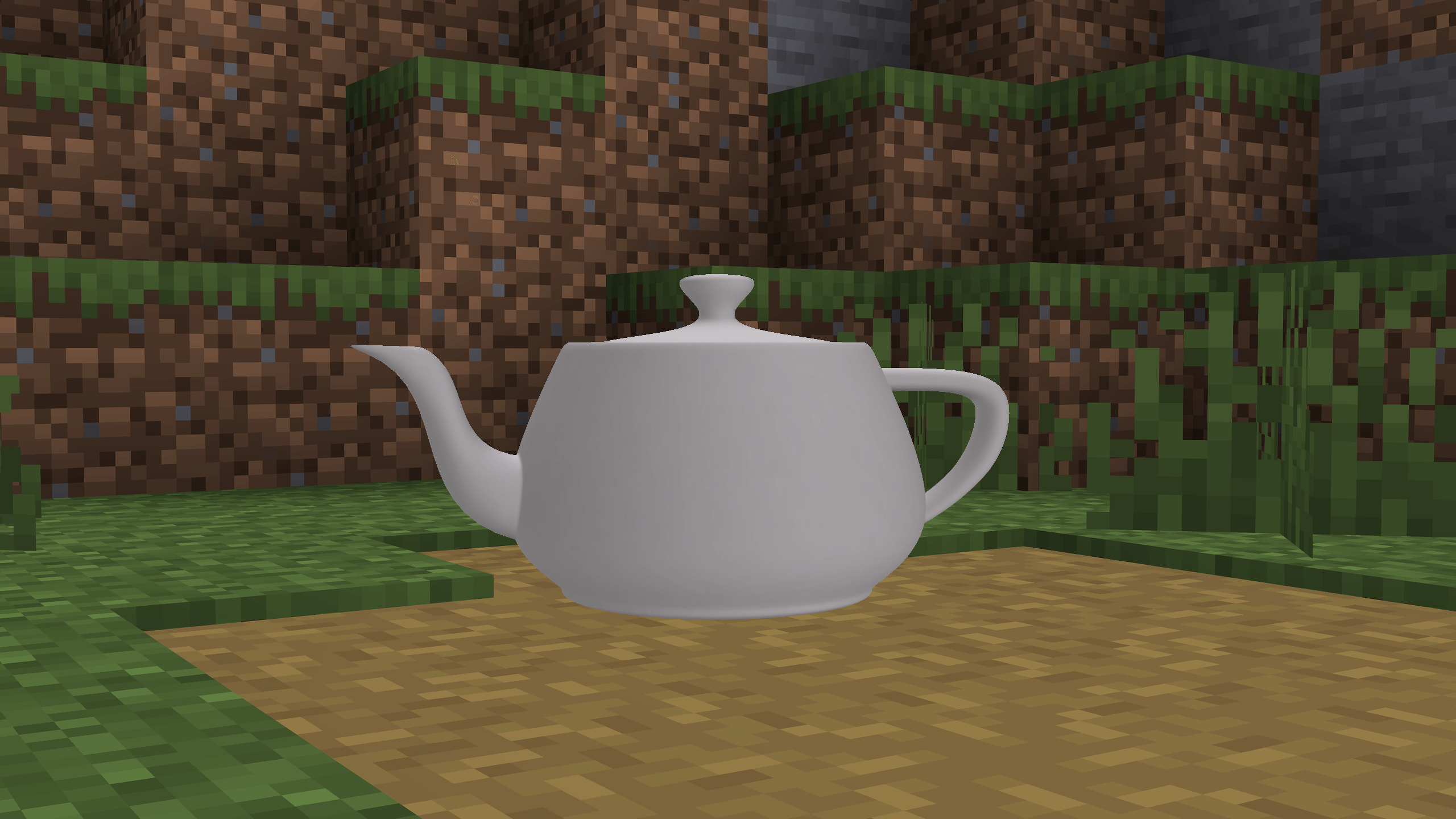 Teapot - Vanilla
-
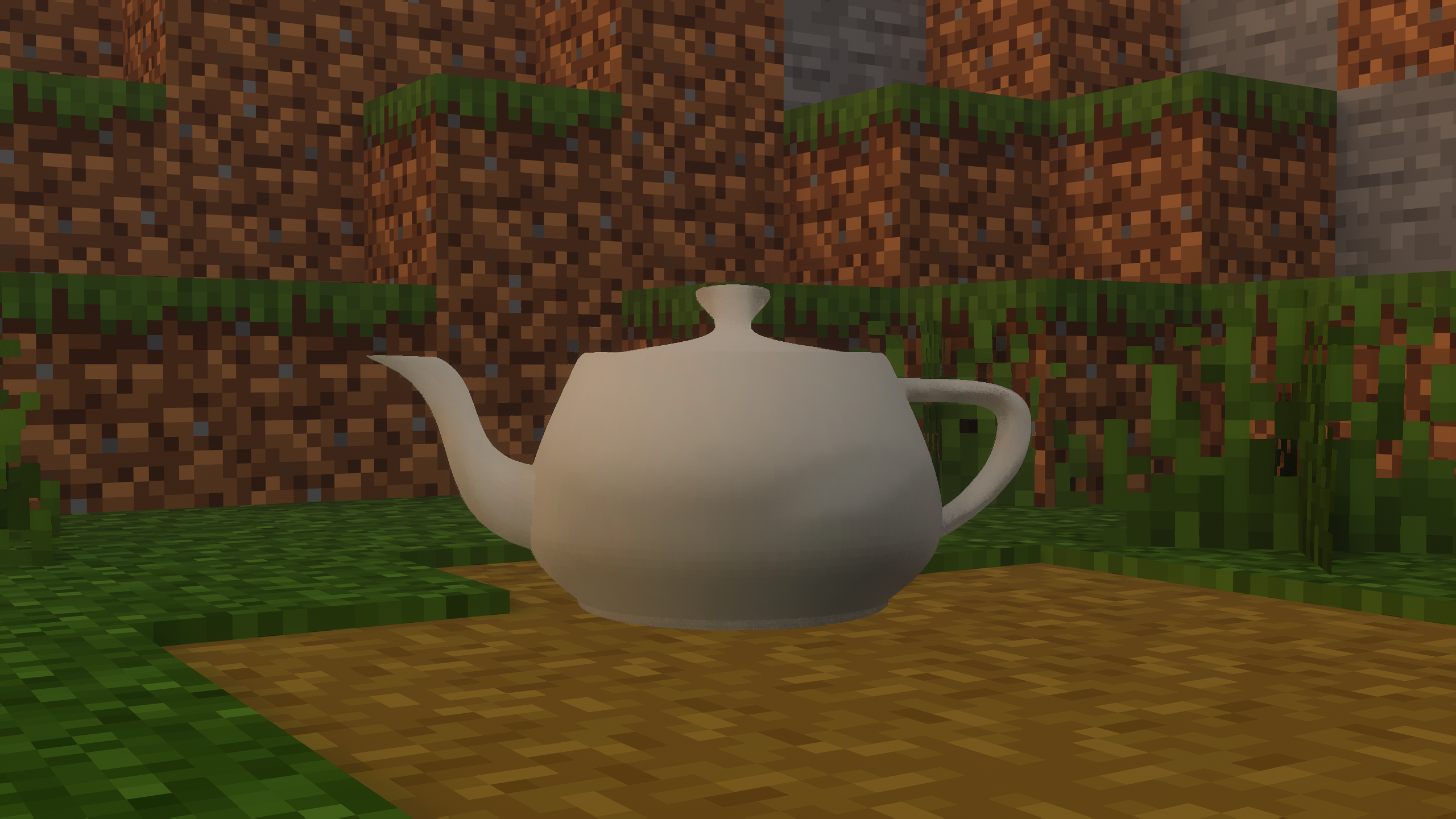 Teapot - Shaders Old screenshot. The new version support smooth normals with shaders.
 -
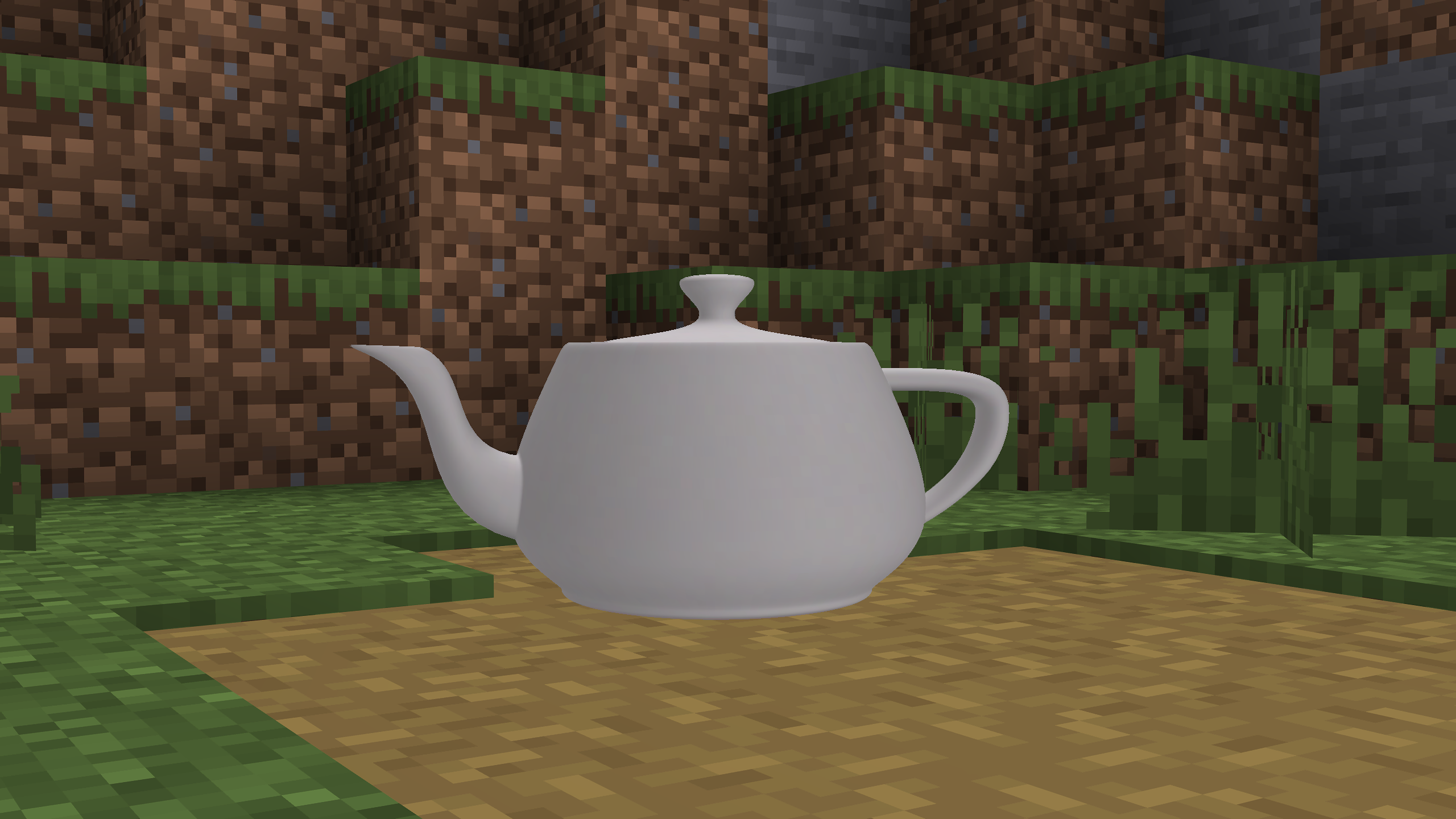 Teapot - Vanilla
Versions
Files
Relations
Project Relations
More like this
Similar Mods
Suggestions use data such as tags, dependencies, dependents, descriptions, titles, and more to rank how much they overlap with this mod.
On ModDex
Community snapshot
By the numbers
Statistics
Want to reach Minecraft players?
We're looking for a server hosting partner to feature here and other parts of the site. Interested? Send us a message!
Get in touchGet it on
Available Platforms
On ModDex
Community snapshot
By the numbers