
Rotwire
No reviews yet
A Zombie Survival take on Minecraft with infested cities. Establish a radio connection with the survivors to maintain your ammunition and resource supply. Migrate from town to town as their difficulty scales with your activity within each of them.
Includes a large focus on traversing worlds with enhanced world generation, structures, dungeons, and more for players to find unique loot.
General improvements to world generation, such as bug fixes, aesthetic overhauls, or misc additions.
Neoforge is a fork of the Minecraft Forge available for versions 1.20.1+ of Minecraft. Many Forge mods are compatible with Neoforge and vice versa.
Community voices
Reviews
Click once to include, again to exclude, again to clear
No reviews yet. Be the first to review this project!
Get it on
Available Platforms
 Modrinth
Compatibility
Supported Environments
About
Project Details
For authors
Embed Badge
If you're the author of this project, you can embed a live badge anywhere that supports HTML or Markdown. It updates automatically whenever ratings change.
Use HTML for any page that supports it, or Markdown for README files and Markdown-based descriptions.
Identifiers
Platform IDs
About
Description
modpack still under review
Rotwire
Rotwire is a Minecraft 1.21.1 NeoForge integration mod built for a curated urban zombie-survival experience. It began as a collection of systems for my own server, but has evolved into a standalone-capable progression layer for modpacks and multiplayer worlds.
Explore ruined Lost Cities, search furnished interiors for supplies and intelligence, clear persistent building encounters, confront the Rotwire Brute, and build a network of firearms, survival equipment, fast travel, and survivor logistics.
This project is primarily designed for servers, although it works in standalone worlds. The intended experience depends on server-side configuration, so review the /config files and adjust them to suit your preferred difficulty.
If you encounter problems, please report them in the issue tracker:
https://github.com/gev414/rotwire/issues
Rotwire may be a good fit if you want:
- dangerous Lost Cities exploration
- proximity-based building encounters that persist across saves and restarts
- safe buildings, infested buildings, and boss sites with different threat profiles
- persistent objectives instead of ordinary one-time mob spawns
- configurable instant-population or wave-based encounters
- a durable miniboss built around gunplay, positioning, movement, and solid cover
- firearms, ammunition, attachments, and weapon progression
- Tough As Nails thirst, water purification, and temperature mechanics
- infection and scheduled horde events
- restricted Waystones travel and infrastructure progression
- radio-gated FTB Quests contracts
- delayed courier deliveries and player-selectable weapon rewards
- an in-game Patchouli field manual explaining the survival systems
For Distant Horizons
Set the distantGeneratorMode option to PRE_EXISTING_ONLY. Otherwise, Distant Horizons may attempt to generate terrain independently of Lost Cities and cause problems with Lost Cities buildings.
The setting is located in:
/config/DistantHorizons.toml
Shader compatibility
I currently use Bliss Shaders, which work well with PointBlank firearms and Distant Horizons.
Some other shaders may cause visual problems with PointBlank weapons, especially while firing. Photon, for example, has produced issues in testing. Shader compatibility can vary between versions and hardware.
Lost Cities profile
A Lost Cities profile is not included with Biohazard.
You can use the ancient profile included with The Lost Cities, or create your own profile using Lost Cities' customization options and documentation.
Biohazard detects real Lost Cities building metadata and layers encounter behavior on top of generated structures. It does not replace Lost Cities' world-generation system.
The survival loop
The intended gameplay loop is built around preparation, controlled exploration, and long-term progression:
- Establish a shelter and secure a reliable water supply.
- Activate Waystones and prepare travel routes.
- Build a Radio Transmitter and connect to the Survivor Network.
- Approach Lost Cities buildings carefully and determine whether they are safe, infested, or hiding a boss.
- Search cleared structures for documents, research, encrypted intelligence, food, medical supplies, firearms, and ammunition.
- Return to a calibrated transmitter to accept contracts, submit evidence, and transmit field reports.
- Wait for courier deliveries, then use the radio to collect supplies or choose from available weapon rewards.
- Prepare for infection, temperature exposure, and the next horde night.
The result is a progression loop where city exploration supplies the information and materials needed to unlock better equipment, while the Radio Transmitter turns successful expeditions into repeatable support.
Infested Buildings
Eligible Lost Cities buildings become persistent encounters when a player approaches them. Biohazard activates only the nearest building within the configured activation radius for each player, preventing every structure in a dense city from activating at once.
Each building is materialized once and receives a persistent outcome:
- safe
- regular infestation
- boss site
- cleared encounter
Encounter state is saved with the world and survives players leaving the area, world saves, and server restarts.
Active buildings:
- lock configured randomized containers until the encounter is cleared
- use persistent encounter markers to track their own enemies
- enforce a configured kill target
- restrict regular enemy replacement according to the selected spawn mode
- remain active until their objectives are completed
- unlock their containers after the encounter is cleared
By default, newly discovered infested buildings use instant population mode. A regular target normally requires between 8 and 15 zombie or husk kills. The selected population is placed as the encounter begins, and successfully placed enemies are not replaced after they are killed.
Server operators can switch newly discovered encounters to wave mode. Wave mode maintains up to the configured active-enemy cap and replaces enemies over time until the kill target is reached.
The encounter mode is saved when a building is first discovered, so changing the server setting does not rewrite encounters already in progress.
Some buildings can contain a Biohazard Brute. Large multi-chunk buildings have their own Brute chance and may become boss sites even when they do not receive a regular infestation.
Players receive a warning when a Brute is about to arrive, and the building announces when it has been cleared.
City operations
City operations turn cleared Lost Cities buildings into shared local progress. A Radio Transmitter is the terminal for that progress: it maps the surrounding city, reports its condition, and is required when a Survivor Network contract uses a city-operation objective.
Player loop
- Place a Radio Transmitter in or near a Lost Cities city.
- Leave it in place while it calibrates and maps connected city chunks. Both processes begin on placement and must finish before the radio connects.
- Interact with the connected radio to open the Survivor Network.
- Open the compact
< CITYtab beside the right side of the quest screen to review the mapped city's status. SelectCITY >to collapse it. - Clear encounter buildings in that city. The city's cleared-building total, danger level, and infected health bonus update as progress grows.
The default calibration duration is 60 seconds. During setup, the radio can report either a remaining calibration time or a city-grid survey count in chat. The survey is deliberately paced across server ticks to avoid a large generation spike. A transmitter is usable only after both jobs complete.
What counts as a cleared building
Only an encounter that reaches CLEARED adds one unique building to city
progress. A building selected as SAFE does not count, and revisiting an
already cleared building does not add progress again.
For a regular encounter, all marked encounter infected must be defeated. For an encounter that includes a Brute, killing the marked Brute immediately finishes and clears that building. This deliberately avoids asking players to hunt down a stray regular infected after the boss is dead.
Progress belongs to the city zone, not to an individual transmitter. Multiple radios mapped to the same city report the same total. A radio outside a mapped Lost Cities zone still provides ordinary Survivor Network access, but reports that no city zone is mapped and cannot accept a city-operation objective.
Danger and infected scaling
By default, every five unique cleared encounter buildings increase the city's danger by one level, up to level 12. Each level adds 10% of base maximum health to tagged infected; the Brute has a separate setting with the same default.
| Cleared buildings | Default danger | Default maximum-health bonus |
|---|---|---|
| 0-4 | 0 | +0% |
| 5-9 | 1 | +10% |
| 10-14 | 2 | +20% |
| 15-19 | 3 | +30% |
Danger applies inside the mapped city and, by default, a five-chunk (80-block) perimeter around it. When a city gains a level, loaded tagged infected are upgraded immediately; unloaded ones are updated the next time they load. Once an infected has received a higher city danger level, it does not lose that health bonus merely by leaving the city.
City status drawer
The radio sends a snapshot when it opens the Survivor Network. The drawer contains:
- Buildings cleared - unique encounter buildings that count for this city.
- Danger level - current and maximum configured danger.
- Infected health - the current normal-infected maximum-health bonus.
- Clears to next level - the number of additional unique clears required before the next danger increase.
The drawer is intentionally collapsed by default so the FTB Quests map and contacts remain usable. It is a report from the radio interaction, not a live HUD tracker; reopen the radio to request an updated snapshot after making progress.
Encumbrance and carried weight
Everything you carry now matters: inventory stacks, armor, offhand equipment, and the contents, tools, upgrades, and fluids of an equipped Traveler's Backpack all contribute to your load. Four weight tiers apply increasingly serious movement penalties, while a compact survival HUD and an inventory weight bar show your current burden; hover the inventory indicator to see the live tier thresholds and penalties used by the server.
Stealth and progressive detection
Travel light and crouch to move quietly through the infected city. Quiet survivors are not automatically selected as targets, but infected that see them build suspicion over time, with close encounters causing immediate detection and Brutes noticing much faster; the EXPOSED status simply means the quiet conditions are not currently met, while horde-spawned infected always know whom they are hunting.
Noise and infected attention
Combat and scavenging can pull danger toward you even before you are seen. Suppressed gunfire draws infected within 12 blocks, unsuppressed shots carry across a much larger area, and melee attacks or breaking durable blocks create their own investigation sounds, forcing survivors to weigh speed and firepower against the risk of waking the street.
The Biohazard Brute
The Brute is a durable hostile boss intended to reward careful positioning, effective firearm use, and deliberate movement.
It features:
- a large health pool
- strong knockback resistance
- high melee damage
- long-range target acquisition
- block-breaking behavior
- a combat boss bar
- a ranged rock attack
- persistent encounter ownership
The rock attack includes:
- a visible wind-up period
- direct impact damage
- knockback
- a line-of-sight splash effect
- an impact area that can injure nearby players
- counterplay through movement and solid cover
When the Brute begins engaging a player, its boss bar becomes visible to relevant combat participants. Do not rely on a thin wall to protect you: the Brute can break through blocks and punish players who remain grouped together.
Use the warning period to reload, create distance, establish a lateral escape route, and identify solid cover before the fight begins.
A defeated Brute awards experience and drops encrypted intelligence. Encrypted intelligence is valuable to the Survivor Network and can be exchanged through later firearm, equipment, and infrastructure contracts.
Horde events and infection
The Hordes controls the authoritative horde schedule, infection system, and horde spawning behavior.
By default, a horde arrives every fifth day. Warning fog begins building around midday before the midnight event, giving players time to return to shelter, restock, reinforce defenses, and prepare escape routes.
Horde behavior may vary according to the installed The Hordes configuration and biome. Ocean regions can shift the event toward drowned, except in frozen oceans.
Infection is a persistent threat that becomes more dangerous when ignored. Biohazard adds two medical items integrated with The Hordes:
- Antiviral Suppressant: extends the current infection stage and grants temporary immunity.
- Complete Infection Cure: completely removes an active infection but does not prevent future exposure.
The Medic's Survivor Network contracts provide an additional route to medical supplies.
Starter Loadout
Each player receives the following equipment once:
- 1× PointBlank Glock 17
- 17× 9mm ammunition
- 1× Tough As Nails empty leather canteen
- 1× Survivor's Field Manual
Hydration and temperature
Tough As Nails is configured as a core survival system.
In the intended setup:
- hand drinking is disabled
- players use canteens to carry water
- canteens can be filled without consuming a protected source block
- untreated water can cause problems if consumed repeatedly
- water purifiers allow routine access to purified water
- thirst affects sprinting and natural healing
- temperature must be monitored during long expeditions
- shelter, clothing, equipment, and climate-control infrastructure become important over time
Build a water purifier early and avoid treating thirst or temperature as systems that can be ignored until the HUD becomes critical.
Survivor's Field Manual
Biohazard includes a Patchouli-powered Survivor's Field Manual containing guidance for:
- first-day priorities
- starter equipment
- PointBlank firearms and ammunition
- firearm controls and attachments
- water, canteens, and purification
- thirst and temperature
- Waystone activation and travel
- Warp Stones and Warp Plates
- horde events and infection
- infested buildings
- instant and wave encounter behavior
- Brute combat and rock attacks
- Radio Transmitters
- Survivor Network contacts
- courier deliveries and weapon requisitions
The manual uses live item, crafting, and recipe pages where the installed mods provide compatible recipes.
Survivor Network and Radio Transmitters
FTB Quests provides the Survivor Network interface and contract journal.
A Radio Transmitter is required for radio operations. After being placed or relocated, it must calibrate before use. By default, calibration takes 60 seconds.
The quest book can be viewed away from a transmitter, but the following actions require a nearby calibrated radio:
- accepting a contract
- transmitting a completion report
- submitting physical items
- collecting ready deliveries
- selecting an item from a choice delivery
The default interaction range is 6 blocks and can be changed in the Rotwire radio quest configuration.
The Survivor Network includes several contacts:
- Dr. Mara Voss, the Medic, provides medical supplies and infection treatment.
- Elias Ward, the Quartermaster, provides ammunition resupply.
- Rook, the Arms Broker, provides firearms, weapon requisitions, attachments, and Brute bounties.
- Nadia Vale, the Surveyor, provides Waystone and rail infrastructure.
Contracts may require:
- documents
- research data
- encrypted intelligence
- infected tissue
- food and provisions
- compass components
- gold
- Brute kills
- other recovered field materials
Radio submissions are checked atomically. If the complete required submission is not present, the contract does not consume partial items.
Courier deliveries
Contract rewards are delivered through a persistent courier system instead of appearing immediately in the player's inventory.
After a contract is transmitted:
- a courier order is created
- the reward is generated from a server loot table
- a category-based delay begins
- the delivery continues counting down through server game time
- the delivery survives server restarts
- the player returns to a calibrated transmitter to collect the package
Default delivery categories include:
- supplies
- ammunition
- medical
- equipment
- firearms
Some firearm contracts provide a selection of several available weapons. Others provide a random weapon from the relevant requisition pool. Generally, firearms and ammunition should be supplied through these tasks.
Delivery timers use server game time. Leaving the world does not advance the countdown unless the server itself continues running.
Waystone Scrolls
Biohazard disables the crafting recipes and recipe-book advancements for:
- Blank Scrolls
- Return Scrolls
- Warp Scrolls
- Portal Scrolls
Blocking the use of existing or command-created scrolls requires an additional rule in waystones-common.toml.
Waystone XP costs, Warp Stone level costs, Warp Plate costs, and scroll refusal are controlled by the server's Waystones configuration. These settings are not embedded in the Biohazard JAR.
Waystones remain useful, but travel is intentionally gated through exploration, configuration, and Survivor Network progression.
External Configuration
The intended Biohazard experience uses configuration outside the mod JAR, including:
config/biohazard-encounters.tomlconfig/biohazard-radio-quests.tomlconfig/biohazard-client.tomlconfig/waystones-common.toml- Tough As Nails thirst and temperature configuration
- The Hordes schedule, spawning, and infection configuration
- PointBlank content packs and recipes
- server-specific Lost Cities settings
- optional Lost Cities Modern Tweaks settings
- Distant Horizons settings
Important encounter settings include:
- haunted-building chance
- Brute chance
- large-building Brute chance
- instant or wave spawn mode
- activation radius
- encounter scan interval
- kill targets
- active regular-mob cap
- spawn distance and spawn attempts
- container locking
- regular mob pools
- excluded building IDs
The dedicated server's configuration is authoritative in multiplayer.
If you are installing Biohazard outside its official modpack or server package, review the Survivor's Field Manual and update the configuration to match your intended experience.
Required Environment
- Minecraft 1.21.1
- NeoForge 21.1.235 or newer
- Java 21
Required Mods
| Mod | Minimum/tested version | Purpose |
|---|---|---|
| The Lost Cities | 1.21-8.3.10 | Ruined-city generation and building metadata |
| Handcrafted | 4.0.3 | Furniture used in Biohazard's Lost Cities interiors |
| Patchouli | 1.21.1-93-NEOFORGE | Survivor's Field Manual |
| PointBlank | 2.2.0 | Firearms, ammunition, manufacturing, attachments, and rewards |
| Tough As Nails | 10.1.0.13 | Hydration, temperature, purification, and the starter canteen |
| The Hordes | 1.6.3c | Horde events and infection systems |
| Waystones | 21.1.36 | Waystones, Warp Stones, Warp Plates, and travel progression |
| FTB Quests | 2101.1.27 | Survivor Network contracts and courier deliveries |
!! FTB QUESTS must be downloaded from curseforge !!
Optional Compatibility Mod
| Mod | Tested version | Purpose |
|---|---|---|
| Lost Cities Modern Tweaks | 2.0.7 | Additional Lost Cities interior and railway compatibility content |
Supporting Libraries
The required mods also need their own libraries. The tested Biohazard environment includes:
- GeckoLib 4.9.2
- GML 6.0.2
- GlitchCore 2.1.0.2
- Atlas Lib 1.21.0-1.1.14
- Balm 21.0.60
- Resourceful Lib, as required by the installed dependency set
Use the versions selected by the official Biohazard pack whenever possible. Modrinth may install some declared libraries automatically, but PointBlank's scripting runtime and content-pack requirements should be checked explicitly.
Compatibility
Biohazard is incompatible with Lost Souls because both mods manage encounters inside Lost Cities buildings.
Client and server should use the same Biohazard version and required mod set.
Biohazard was designed around a specific server and modpack configuration. Installing only the Biohazard JAR will not reproduce every rule described in the Survivor's Field Manual.
Installation
For the complete intended experience, install the official Biohazard modpack or server package.
For manual installation:
- Install Minecraft 1.21.1 with NeoForge 21.1.235 or newer.
- Install every required mod and supporting library.
- Place the Biohazard JAR in the client and server
modsdirectories. - Install the optional compatibility mods you intend to use.
- Deploy the intended server configuration separately.
- Restart the client and server completely.
- Create or select a compatible Lost Cities profile.
- Confirm that the Survivor's Field Manual, Radio Transmitter, and starter advancement are available.
Do not replace the server configuration while it is running.
Screenshots
Gallery
-
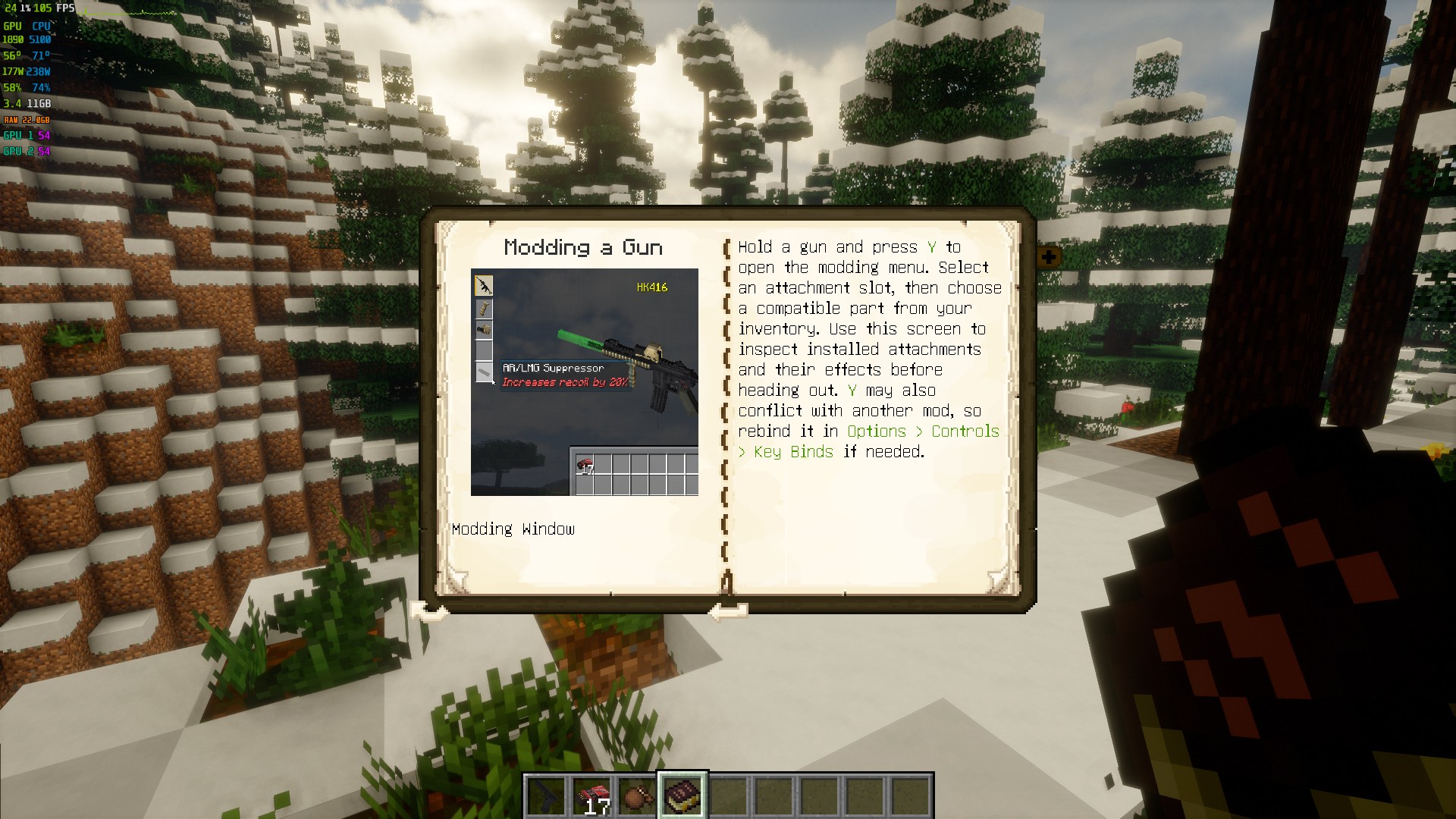 survivor's field manual page
 -
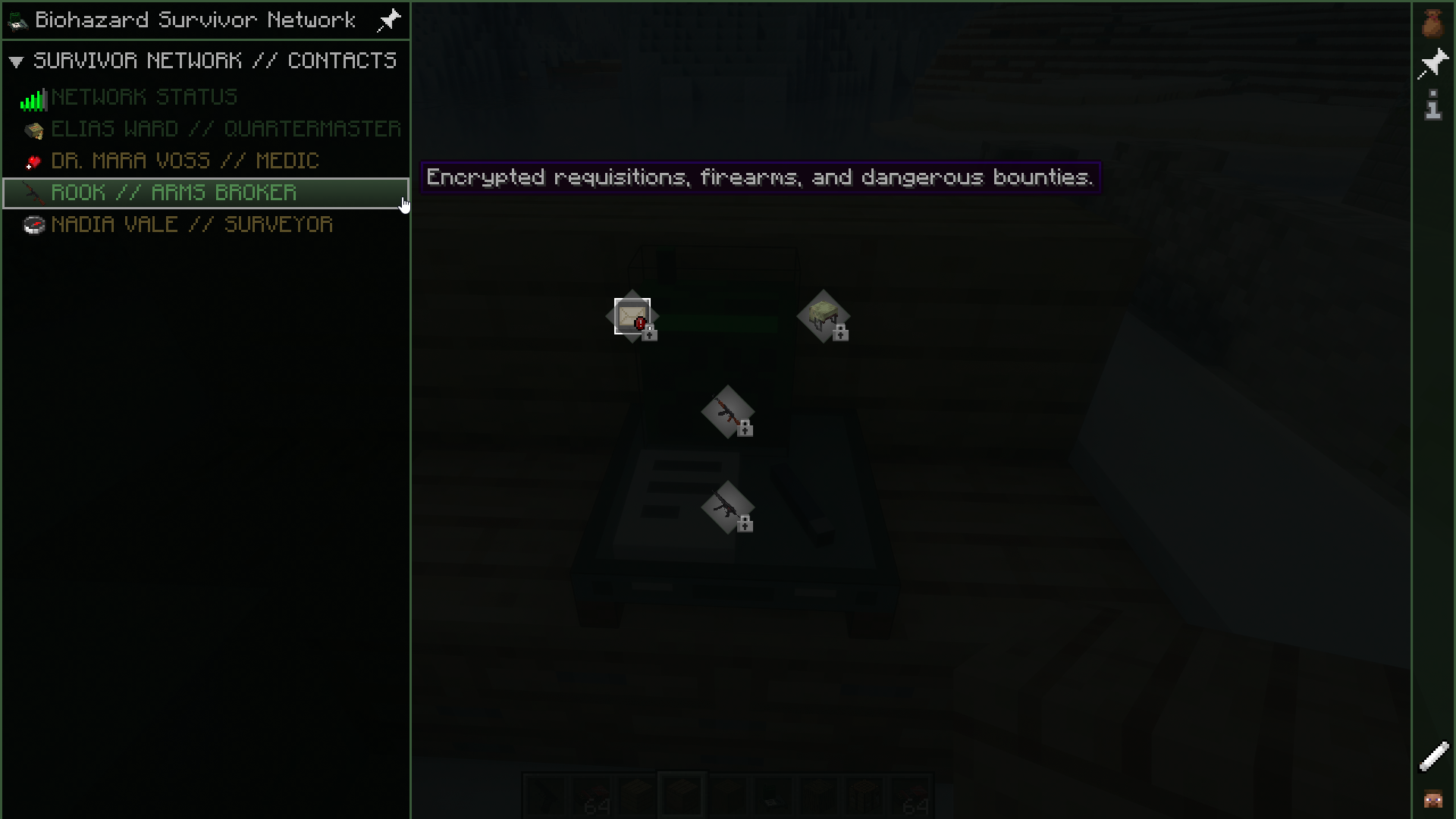 survivor network tasks interface
 -
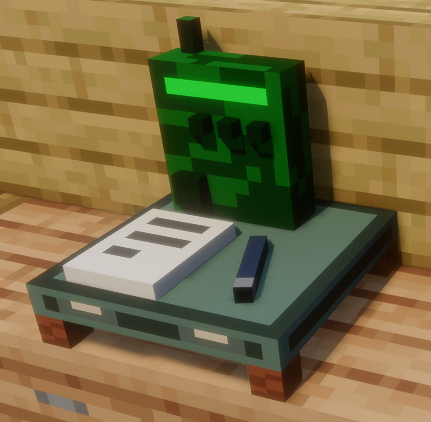 radio-transmitter Introduces quests in the form of tasks from various traders.
 -
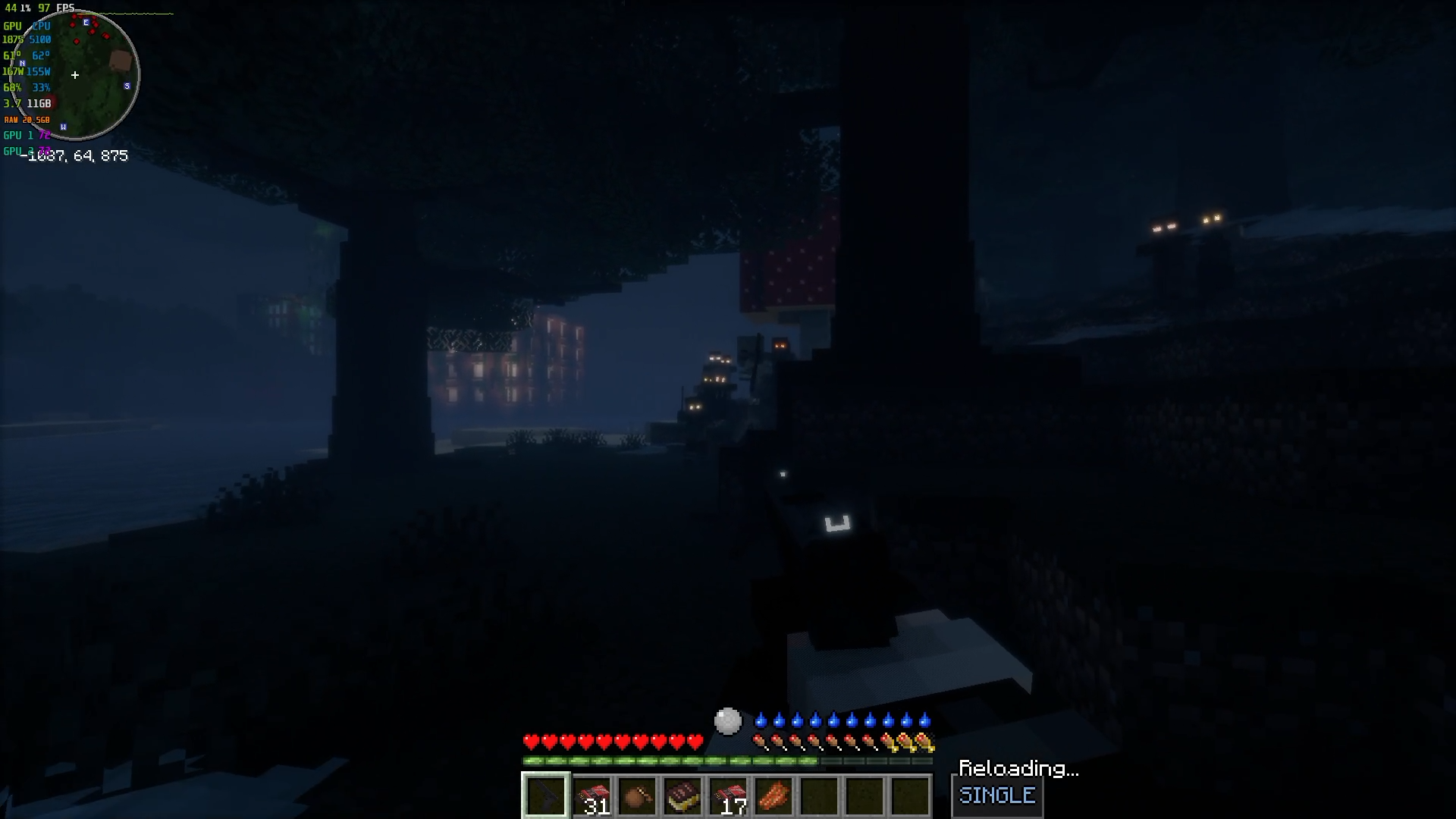 horde night
 -
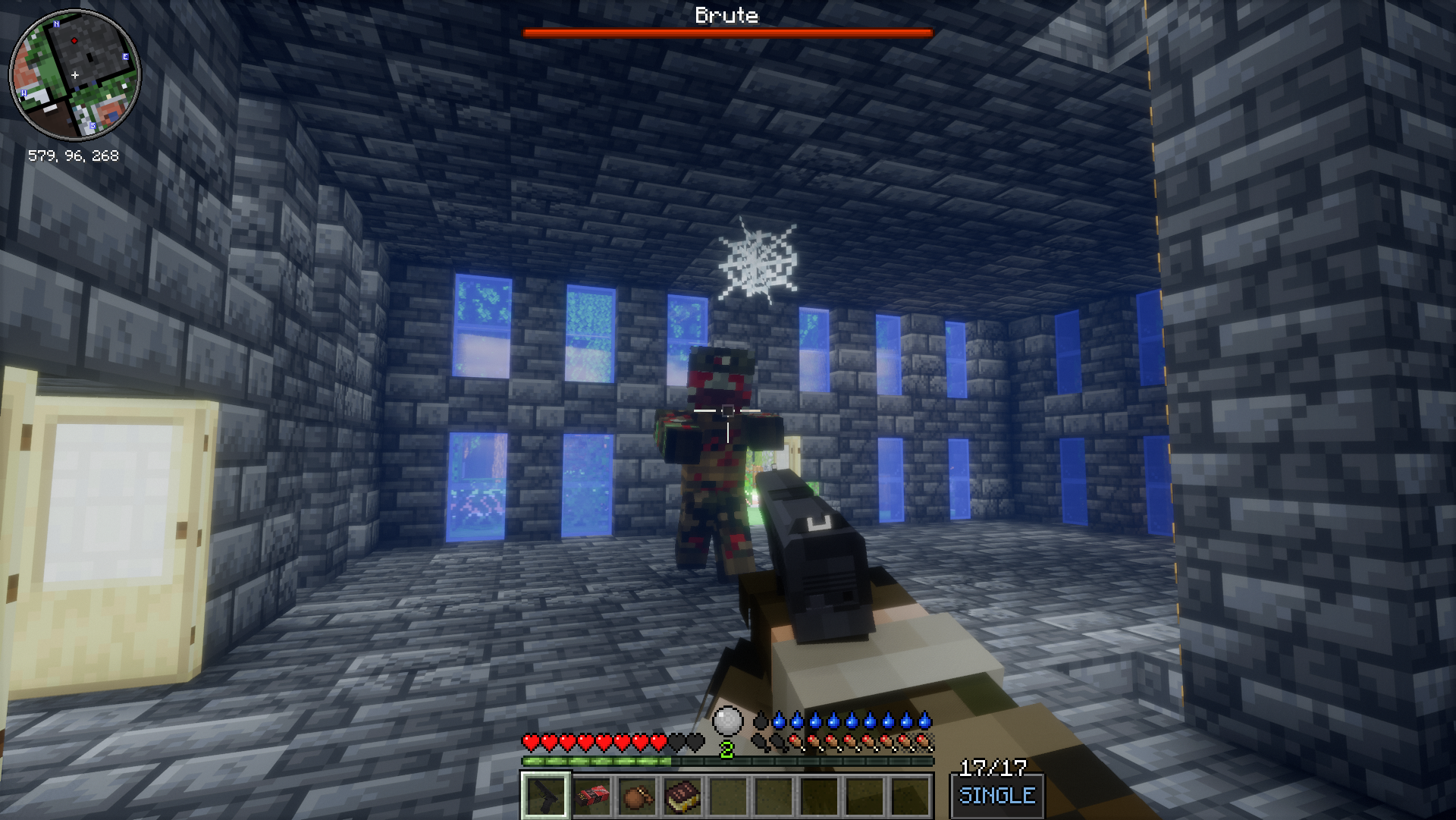 Brute miniboss
 -
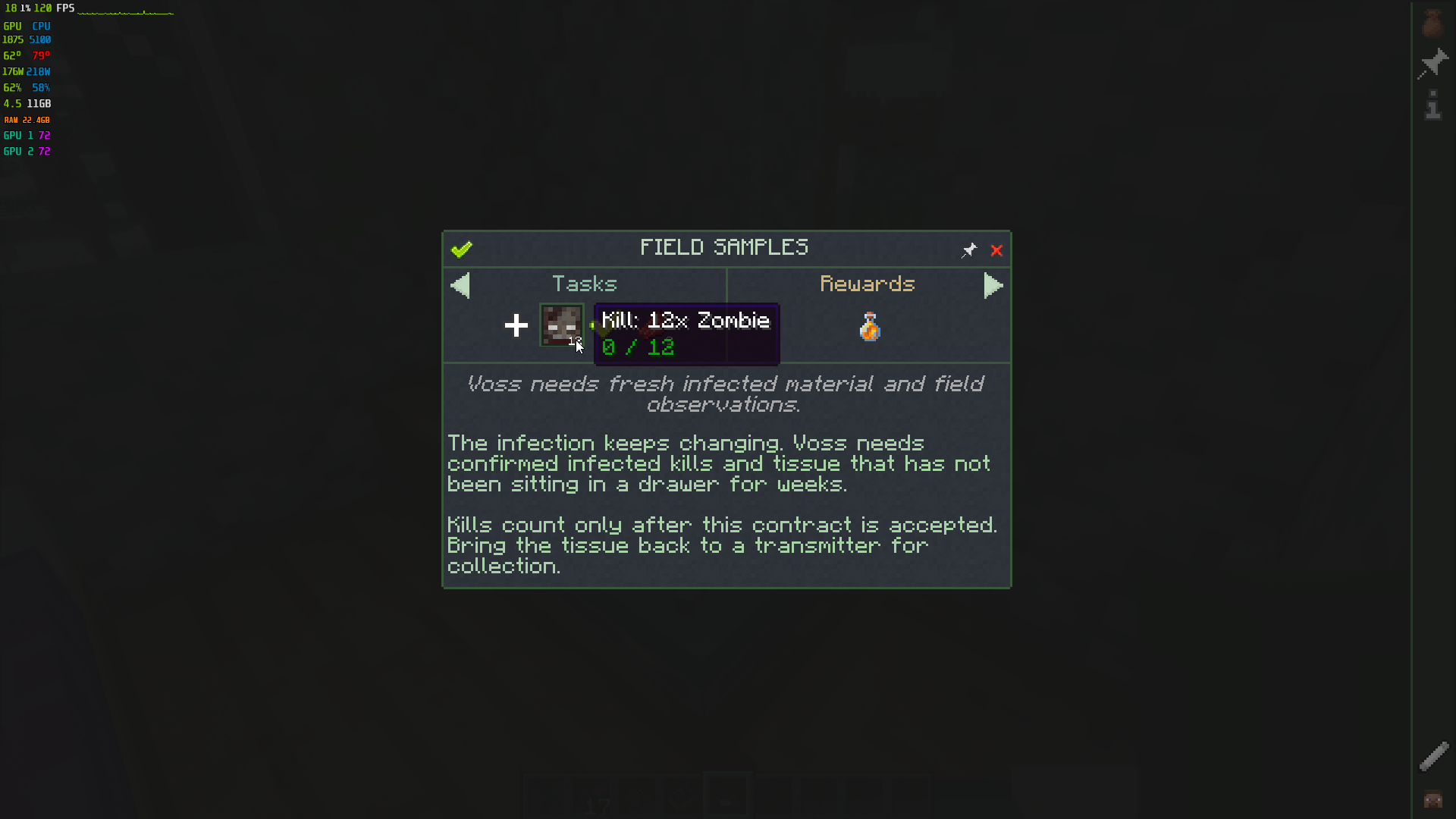 task example
 -
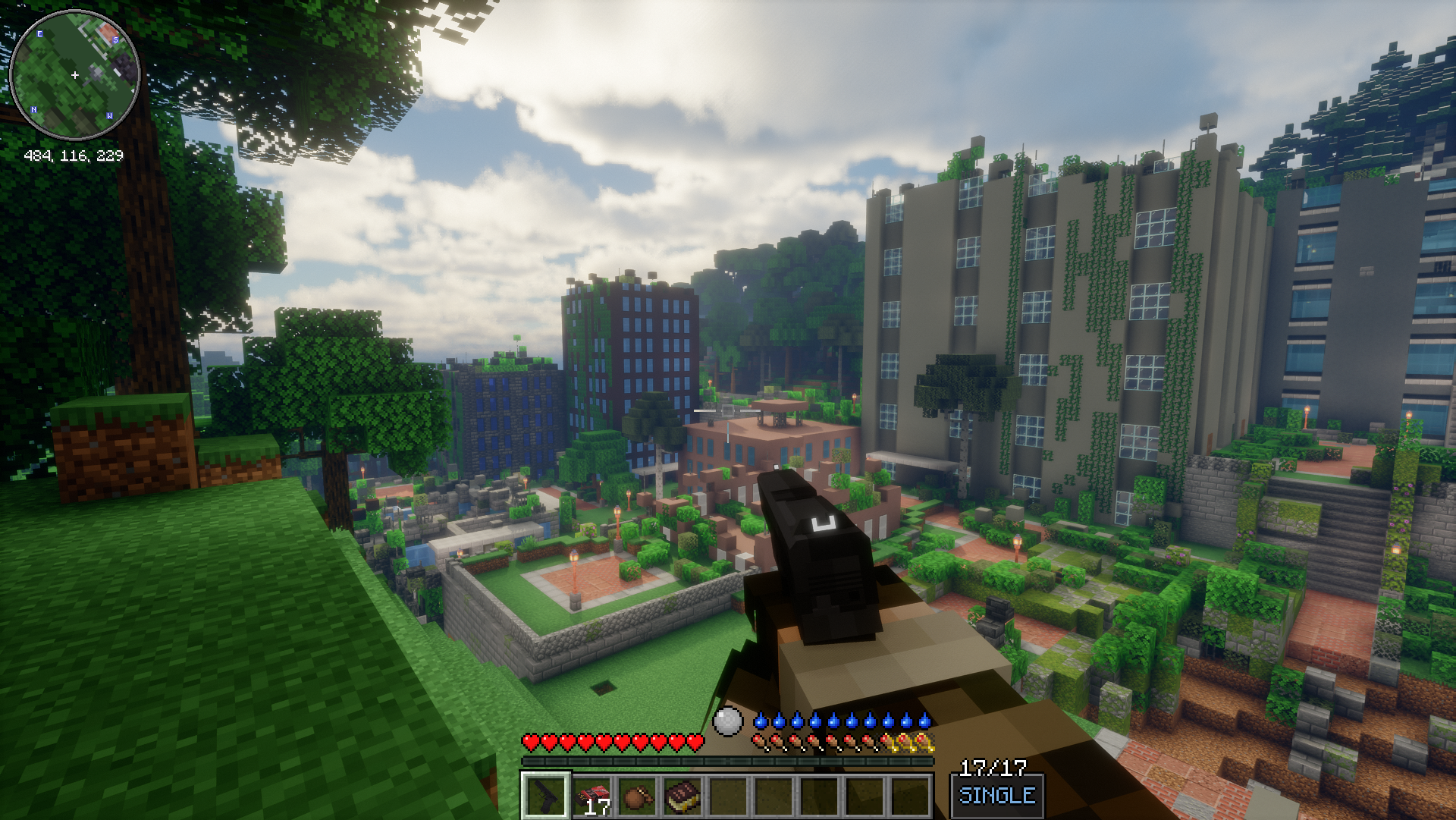 small city poi
 -
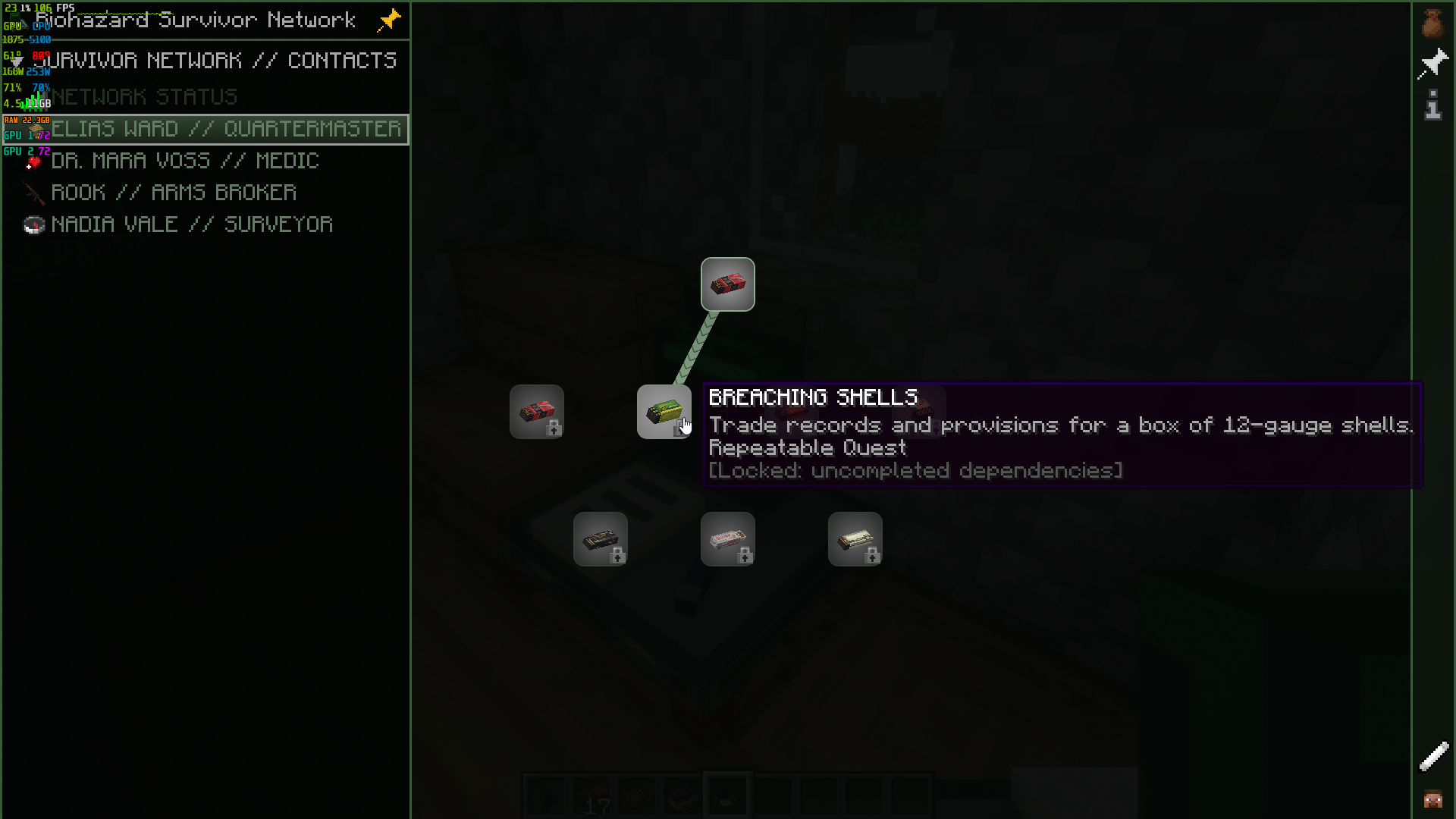 tasks interface 2
 -
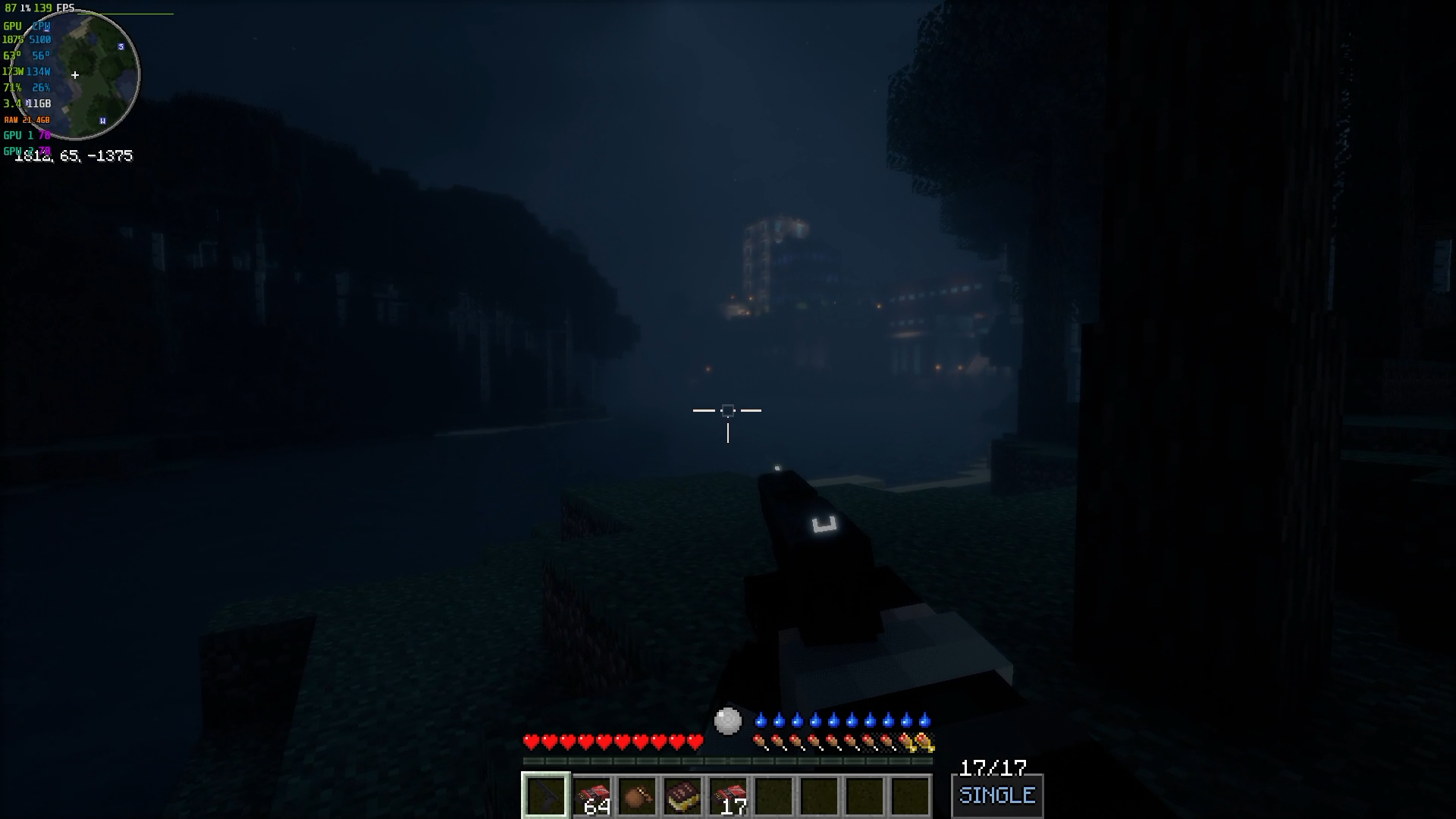 Horde Night Heavy Fog Instead of an intrusive text warning you that tonight is horde night, a heavy fog rolls out progressively as midnight comes
Versions
Files
Relations
Project Relations
More like this
Similar Mods
Suggestions use data such as tags, dependencies, dependents, descriptions, titles, and more to rank how much they overlap with this mod.
On ModDex
Community snapshot
By the numbers
Statistics

Want to reach Minecraft players?
We're looking for a server hosting partner to feature here and other parts of the site. Interested? Send us a message!
Get in touchGet it on
Available Platforms
On ModDex
Community snapshot
By the numbers