
Community listing page, reviews may not be monitored by the author.
Sleepium

No reviews yet
A performance engine for servers and clients that keeps the game exact: idle ticks put to sleep, a compiled event bus, parallel worldgen, a fast renderer with its own shaderpack support (beta).

Community voices
Reviews
No reviews yet. Be the first to review this project!
Get it on
Available Platforms
About
Project Details
For authors
Embed Badge
If you're the author of this project, you can embed a live badge anywhere that supports HTML or Markdown. It updates automatically whenever ratings change.
Use HTML for any page that supports it, or Markdown for README files and Markdown-based descriptions.
Identifiers
Platform IDs
Resources
External Links
About
Description
Sleepium
A performance engine for Minecraft 1.21.1 (NeoForge) and 1.20.1 (Forge) that makes servers and clients cheaper to run without changing what the game computes.
⚠ Using C2ME? Use Sleepium 1.1.4 or newer, and check your world
Before 1.1.4, Sleepium together with C2ME (or another mod that saves chunks on its own threads) could save chunks with parts missing. That was my bug, found and fixed in 1.1.4. Signs of it: No key palette in MapLike[{}] in the log, chunks that look hollow or do not appear.
1.1.4 saves correctly (tested: a world generated with C2ME, the game restarted, every chunk read back without an error), but it cannot restore data that was never written. If you played with C2ME on an older version, regenerate the broken chunks: delete them with MCA Selector, or the region files of that area in saves/<world>/region, or start a new world. Anything built in those chunks is lost when they regenerate.
A hopper with nothing to do, a resting item stack, a furnace waiting for fuel: in vanilla each of them runs its full tick 20 times a second only to find out that nothing happened. Sleepium proves from the class's own bytecode and from what it observes that a tick only moves clocks, takes the object off the tick ("puts it to sleep") and wakes it at exactly the tick vanilla would have acted. Around that idea sit an event engine, exact memos and indexes, parallel world generation, batched chunk I/O, and a renderer that keeps frames pixel-identical.
Every optimisation is checked against vanilla: a scene runs twice from the same seeds, once with the optimisations off and once on, and after the same number of ticks every block, block entity and every field of every entity is hashed. On the client, rendered frames are hashed.
Numbers
Intel N100 (4 cores, 6 W, Intel UHD Graphics), server milliseconds per tick, lower is better:
| scene | vanilla | Sleepium | |
|---|---|---|---|
| 4 000 item stacks | 109.6 | 8.0 | ×13.7 |
| 1 024 idle hoppers | 2.78 | 0.73 | ×3.8 |
| items among sliding minecarts | 36.97 | 10.82 | ×3.4 |
| 1 024 furnaces | 1.25 | 0.55 | ×2.3 |
| water and lava flowing | 10.43 | 5.15 | ×2.0 |
| 300 farm animals + 50 villagers | 18.48 | 10.00 | ×1.8 |
Client, entity / block-entity scene (armour stands, item frames, chests, signs, skulls):
- Intel N100: 39 → 117 fps, garbage 3 952 → 113 KiB per frame
- Ryzen 7 5800X + RTX 4070 SUPER: 67 → 1 514 fps; 300 animated mobs 175 → 1 782 fps
New in 1.1.11: tall-world datapacks generate up to 2x faster
Datapacks such as JJThunder To The Max make the game recompute "climate" values that do not depend on height for every 4x4x4 cell of a very tall column. Sleepium now reads the datapack's functions, finds those parts and computes them once per column - the same world, block for block and biome for biome.
| JJThunder To The Max + Chunky, chunks per second | vanilla | Sleepium 1.1.10 | Sleepium 1.1.11 |
|---|---|---|---|
| 1.21.1 | 37 | 108-116 | 195-233 |
A normal world and Biomes O' Plenty are unchanged (their climate is already computed once per column).
New in 1.1.10: a fix for world generation far out
On 1.21.1, generating new land far from the world's centre was slower with Sleepium than without it: each new mob's move from the centre to its place made Sleepium check everything in between. Fixed:
| 576 new chunks 64 000 blocks from the centre, chunks per second | vanilla | Sleepium 1.1.9 | Sleepium 1.1.10 |
|---|---|---|---|
| 1.21.1 | 55 | 20-34 | 123-126 |
| next to ModernFix, Fast Noise and Lithostitched | 66-81 (those mods alone) | 31-33 | 105-126 |
Long teleports were slowed the same way (less) and are fixed too.
1.20.1: moving blocks up to 1.9x faster. Blocks moved by pistons and falling blocks are now drawn from a cache, as on 1.21.1:
| A scene with many moving pistons, 1.20.1 | Sleepium 1.1.9 | Sleepium 1.1.10 |
|---|---|---|
| fps | 790-979 | 1 515-1 552 |
| slowest frames (p99), ms | 5.7-6.4 | 2.9-3.3 |
Also, on both versions: blocks moved by pistons no longer show the light of a moment ago for a frame.
New in 1.1.9: a fix for ImmediatelyFast
1.1.8 was slower next to ImmediatelyFast (in most modpacks): items were prepared for the graphics card and then drawn again the normal way. Fixed - items, and on 1.20.1 also transparent entities, now go to the graphics card next to it:
| 1 128 dropped items + 1 081 experience orbs, next to ImmediatelyFast | Sleepium 1.1.7 | Sleepium 1.1.8 | Sleepium 1.1.9 |
|---|---|---|---|
| fps, 1.21.1 | 1 057 | 498 | 1 765 |
Also: entities that a mod adds from a world-generation thread go into the chunk being generated or onto the server thread (GitHub #4), and a new setting, off by default, ObservedModSleep - mods' machines that the analysis cannot follow sleep on what Sleepium observes, as before 1.1.8.
New in 1.1.8: items and experience orbs
Dropped items, items in frames and in mobs' hands are drawn by the graphics card from video memory, and experience orbs and items collide with blocks for less (every result the same as vanilla's).
| vanilla | Sleepium 1.1.7 | Sleepium 1.1.8 | |
|---|---|---|---|
| 1 128 dropped items + 1 081 experience orbs on the ground, fps, 1.21.1 | 182 | 1 066 | 2 094 |
| the same, fps, 1.20.1 | 128 | 980 | 1 621 |
| 2 000 experience orbs + 1 500 items being picked up, fps, 1.21.1 | 1 | 194 | 215-219 |
| the same on an Intel N100 with integrated graphics, fps | 1 | 22-24 | 24-27 |
Many experience orbs at once? Sleepium works well together with Clumps, which merges them: the orb crowd above runs at 996 fps (Clumps alone: 128), on the Intel N100 at 89 fps (Clumps alone: 29).
Help wanted: checking Sleepium against mods
Sleepium lets a block entity sleep only when it can prove from the code that skipping its tick changes nothing, and every release is checked against vanilla scene by scene. Mods are where that proof is hardest: a mod's machine may keep its state in its own objects, use its own inventories and energy, or tick in ways our tests have not seen yet. This release found and closed one such gap (machines whose tick goes through an interface) by placing every block of 13 popular mods and reading what the analysis made of them. Next we want an automatic check that works for any mod: every machine fed and drained through the standard item / energy / fluid connections, put to sleep and woken in every way a player can, and compared with vanilla tick by tick.
If you know a mod whose machines behave differently with Sleepium, know a good way to test this kind of thing, or want to help run such checks on your pack, please open an issue on GitHub or leave a comment - we will be grateful. A link to the mod or the pack is enough: we download mods only from their official pages.
New in 1.1.0: Minecraft 1.20.1 / Forge
The whole engine on Forge 47 (Java 17 or newer): sleeping block entities and entities, the event engine, exact memos, parallel world generation, the renderer, GeckoLib and Create support, the settings screen, shaderpacks.
Intel N100, production server, milliseconds per tick:
| scene | vanilla | Sleepium |
|---|---|---|
| 4 000 item stacks | 114.9 | 10.7 |
| 300 animals + 50 villagers | 22.2 | 13.25 |
| 120 villagers | 19.3 | 14.0 |
| 1 024 idle hoppers | 6.68 | 2.4 |
The fights from a player's Cursed Fate videos (840 entities, zombies burning at noon, black holes and supernovas): 87 -> 600-646 fps; with Oculus + Embeddium installed 289 -> 299 fps (next to Oculus the entities stay on the render thread).
New in 1.1.0: the gains kept next to other optimisation mods
Tested one mod at a time and as a pack (Biohazard: Project Genesis' optimisation set):
| next to | before 1.1.0 | 1.1.0 |
|---|---|---|
| Embeddium (1.20.1), client fps | 137 | 845 |
| Oculus + Embeddium (1.20.1), client fps | 238 | 440-464 |
| ImmediatelyFast (1.20.1), client fps | 371 | 681 |
| Iris + Sodium, no pack (1.21.1), client fps | 377 | 570 |
| ImmediatelyFast (1.21.1), client fps | 809 | 1 149 |
| Lithium (1.21.1), 4 000 items, ms per tick | 4.32 | 3.37 |
In packs, without Sleepium and with 1.1.0 (production clients):
| without | 1.1.0 | |
|---|---|---|
| Biohazard, 473 mods (1.20.1), a new world, fps | 351-379 | 571-578 |
| 144 Fresh Animations mobs + 450 other entities, EMF 3.2 (1.20.1), fps | 32-33 | 391-392 |
| 144 Fresh Animations mobs + 450 other entities, EMF 3.3 (1.21.1), fps | 42-46 | 490-506 |
Entity Model Features: its animations now run compiled (EMF before 3.3 left them to the interpreter) and its model parts are drawn from video memory - on the scene above with EMF 3.2, Sleepium 1.0 186 fps, 1.1.0 391.
Entity sleep now works next to mods that change entities (Lithium, Radium, Canary); ModernFix no longer turns off the collision memo. Fixed: a crash at start with TerraBlender (Biomes O' Plenty, Regions Unexplored and many packs) in 1.0.x. Exact: world and frame hashes as before.
Water and glass in one draw (1.0.3)
A view over a river on the client (RTX 4070 SUPER): 1 227-1 383 fps on 1.0.2, 2 635-2 833 on 1.0.3 (Sleepium 1.0.2 with Sodium: 1 718). Water, glass and ice are drawn in one multi-draw in vanilla's order; frames unchanged. On an Intel N100 the client's CPU use dropped from 1.67 to 0.52 cores.
With Create
Client on real Create worlds (RTX 4070 SUPER, 1280×720, Flywheel on, default settings; vanilla = the same mods without Sleepium):
| world | vanilla | Sleepium |
|---|---|---|
| Alpha Industries (12 880 Create block entities) | 48 fps | 176–207 fps |
| Create Aeronautics: SS.Venator placed | 108 fps | 283–297 fps |
| Create Aeronautics: SS.Venator assembled (Sable) | 101 fps | 254 fps |
Experimental, off by default: Create's kinetic parts drawn by Sleepium instead of Flywheel - 2 181 fps against Flywheel's 1 523 on a scene of driven lines and belts.
Against other optimisation mods
Server, Intel N100, each mod alone, speed-up over vanilla (vanilla MSPT / the mod's MSPT):
| scene | Lithium 0.15.4 | Moonrise beta.15 | Sleepium |
|---|---|---|---|
| 4 000 item stacks | ×6.8 | ×10.9 | ×13.6 |
| 1 024 idle hoppers | ×3.2 | ×1.0 | ×3.7 |
| 200 cows crammed | ×1.3 | ×1.5 | ×2.1 |
| 300 animals + 50 villagers | ×1.4 | ×1.3 | ×1.9 |
| 120 villagers | ×1.4 | ×0.9 | ×1.5 |
| minecarts | ×3.1 | ×4.2 | ×3.6 |
| redstone clocks | ×1.5 | ×1.4 | ×1.2 |
Sleepium leads in six of twelve scenes and is level in one; Moonrise is ahead on carts, pistons and crops, Lithium on fluids and redstone.
Client against Sodium (RTX 4070 SUPER, 1280×720):
| scene | Sodium | Sleepium |
|---|---|---|
| terrain, no shaders | 1 697–1 827 fps | 1 762–1 912 fps |
| entity scene, no shaders | 146 fps | 1 500–1 680 fps |
| 538 entities, Complementary + shadows (Iris + Sodium) | 68–73 fps | 484 fps |
| terrain view, Complementary (Iris + Sodium) | 477–515 fps | 452–475 fps |
Running Sleepium together with them works since 1.0.3 (tested with 22 optimisation mods and a 13-mod pack); see below.
Against Horizon, a Rust rewrite of Minecraft (0.2.97, on 26.3 - the versions differ), on the same Intel N100: the client draws more frames in every scene (entities 115 vs 87 fps, mobs 136 vs 112, light 156 vs 138: +13-32 %); on the server Sleepium is ahead on items, hoppers, smelters, furnaces and pistons, Horizon on mobs, villagers, cramming, redstone, carts and fluids, partly through shortcuts that are not vanilla-exact. Sleepium keeps the vanilla game and its mods.
What it does
- Sleeping block entities and entities: idle ticks skipped and woken at the exact tick vanilla would act.
- Event bus: each listener list compiled into its own class, and events nobody listens to never allocated (50 listeners: 542 → 30–38 ns per post).
- Exact memos and indexes: collisions, shapes, entity sections, neighbour updates, scheduled ticks.
- World generation and chunk I/O: parallel generation steps, shared noise, chunk saving and loading off the main thread.
- Renderer: terrain in a few indirect multi-draws with packed vertices, entities batched and posed on the GPU, a render cache for unchanged objects; frames hash-identical to vanilla.
- GeckoLib models: parallel bone work and compiled Molang.
Shaderpacks (beta)
Sleepium runs OptiFine / Iris-format shaderpacks itself, inside its own renderer, with no Iris or Sodium needed. Put a pack (.zip or folder) into shaderpacks/ and pick it on the settings screen's Shaders tab; it switches without a restart. Tested with Complementary Reimagined r5.9.3 (shadows, deferred lighting, composites). Packs that need features not implemented yet may render wrong. With Iris, Oculus or OptiFine installed, Sleepium leaves shaders to them.
Settings
Options → Sleepium… (or the mod list's Config button): features switched by group, the shaderpack, and every engine flag one by one with search. Saved to config/sleepium.properties.
Installation and compatibility
- Minecraft 1.21.1 with NeoForge 21.1.251 or later (Java 21 or newer), or Minecraft 1.20.1 with Forge 47.4.9 or later (Java 17 or newer). The renderer needs OpenGL 4.3 (4.6 for multi-draw).
- Works on the server, on the client, or both: a server with Sleepium accepts clients without it, and the other way round.
- Tested with Create 6.0.10, Create Aeronautics (Sable, Veil) and GeckoLib 4.9.3.
- Tested together with Sodium, Iris (also with shaderpacks), Embeddium, Lithium, Moonrise, C2ME, ModernFix, FerriteCore, ImmediatelyFast, EntityCulling, ScalableLux, Radium, BadOptimizations, Dynamic FPS, Chloride, Noisium, spark, FastSuite, Ksyxis, ServerCore, Clumps and Create, and 13 of them at once. With Lithium or Moonrise installed Sleepium's changes stay exact.
- On 1.20.1 tested with the optimisation set of Biohazard: Project Genesis (Embeddium, Oculus, ImmediatelyFast, EntityCulling, ModernFix, FerriteCore, Radium, Canary, dynamic lights, Create), each alone and all together, and with the Cursed Fate set (GeckoLib, Photon).
- Where another mod overwrites or redirects the same method, Sleepium's change to it steps aside and vanilla's code runs with the other mod's change.
Source and license
Source, measurements and the full write-up: https://github.com/ha7gawa/sleepium
LGPL-3.0-only. Modpacks may include it; other mods, open or not, may depend on it.
Screenshots
Gallery
-
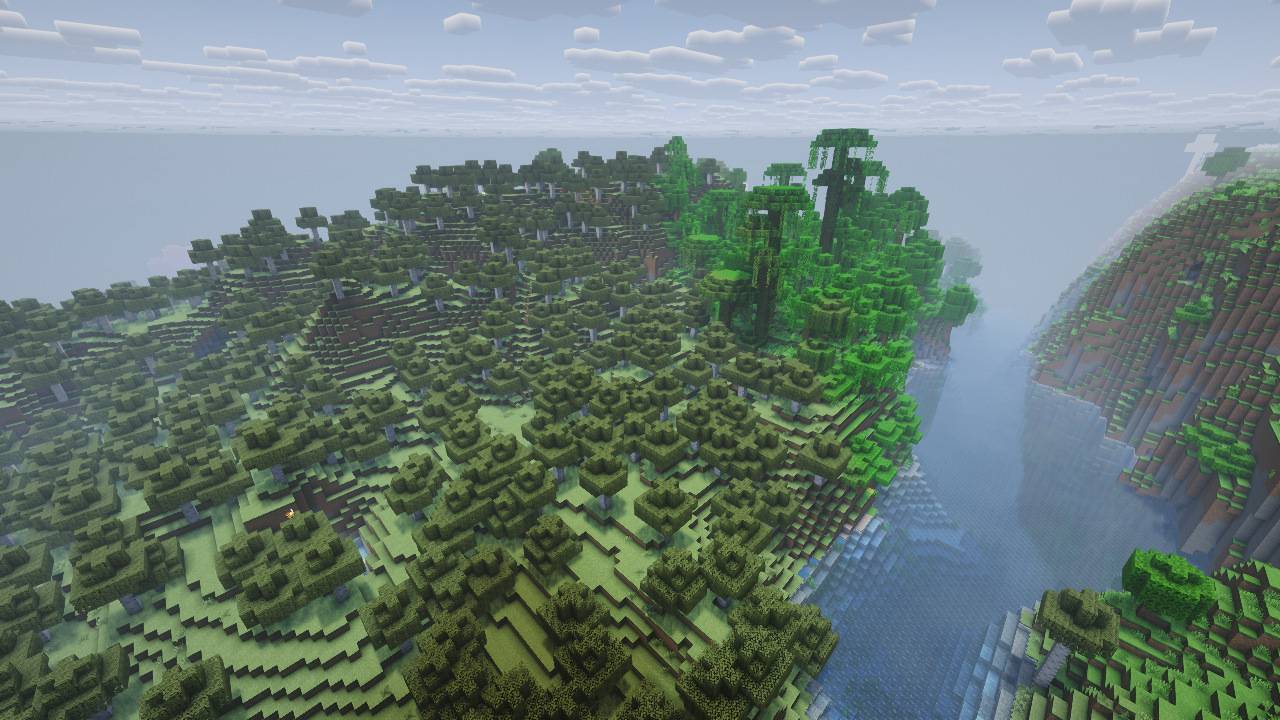 Complementary Reimagined on Sleepium The shaderpack run by Sleepium's own renderer (beta), no Iris or Sodium; 475 fps on an RTX 4070 SUPER
-
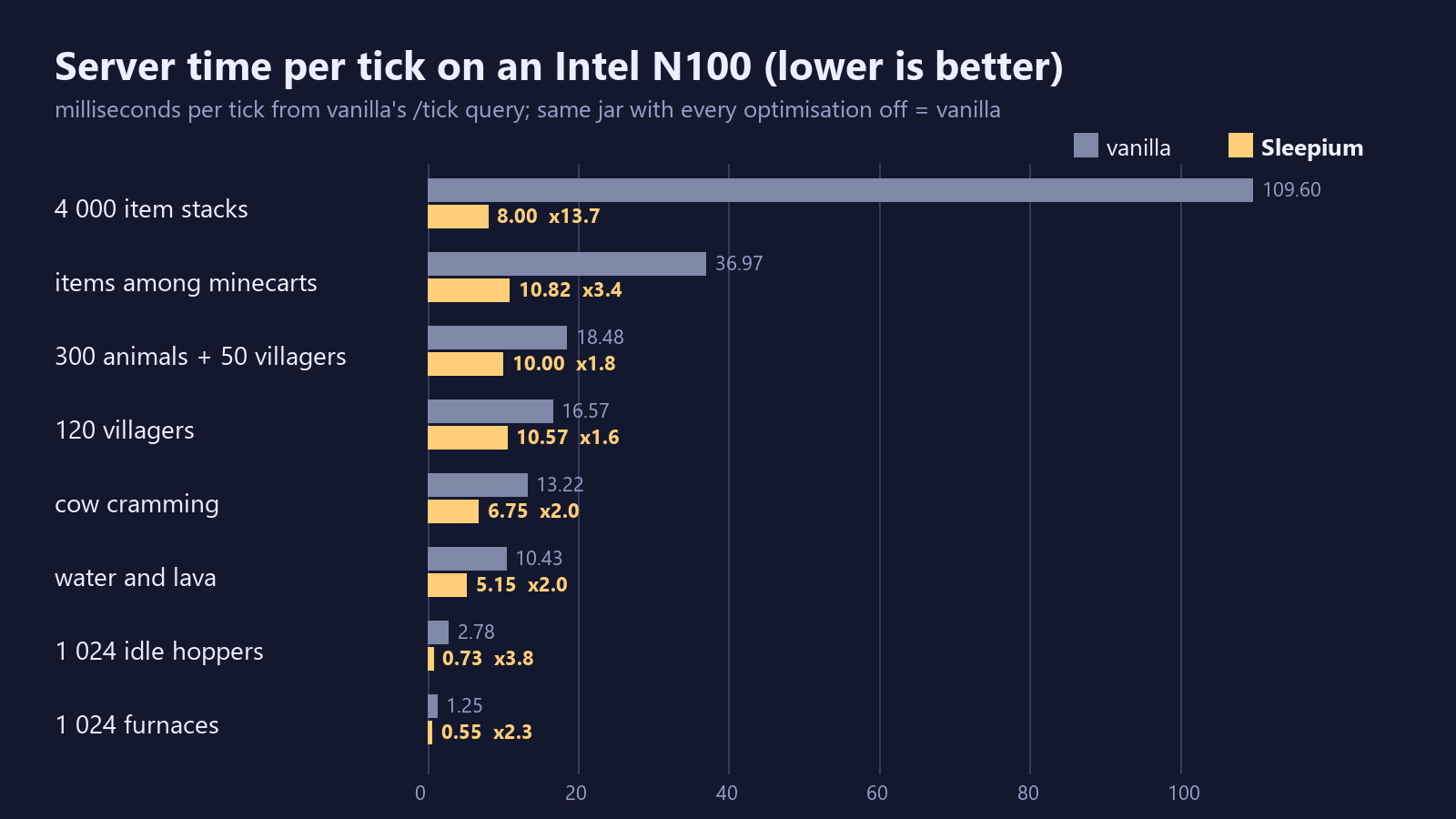 Server time per tick Intel N100, vanilla vs Sleepium, milliseconds per tick from /tick query
-
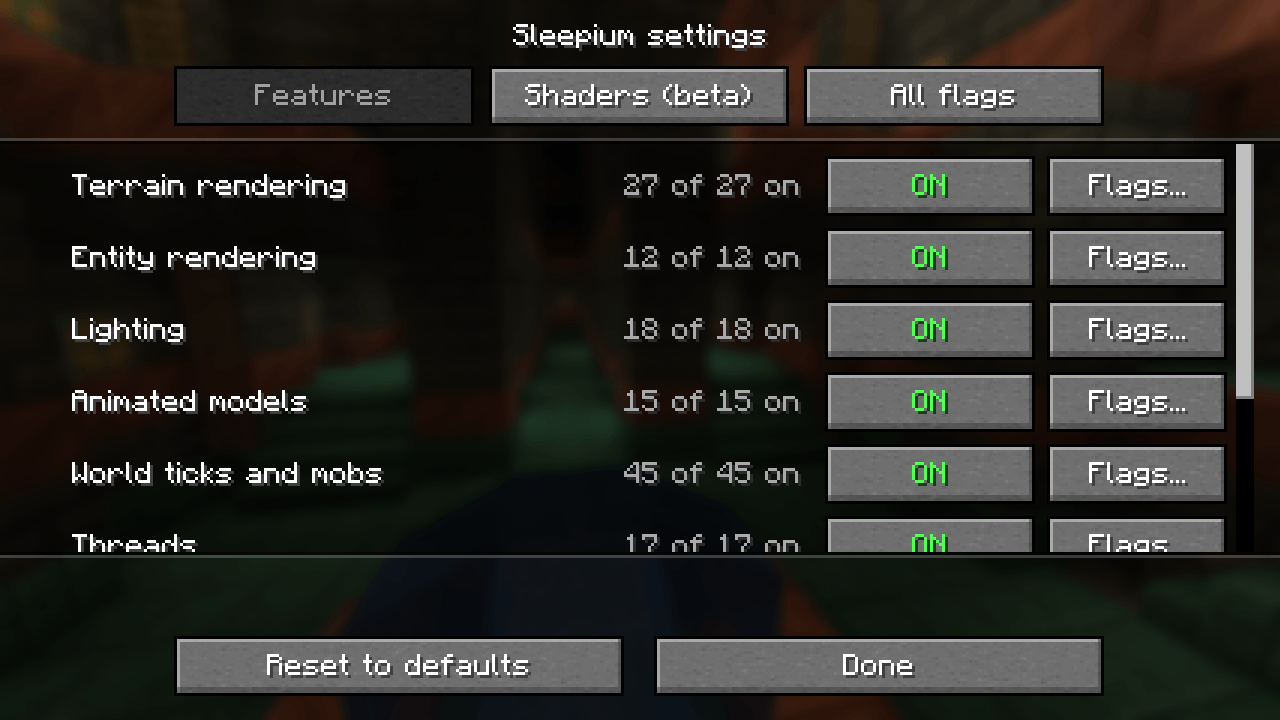 Settings screen Options → Sleepium...: features by group, the shaderpack, every flag with search
-
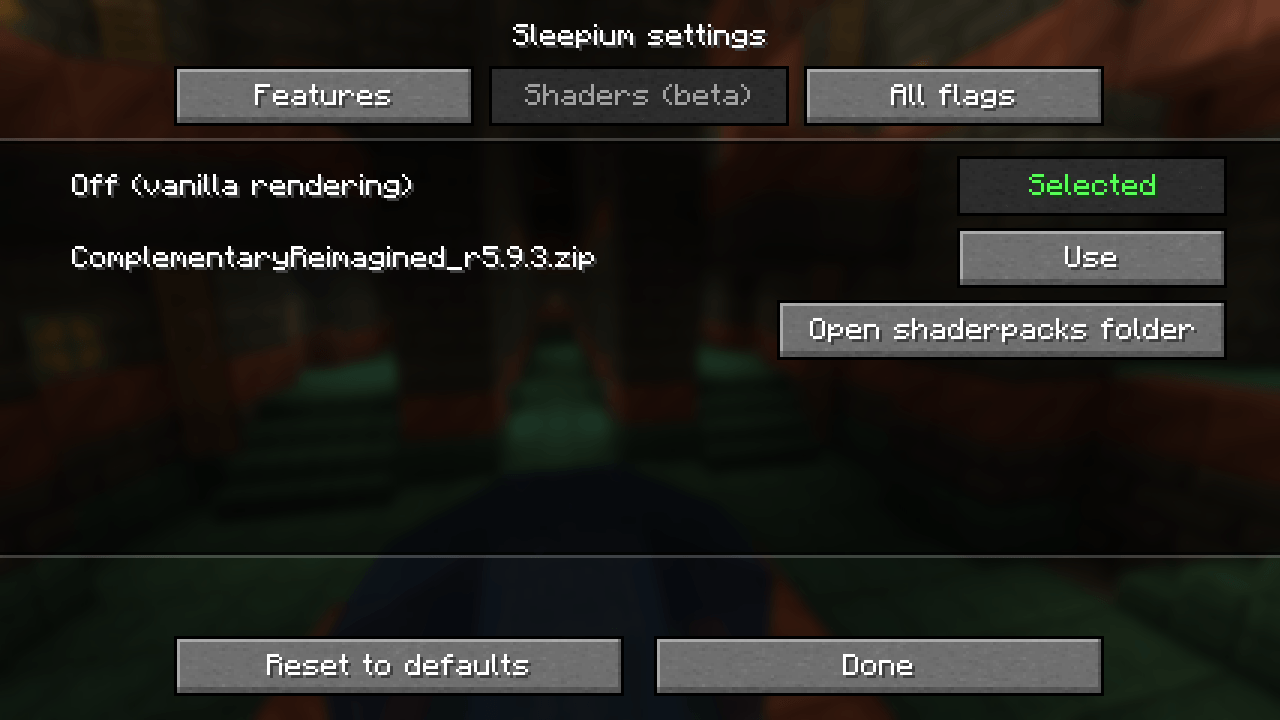 Shaderpacks tab Pick a pack from shaderpacks/; it switches without a restart
-
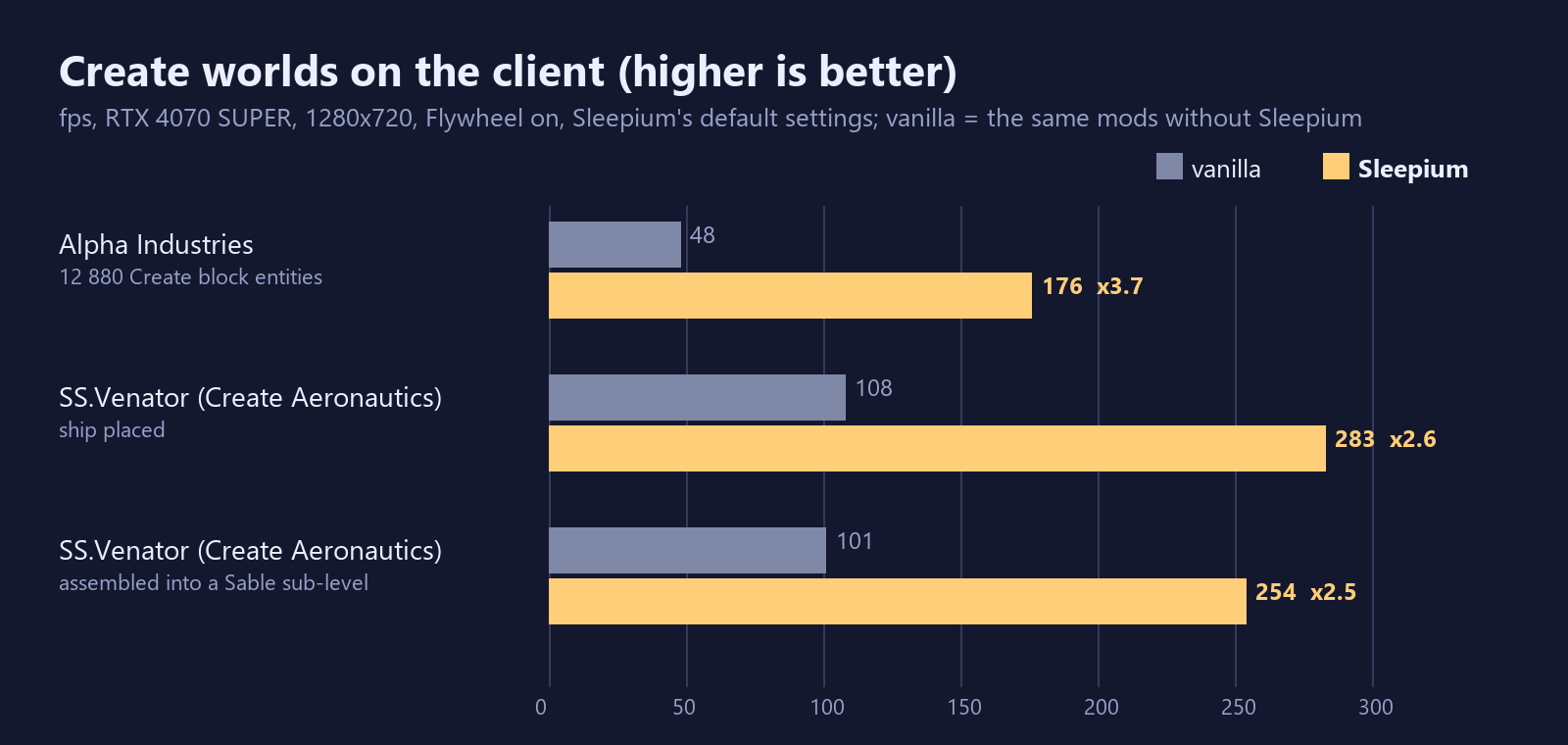 Create worlds on the client Alpha Industries and Create Aeronautics, vanilla vs Sleepium (default settings, Flywheel on)
-
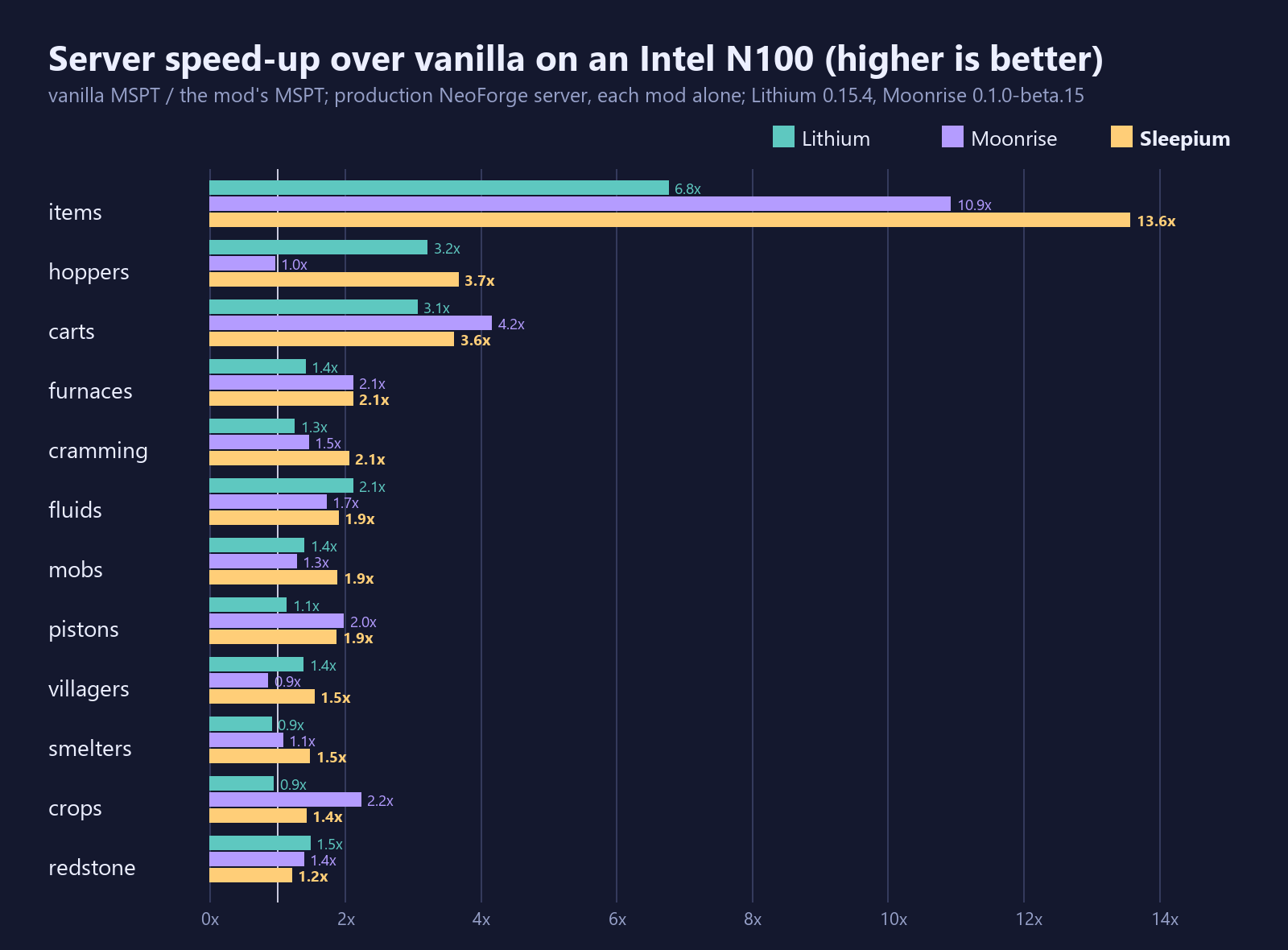 Against Lithium and Moonrise Server speed-up over vanilla on an Intel N100, each mod alone
-
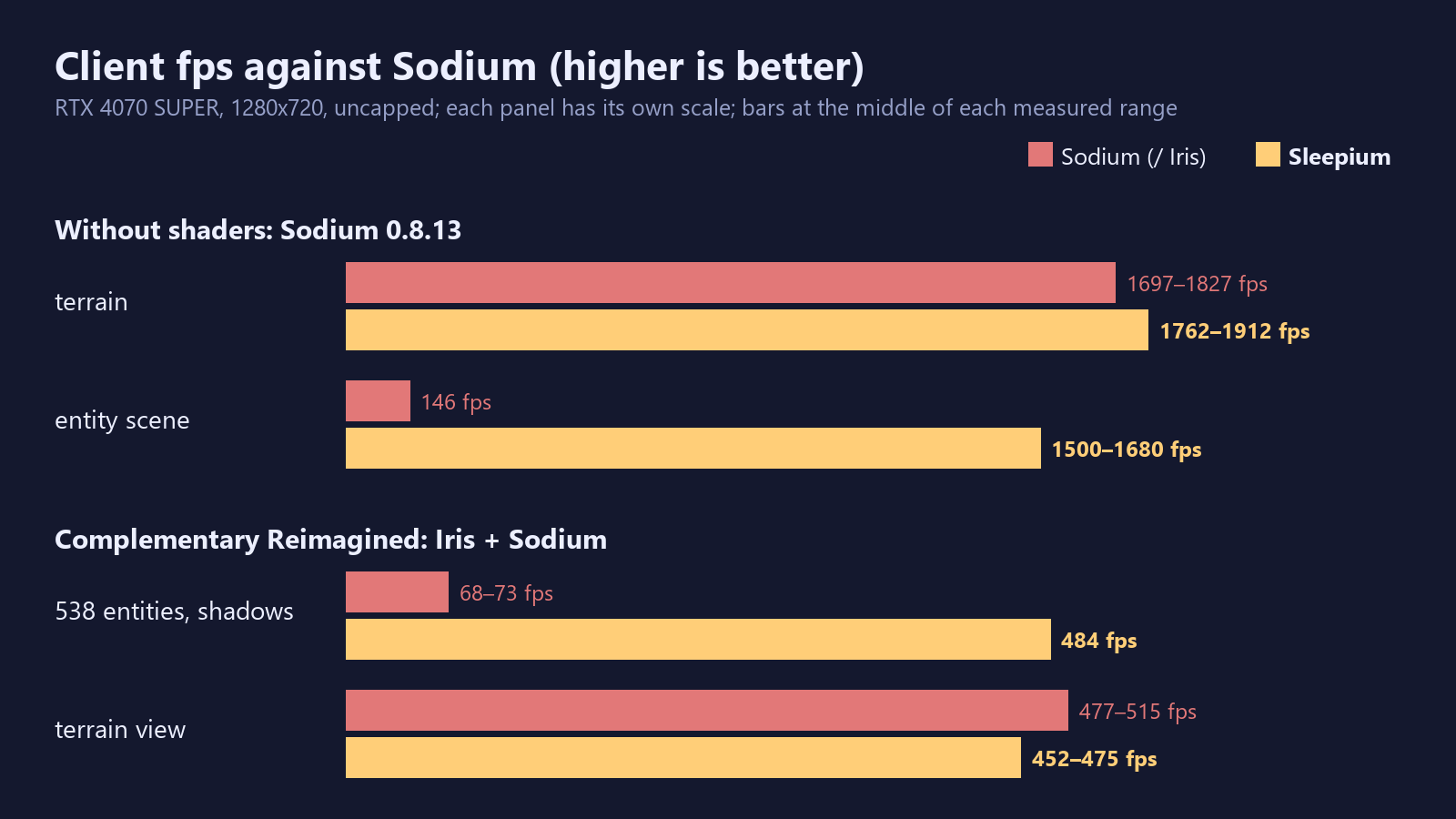 Against Sodium Client fps: Sodium without shaders, Iris + Sodium with Complementary
-
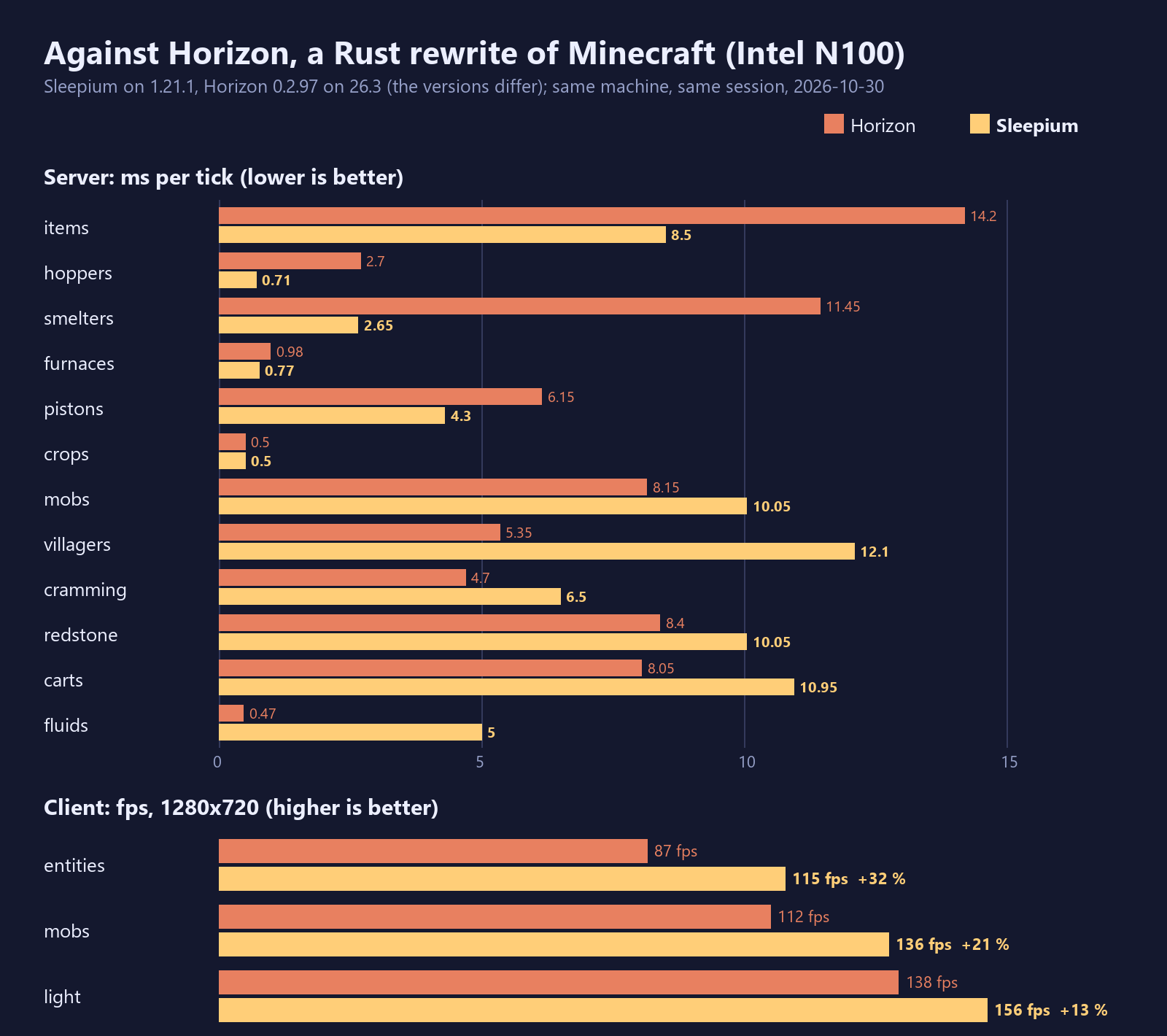 Against Horizon A Rust rewrite of Minecraft on the same Intel N100: server ms per tick and client fps
-
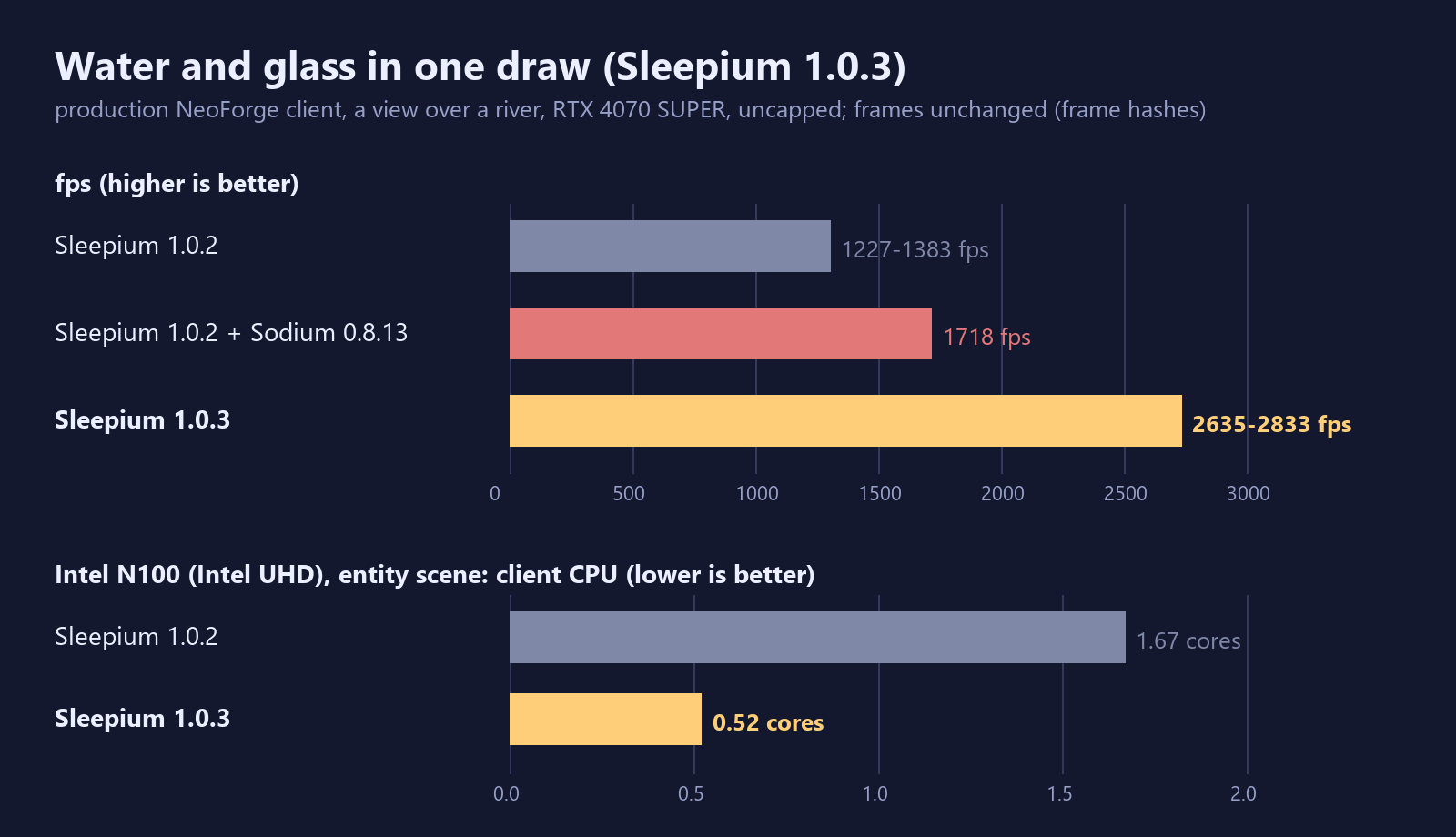 Water and glass in one draw (1.0.3) A view over a river: 1227-1383 fps on 1.0.2, 2635-2833 on 1.0.3 (RTX 4070 SUPER); N100 client CPU 1.67 -> 0.52 cores.
-
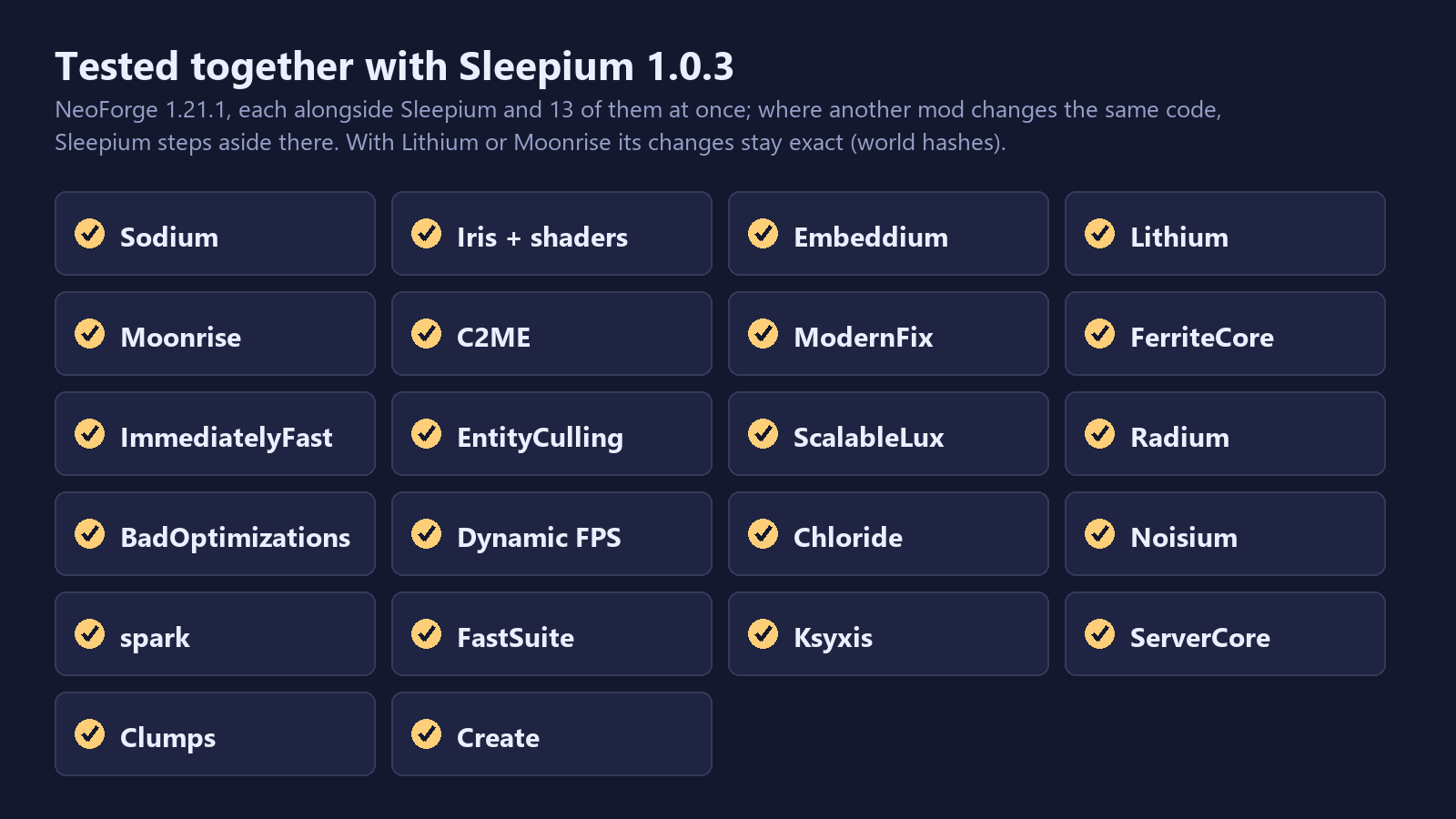 Tested together with 22 optimisation mods Sodium, Iris, Embeddium, Lithium, Moonrise, C2ME, ModernFix, FerriteCore and more, each alongside Sleepium 1.0.3 and 13 at once.
Versions
Files
Relations
Project Relations
More like this
Similar Mods
Suggestions use data such as tags, dependencies, dependents, descriptions, titles, and more to rank how much they overlap with this mod.
On ModDex
Community snapshot
By the numbers
Statistics

Get it on
Available Platforms
On ModDex
Community snapshot
By the numbers
Statistics
Resources