
Community listing page, reviews here may not be monitored by the author.
Ommoran Extraction: Gem Defense

No reviews yet
Extract valuable resources from dimensional gem nodes and fight hordes of monsters! Highly configurable.

Community voices
Reviews
No reviews yet. Be the first to review this project!
Get it on
Available Platforms
About
Project Details
For authors
Embed Badge
If you're the author of this project, you can embed a live badge anywhere that supports HTML or Markdown. It updates automatically whenever ratings change.
Use HTML for any page that supports it, or Markdown for README files and Markdown-based descriptions.
Identifiers
Platform IDs
Resources
External Links
About
Description
Ommoran Extraction
Ommoran Extraction, inspired by the Escort mission in Deep Rock Galactic, is a resource-extraction mod built around Heartstones: rare formations that generate across all three vanilla dimensions. The core loop is simple: find a Heartstone, set up an extraction operation, survive the encounter, and process what you pull out. The systems underneath that loop have enough depth to stay interesting well past the first few runs.
Extraction Heartstones
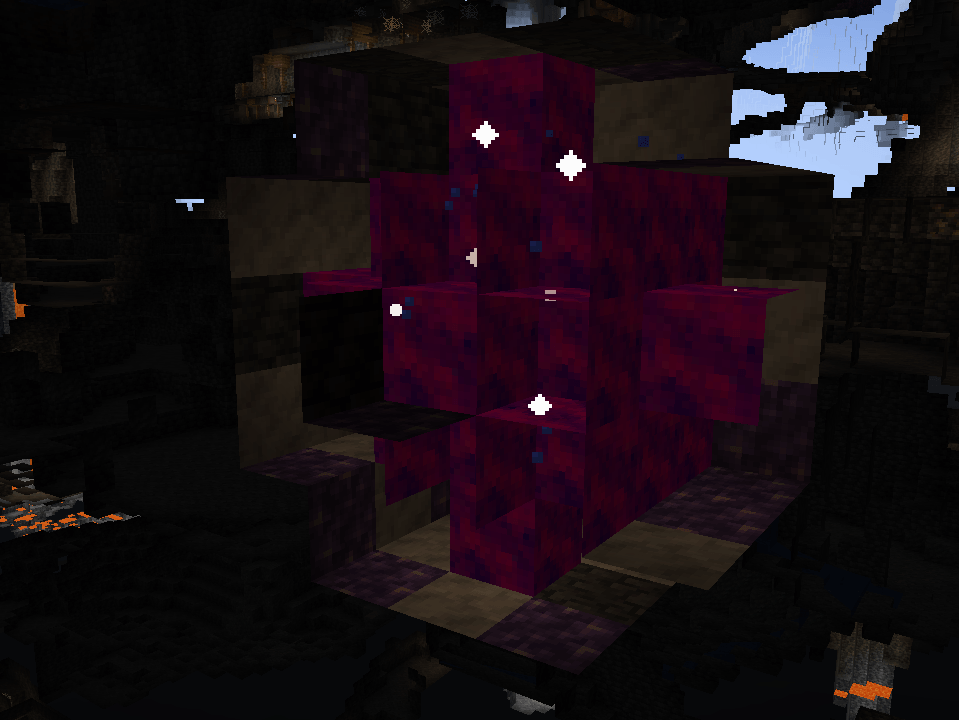
Heartstones come in three dimensional schools: Mineral (Overworld), Thermal (Nether), and Cryo (End). Each school generates their own class of dimensional materials and hazardous byproducts. A Heartstone exists in a persistent world state: pristine Heartstones are ready to extract, damaged Heartstones yield less, depleted Heartstones are gone (or recovering, depending on your config), and Heartstones in cooldown are ticking down to their next available window. The spherical shell of decorative blocks surrounding each core visually tracks the active state of the encounter, lighting up and updating as extraction progresses.
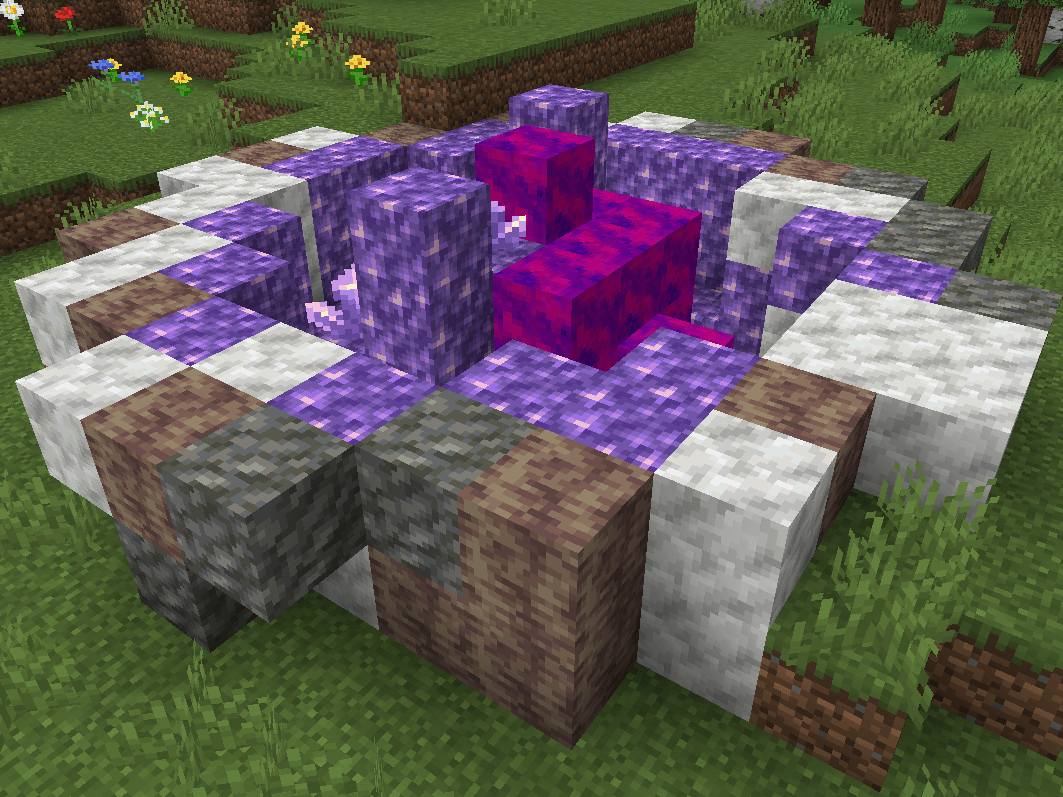
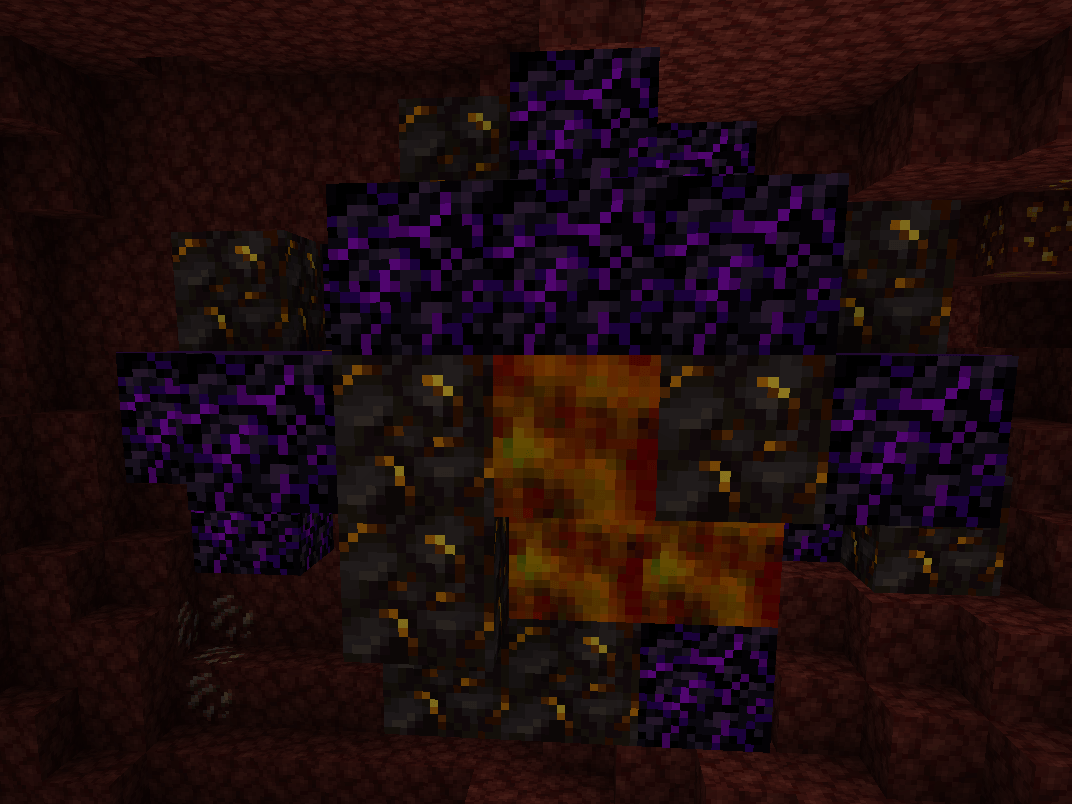
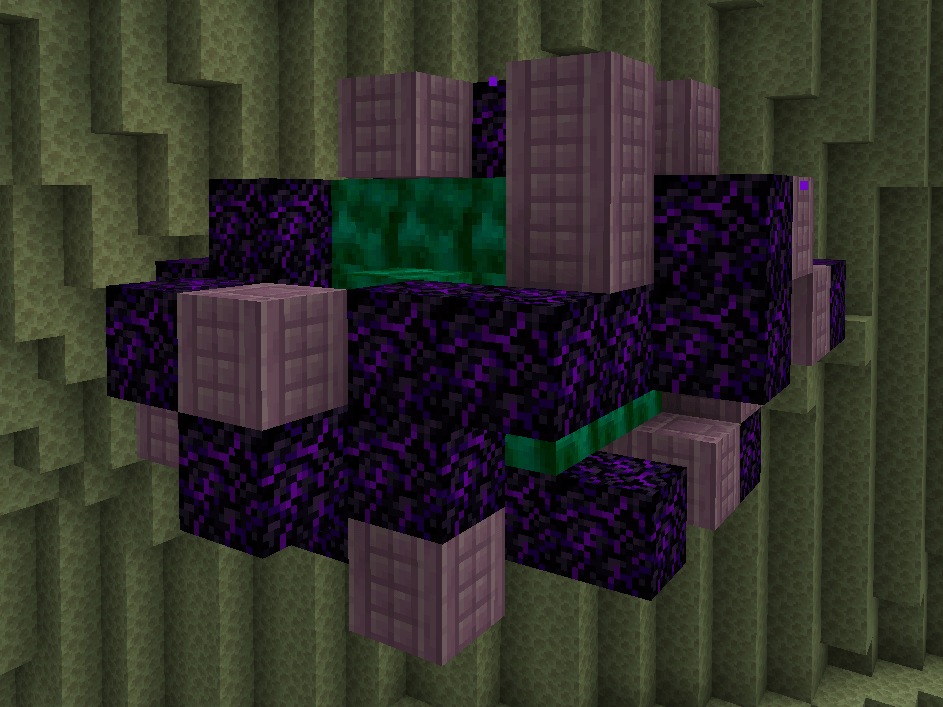
The Rig
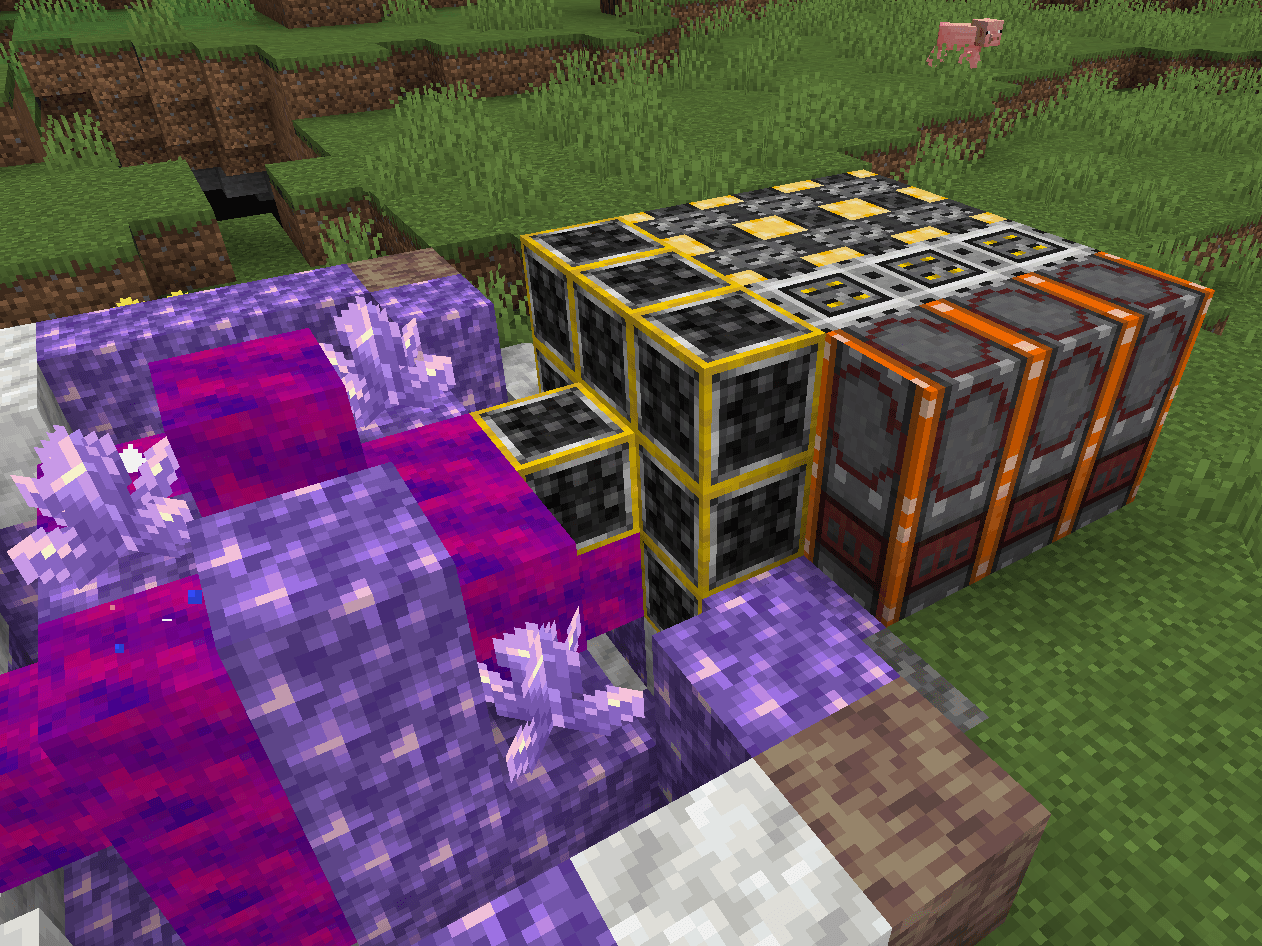
Extraction is driven by an Extractor structure, pointed at the Heartstone. The pyramid at the end pointing towards the Heartstone ranges from size 1 (the apex alone) up to size 5 (four increasing cross layers behind it). Larger pyramids do not speed up the overall extraction; every size runs for the same fixed tick budget, but they advance depth faster, spending more time at the high-value, high-risk late tiers. A Chassis made from Extractor Chassis blocks needs to be connected to the Extractor Apex. It is a cube with sides equal to the size of the extractor. Power comes from generator blocks connected via a Transfer Node network, each with their own fuel logic (combustion, magma heat, kill-harvesting, and others). Transfer Nodes can replace Chassis blocks. A transfer node network is at most 12 connections long, configurable. Increasing this config value has effects on server performance, so it is not advisable to increase it too much. An Overclocker block can be patched into the network for doubled output, at the cost of escalating penalties if the overclock feed is interrupted partway through.
Extractor network BFS (Breadth-First Search) discovers all connected generators and hazmat handlers up to a configurable range. The network is re-evaluated every few ticks, so the rig dynamically responds to mid-run changes.
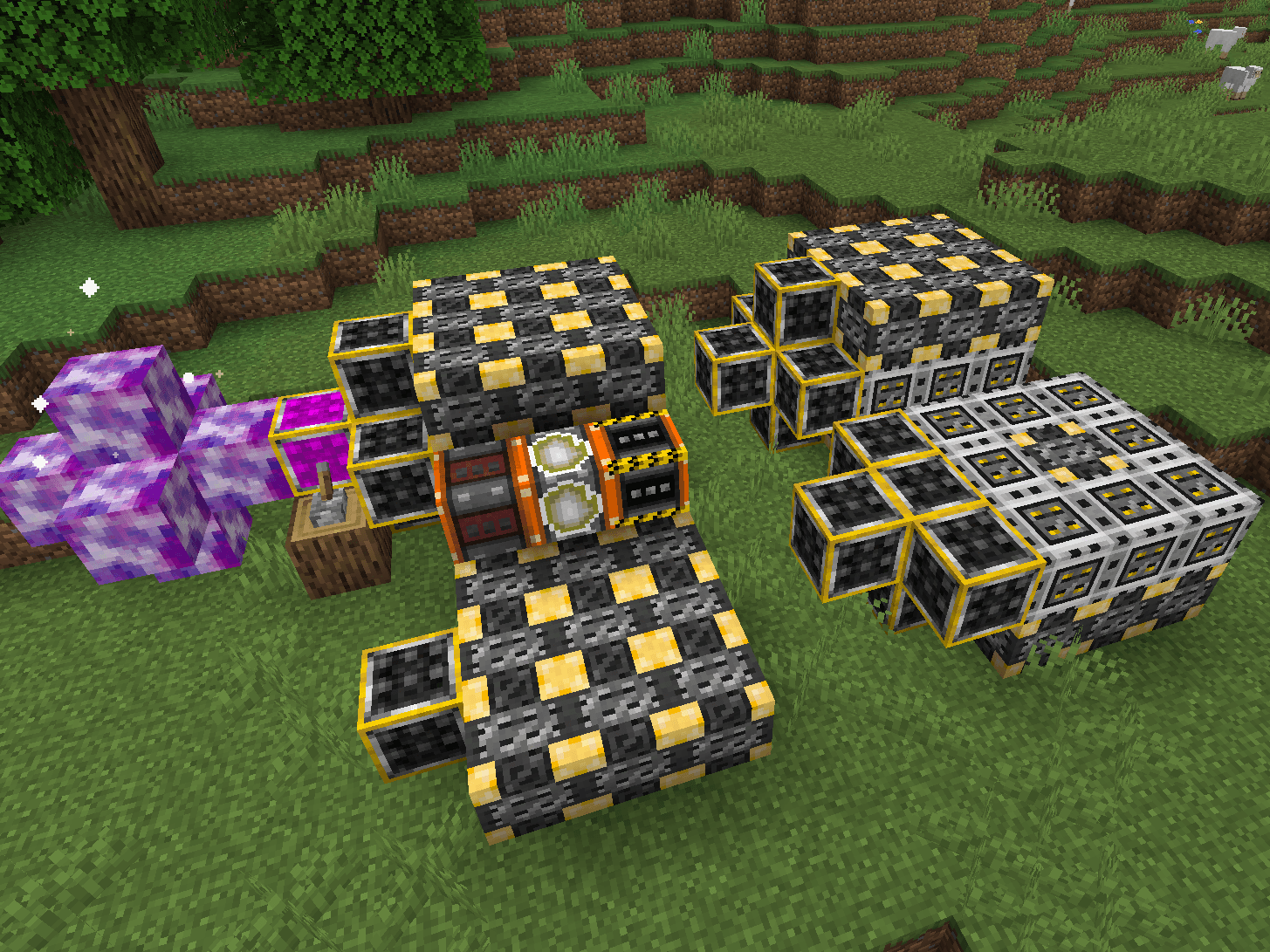
Depth and Tier Progression
Each extraction session tracks a depth value from 0 to 100. As depth climbs, the encounter moves through three loot tiers:
- Tier 1 (0–30): Common materials: metals, Nether resources, End drops.
- Tier 2 (31–65): Dimensional materials begin appearing: Mineral Shards, Thermal Cores, Void Shards, and their school equivalents.
- Tier 3 (66–100): High-value drops (Diamonds, Ancient Debris, Dragon Breath) alongside hazardous raw materials at a 15% roll chance.
Depth advancement is driven by the pyramid size, so a larger pyramid reaches Tier 3 and stays there for a larger fraction of the run. The tradeoff is higher energy cost and a more punishing failure state if the operation collapses.
The Threat System
Extraction draws hostile attention. Waves spawn on a configurable timer and at fixed depth thresholds, pulling from biome-appropriate mob pools that scale with current depth: basic overworld mobs at shallow depths, Wither Skeletons and Pillagers mid-run, Evokers and Ravagers at depth 60+. Wave sizes scale with the number of nearby players. A separate anti-cheese system spawns Vexes directly around players every now and then, discouraging simply retreating or turtling and waiting.
Creepers spawned by the mechanic are eligible to gain Frustration when their AI stalls due to not being able to pathfind, allowing them to blow up on the spot when max Frustration is reached. Furthermore, waves can send out instability pulses that destabilize and ignite nearby creepers.
The threat system is broadly configurable: wave interval, base mob count, per-player scaling, ambient mob cap, anti-cheese radius and count, and grace tick windows are all exposed in the config file.
Hazardous Materials
Raw dimensional hazmat (Raw Precious Slag, Raw Thermal Flux, and Raw Void Crystal) is generated at Tier 3 and handled separately from normal loot. Any hazmat sitting in a player's inventory or lying on the ground emits a proximity damage aura, so it can't simply be pocketed. Hazmat Handler blocks connected to the extractor network collect these items from the rig and channel them to players holding a Hazmat Container, allowing controlled transfer. Uncontained hazmat that ends up on the ground has a wider aura radius. Unsealed hazmat can be stored long-term in a Sealed Container.
Alchemy
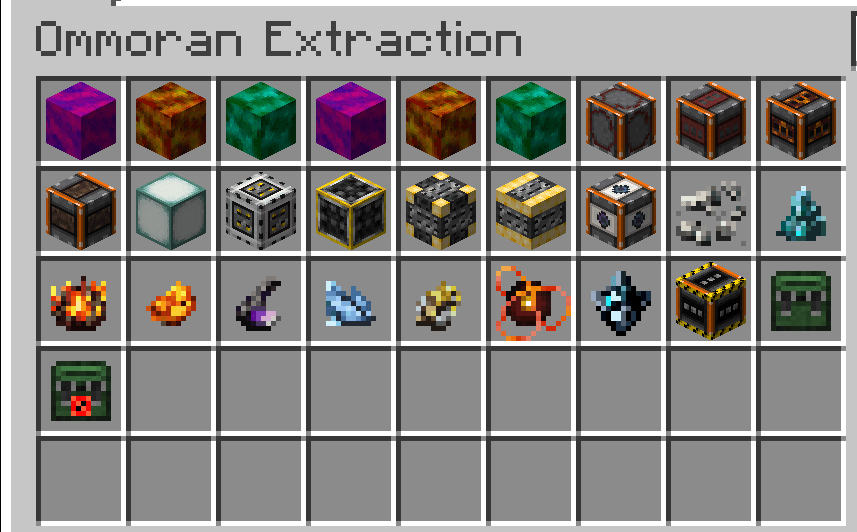
The dimensional materials produced by extraction serve as reagents for a crafting-based conversion system. Combining materials from different schools produces vanilla resources, with yield scaling based on which combination is used and how many reagent types are involved.
A Mineral Shard alone refines to Raw Iron. Combined with a Thermal Core it yields twice as much. Add an Ignition Fragment instead for four. Cross-school combinations unlock different outputs entirely: Mineral + Void produces Quartz; Mineral + Cryo gives Copper; three-component mixes reach Prismarine, Lapis, Redstone, and Bone Meal. Hazmat items act as high-output catalysts. For example, Raw Precious Slag combined with Thermal materials converts to Raw Gold at yields between 4 and 16 depending on the catalyst. Void-school reagents convert toward Ender Pearls, Eyes of Ender, Chorus Fruit, Obsidian, and Blaze Rods through their own combination tree.
The system creates a soft cross-dimensional dependency: Cryo and Thermal materials from Nether and End runs improve the yield of Mineral conversions, and vice versa, so stockpiling materials from different Heartstone types pays off.
RPG Mode
An optional config flag (rpgMode: true) strips away the rig entirely. In this mode, right-clicking any Heartstone or its shell blocks starts the extraction with no extractor pyramid, generators, or infrastructure required. The encounter proceeds as a tier-one extraction (pyramid size 1 behaviour, no energy), hazmat items deal no damage to players, and loot drops directly at the topmost shell block rather than into an extractor inventory. The threat system runs as normal. At least one player must remain within 32 blocks (configurable) at all times, with an 8-second grace period before the encounter stops and the Heartstone goes on cooldown. Rig-related items are hidden from the creative tab in this mode.
Configuration
All economically significant values are exposed in a JSON config file: Heartstone respawn behaviour (finite, cooldown, or tiered), cooldown duration, wave timing and sizing, anti-cheese parameters, transfer Heartstone network range, overclock interruption thresholds, RPG mode proximity radius and grace period, and several others..
Future Content
In the future, we have planned things such as gadgets, turrets, economies, traders, and much more! So stay tuned!
Screenshots
Gallery
-
1.png 1.png
-
7.png 7.png
-
6.png 6.png
-
5.png 5.png
-
4.png 4.png
-
3.png 3.png
-
 2.png 2.png
Versions
Files
Relations
Project Relations
More like this
Similar Mods
Suggestions use data such as tags, dependencies, dependents, descriptions, titles, and more to rank how much they overlap with this mod.
On ModDex
Community snapshot
By the numbers
Statistics
 (opens in a new tab)
Get it on
Available Platforms
On ModDex
Community snapshot
By the numbers
Statistics
Resources