
Community listing page, reviews here may not be monitored by the author.
Realistic Generators


No reviews yet
Most power mods hand you a block that makes energy. Realistic Generators hands you a process — fuel → heat → steam → rotation → electricity. Build it well and it hums. Build it wrong and it tells you why.

Community voices
Reviews
No reviews yet. Be the first to review this project!
Get it on
Available Platforms
Compatibility
Supported Environments
Must be installed on both the client and the server.
About
Project Details
For authors
Embed Badge
If you're the author of this project, you can embed a live badge anywhere that supports HTML or Markdown. It updates automatically whenever ratings change.
Use HTML for any page that supports it, or Markdown for README files and Markdown-based descriptions.
Identifiers
Platform IDs
About
Description
Most power mods hand you a block that makes energy. Realistic Generators hands you a process — fuel → heat → steam → rotation → electricity — and every stage is a real, buildable multiblock that behaves like the machine it models. Build it well and it hums. Build it wrong and it tells you why.

A complete steam plant is a chain you assemble yourself:
- Fire a boiler to turn water into high-pressure steam.
- Pipe the steam through a turbine — a rotor you build stage by stage (HP → IP → LP).
- Draw off Forge Energy for the rest of your base.
- Condense the spent steam back to water and run it as a closed loop.

These aren't decorations — every lever changes your output, or whether the machine survives the night:
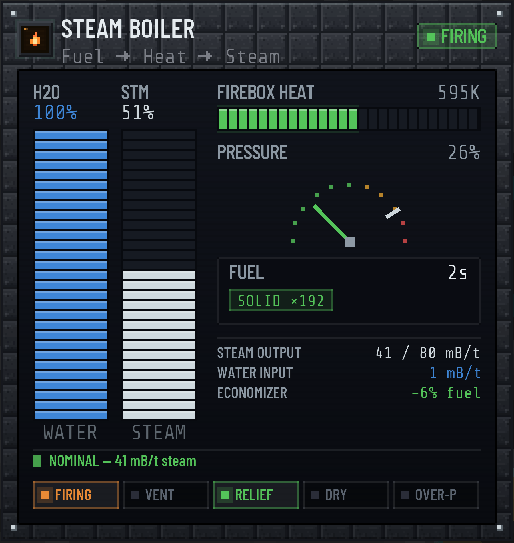
- Pressure is real. Over-fire a boiler with nowhere for the steam to go and it ruptures. Fit a relief valve, or watch your gauges. Run it dry while hot and the thermal shock bursts the shell.
- Heat has mass. Machines warm up and cool down — no instant on/off. Cold starts are slow and weak; a hot plant is efficient. Turbines spin up and coast down on their own inertia.
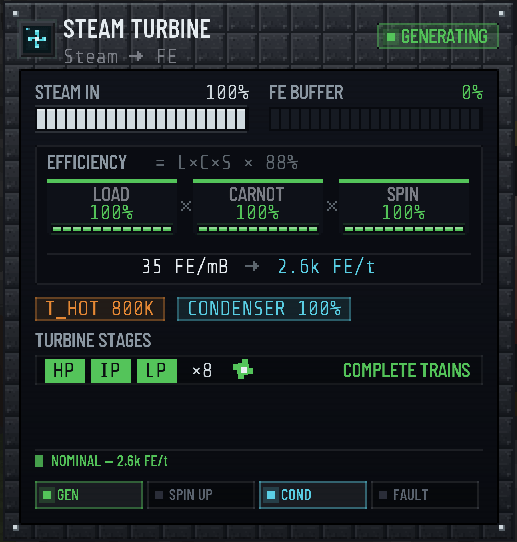
- Carnot efficiency. Bigger temperature gradients extract more work (η = 1 − T_cold/T_hot). Superheat raises the hot side; a condenser pulls the cold side down. Run hot, condense cold.
- Assembly order matters. A rotor runs HP → IP → LP in order. Get the order wrong, leave a gap, or orphan a stage and the turbine makes zero power — and the dashboard says exactly which stage is stray.
- Sized to match. Every multiblock is variable-size. A boiler too small starves the turbine; too big backs up pressure; a battery too small overloads and melts. A coherent chain is a build puzzle.
Every multiblock has a controller with a live dashboard — temperature, pressure, load, output, efficiency breakdown, and a plain-language diagnosis the moment something's off. A built-in Patchouli guidebook teaches the whole chain in-game.

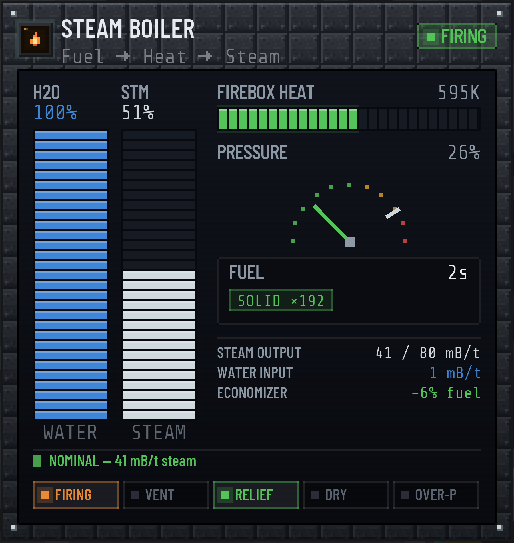
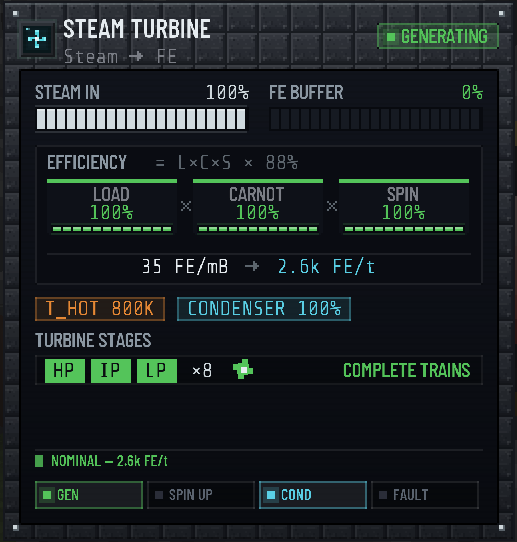
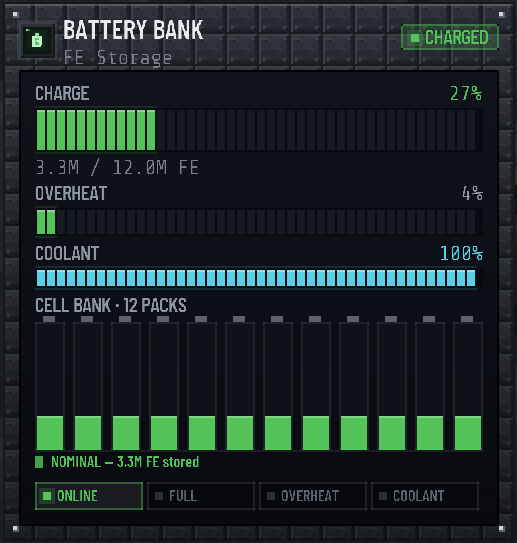
Every controller opens a full readout built for the job — not a single number on a block. Bars, gauges, stage maps and a one-line verdict at the bottom tell you what's happening and what to fix, at a glance.
 |
 |
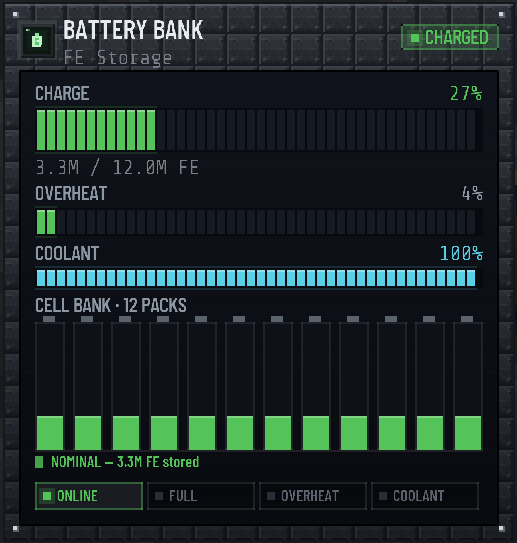 |
| STEAM BOILER — firebox heat, live pressure gauge, fuel burn and economizer. Hit the limit and the relief valve saves the shell. | STEAM TURBINE — efficiency reads as Load × Carnot × Spin, with live HP / IP / LP stage assembly. | BATTERY BANK — charge level, overheat and coolant tracking, plus per-pack cell health across the bank. |

Nothing here is a walled garden. Interop is through shared standards, so it slots into big packs — built and tested against All The Mods 10 — without conflict:
- Forge Energy (FE/RF) out — any mod's cables and machines pull straight from a generator.
- Conventional
c:tags for fuel and materials — coal, diesel, uranium, dusts and ingots from any mod just work. - Fluid capability for water in / steam out — accepts water from any source.
- No hard dependencies. It cooperates; it doesn't demand.

The full steam chain: multiblock boiler, staged turbine, energy storage, condenser, controller dashboards, and the in-game guidebook. Variable-size multiblocks — scale them up for more throughput.

Nuclear. Reactors with the same realism contract — coolant you can't skip, meltdowns you can earn, spent fuel you have to store. Same interop, same c: fuel tags, same turbine.

Right now the mod ships completely silent — no boiler roar, no turbine whine, no relief-valve hiss. The machines are begging for a voice. If you do sound design and want to help bring these plants to life, I'd love it — reach me on Discord at benware_.

- Minecraft 1.21.1
- NeoForge 21.1.x
- No other mods required — but a fluid & item piping mod (e.g. Mekanism, Pipez, XNet) is recommended for moving water, steam & fuel between machines.

This is the first public build. The machines work; the balance (burn rates, melt thresholds, efficiency curves) is what I most want feedback on. Open a comment with how it feels in your pack.

MIT — free to use, modify, and bundle in any modpack.

Power you have to engineer, not just place.
Most power mods hand you a block that makes energy. Realistic Generators hands you a process — fuel → heat → steam → rotation → electricity — and every stage is a real, buildable multiblock that behaves like the machine it models. Build it well and it hums. Build it wrong and it tells you why.

A complete steam plant is a chain you assemble yourself:
- Fire a boiler to turn water into high-pressure steam.
- Pipe the steam through a turbine — a rotor you build stage by stage (HP → IP → LP).
- Draw off Forge Energy for the rest of your base.
- Condense the spent steam back to water and run it as a closed loop.

These aren't decorations — every lever changes your output, or whether the machine survives the night:
- Pressure is real. Over-fire a boiler with nowhere for the steam to go and it ruptures. Fit a relief valve, or watch your gauges. Run it dry while hot and the thermal shock bursts the shell.
- Heat has mass. Machines warm up and cool down — no instant on/off. Cold starts are slow and weak; a hot plant is efficient. Turbines spin up and coast down on their own inertia.
- Carnot efficiency. Bigger temperature gradients extract more work (η = 1 − T_cold/T_hot). Superheat raises the hot side; a condenser pulls the cold side down. Run hot, condense cold.
- Assembly order matters. A rotor runs HP → IP → LP in order. Get the order wrong, leave a gap, or orphan a stage and the turbine makes zero power — and the dashboard says exactly which stage is stray.
- Sized to match. Every multiblock is variable-size. A boiler too small starves the turbine; too big backs up pressure; a battery too small overloads and melts. A coherent chain is a build puzzle.
Every multiblock has a controller with a live dashboard — temperature, pressure, load, output, efficiency breakdown, and a plain-language diagnosis the moment something's off. A built-in Patchouli guidebook teaches the whole chain in-game.

Every controller opens a full readout built for the job — not a single number on a block. Bars, gauges, stage maps and a one-line verdict at the bottom tell you what's happening and what to fix, at a glance.
 |
 |
 |
|---|---|---|
| Steam Boiler — firebox heat, live pressure gauge, fuel burn and economizer. Hit the limit and the relief valve saves the shell. | Steam Turbine — efficiency reads as Load × Carnot × Spin, with live HP / IP / LP stage assembly. | Battery Bank — charge level, overheat and coolant tracking, plus per-pack cell health across the bank. |

Nothing here is a walled garden. Interop is through shared standards, so it slots into big packs — built and tested against All The Mods 10 — without conflict:
- Forge Energy (FE/RF) out — any mod's cables and machines pull straight from a generator.
- Conventional
c:tags for fuel and materials — coal, diesel, uranium, dusts and ingots from any mod just work. - Fluid capability for water in / steam out — accepts water from any source.
- No hard dependencies. It cooperates; it doesn't demand.

The full steam chain: multiblock boiler, staged turbine, energy storage, condenser, controller dashboards, and the in-game guidebook. Variable-size multiblocks — scale them up for more throughput.

Nuclear. Reactors with the same realism contract — coolant you can't skip, meltdowns you can earn, spent fuel you have to store. Same interop, same c: fuel tags, same turbine.

Right now the mod ships completely silent — no boiler roar, no turbine whine, no relief-valve hiss. The machines are begging for a voice. If you do sound design and want to help bring these plants to life, I'd love it — reach me on Discord at benware_.

- Minecraft 1.21.1
- NeoForge 21.1.x
- No other mods required — but a fluid & item piping mod (e.g. Mekanism, Pipez, XNet) is strongly recommended for moving water, steam, and fuel between machines.

This is the first public build. The machines work; the balance (burn rates, melt thresholds, efficiency curves) is what I most want feedback on. Open a comment with how it feels in your pack.

MIT — free to use, modify, and bundle in any modpack.
Screenshots
Gallery
-
 steam_turbine_ui.png steam_turbine_ui.png
 -
 steam_boiler_ui.png steam_boiler_ui.png
 -
 battery_bank_ui.png battery_bank_ui.png
 -
 2026-06-27_15.37.38.png 2026-06-27_15.37.38.png
 -
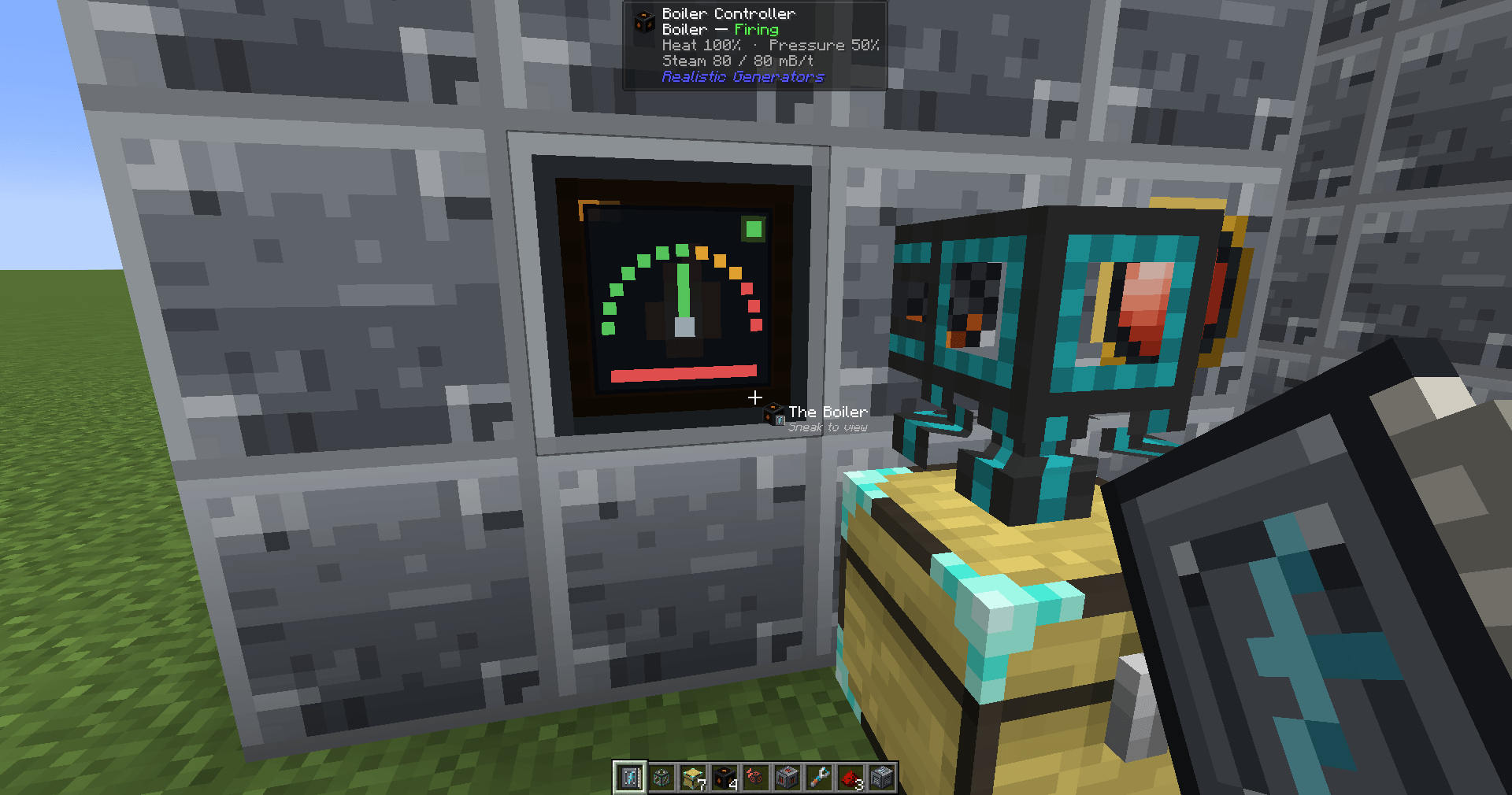 2026-06-27_15.36.41.png 2026-06-27_15.36.41.png
 -
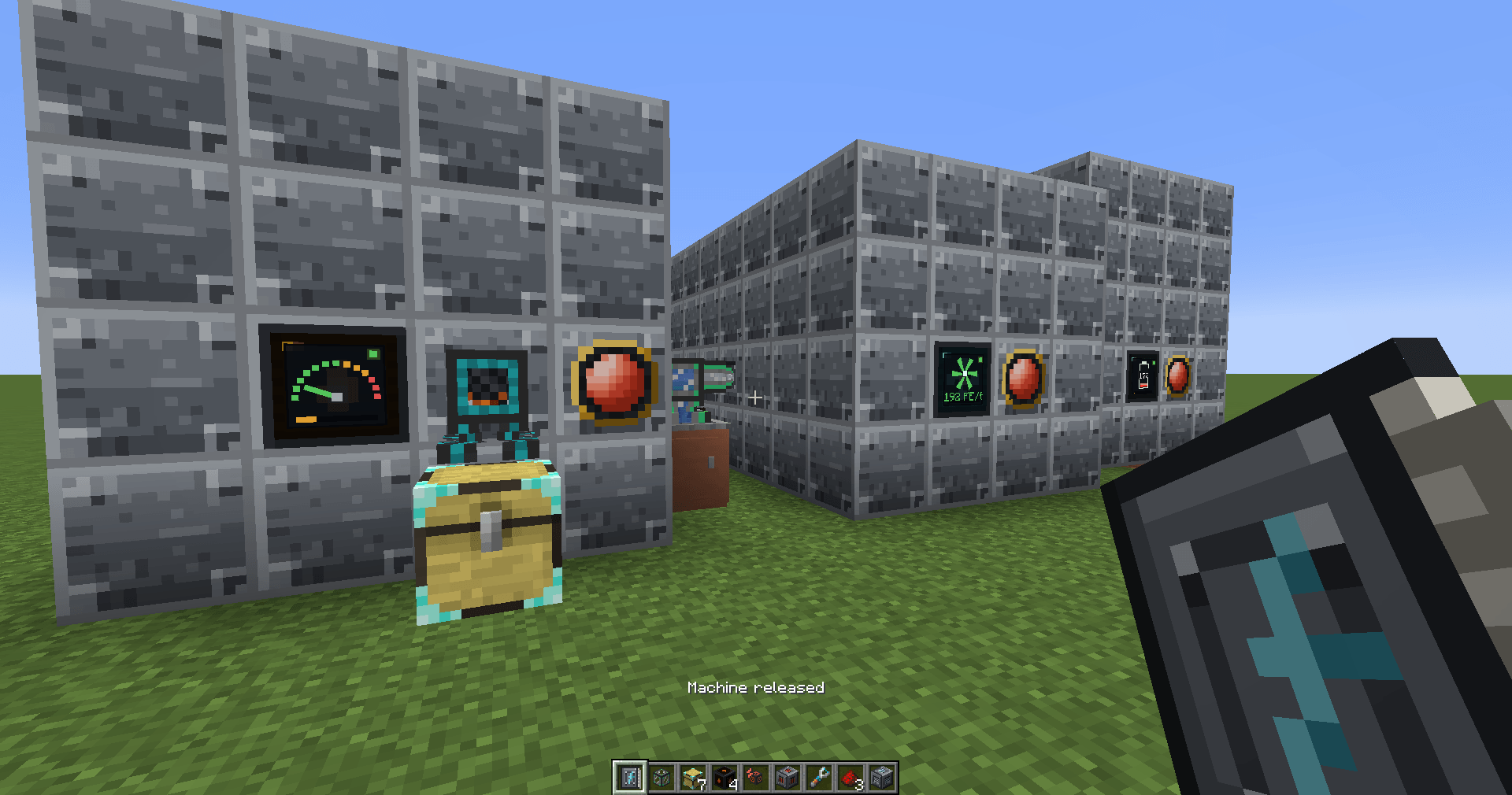 2026-06-27_15.36.25.png 2026-06-27_15.36.25.png
-
 Generators
 -
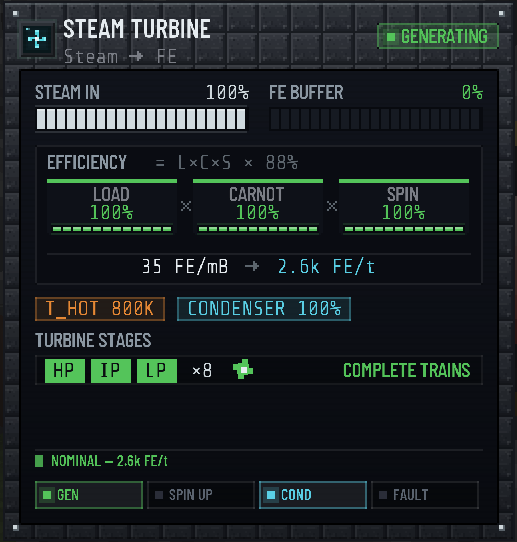 Turbine UI
 -
 External UI
 -
 Oops They will explode if the condisions are wrong!
 -
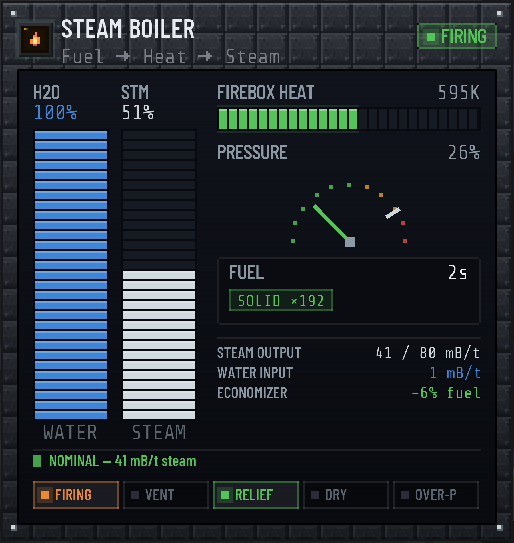 Boiler UI
 -
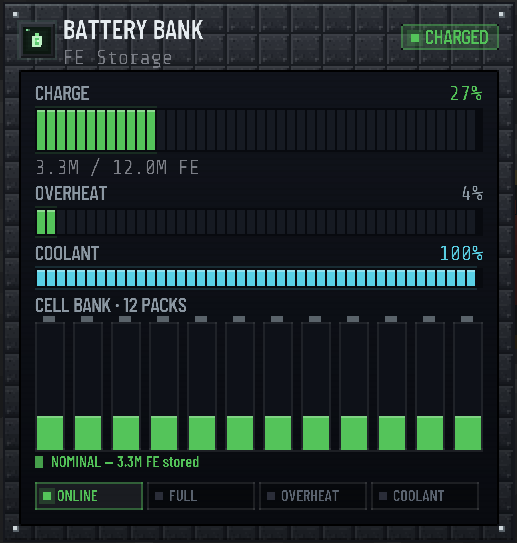 Battery Bank UI
Versions
Files
Relations
Project Relations
More like this
Similar Mods
Suggestions use data such as tags, dependencies, dependents, descriptions, titles, and more to rank how much they overlap with this mod.
On ModDex
Community snapshot
By the numbers
Statistics
 (opens in a new tab)
Get it on
Available Platforms
On ModDex
Community snapshot
By the numbers