
Community listing page, reviews here may not be monitored by the author.
Variants-CIT


No reviews yet
Alternative CIT format for large and extensible collections of variants.
Does not follow a specific thematic focus apart from vanilla Minecraft.
Used for mods with little to no gameplay elements.
Improves the visual aspects of the game with better textures, models, etc.
Includes aesthetic items like decoration, clothing, and visual effects.
Provides a framework or library for other mods to use.
Fabric is a mod loader for versions 1.14+ of Minecraft, particularly popular for client side and optimization mods.
Community voices
Reviews
Filters
Click once to include, again to exclude, again to clear
No reviews yet. Be the first to review this project!
Get it on
Available Platforms
Compatibility
Supported Environments
Runs entirely on the client. Works on vanilla servers.
About
Project Details
For authors
Embed Badge
If you're the author of this project, you can embed a live badge anywhere that supports HTML or Markdown. It updates automatically whenever ratings change.
Use HTML for any page that supports it, or Markdown for README files and Markdown-based descriptions.
Identifiers
Platform IDs
About
Description
Variants-CIT
A streamlined CIT format for items with standardized variants.
This mod isn't as flexible as optifine, but excels in scenarios where one item has many variants based on the same piece of data. It yields better performances when extreme amounts of CITs are available, and uses a resource format that is less redundant, requiring only a short file to configure all possible variants at once.
Ready-to-use forks of resource packs for this mod:
- Even Better Enchants (original pack)
- Xali's Enchanted Books(original pack)
- Xali's Potions (original pack)
- Axolotl Bucket Variants (original pack)
Resource Pack Format
This is an overview, please see the wiki for a complete guide.
The format revolves around item variants being automatically associated to models or textures with matching names. Instead of defining a condition for every CIT, you define a single rule that governs all CITs in a collection, (so-called modules). This modules defines what item is affected, how to figure out its variants, and where their models are located.
For example, here's a simple module that would change the texture of enchanted books :
{
	"type": "stored_enchantment", // The behaviour of the module
	"items": "minecraft:enchanted_book", // The affected item type(s)
	"modelPrefix": "item/book_cit/", // The folder containing the possible models/textures.
	"modelParent": "item/generated", // Automatically generate models from texture (if models are absent)
	"parameters": { // Extra options specific to the module type
		"levelSeparator": "_lvl_" // Include the enchantment level in the variant ID
	}
}
Here, a book with the enchantment minecraft:unbreaking at level 2 will have the variant ID minecraft:unbreaking_lvl_2, and thus use the texture stored at /assets/minecraft/texture/item/book_cit/unbreaking_lvl_2.png.
This single module will work for every possible enchantment, vanilla or modded, so long as a corresponding texture exists.
The module type above has a purpose-made logic for enchanted books. If no module type exists for a specific component, you can still use more generic modules to get a variant from any component:
{
	"type": "component_data",
	"items": "minecraft:suspicious_stew",
	"modelPrefix": "item/suspicious_stew_cit/",
	"parameters": {
		"componentType": "suspicious_stew_effects", // The component containing the variant ID
		"nbtPath": "[0].id" // The location of the variant ID in the component.
	}
}
At a higher level, you can create variants by combining multiple pieces of data from multiple components:
{
	"type": "component_format",
	"items": "minecraft:diamond_sword",
	"modelPrefix": "item/trimmed_diamond_sword/",
	"parameters":{
		"format": "${pattern}_${material}", // How to combine various pieces of data into a variant ID
		"variables": { // Where to find those pieces of data.
			"pattern": {
				"componentType": "trim",
				"nbtPath": ".pattern"
			},
			"material": {
				"componentType": "trim",
				"nbtPath": ".material",
				"transform": "discard_namespace"
			}
		}
	}
}
Variants-CIT
An alternative CIT format designed to handle large amounts of variants.
This mod excels in scenarios where one item has many variants all based on the same pieces of data. It yields better performances when extreme amounts of CITs are available, and uses a resource format that is less redundant, requiring only one short file to configure all possible variants of an item at once.
Assigning models on a case-by-case basis (similar to how Optifine-CIT handles it) is still possible, but does not boast the same performances.
Resource Pack Format
This is a quick showcase. Refer to The Wiki for a complete guide.
The format revolves around item variants being automatically associated to models or textures with matching names. Instead of defining separate conditions for every variants, you define a single rule that governs all variants in a collection, (so-called modules). This module defines what item is affected, how to figure out its variants, and where the variant models are located.
Fully automatic variants-to-model association
Here's a simple module that would change the texture of enchanted books :
{
	"items": "enchanted_book", // The affected item type(s)

	"modelPrefix": "book_cit/", // The folder containing the possible models/textures.
	"assetGen": "item_model/generated", // Auto-generate models from textures (if missing)

	"type": "stored_entchantment", // How to compute the item's "variant ID"
	"parameters": { // Extra options specific to the module's type
		"levelSeparator": "_lvl_" // Include enchantment level in the variant ID
	}
}
Here, a book with the enchantment minecraft:unbreaking at level 2 will have the variant ID minecraft:unbreaking_lvl_2, and thus use the texture stored at /assets/minecraft/textures/item/book_cit/unbreaking_lvl_2.png.
This single module will work for every possible enchantment, vanilla or modded, so long as a corresponding texture exists.
Automatic variants based on custom data
The module above has a purpose-made type for enchanted books. If no type exists for a specific use-case, you can still use more generic modules to get a variant from any component:
{
	"items": "minecraft:suspicious_stew",
	"modelPrefix": "item/suspicious_stew_cit/",
	"assetGen": "item_model/generated",

	"type": "component_data",
	"parameters": {
		"componentType": "suspicious_stew_effects", // The component containing the variant ID
		"nbtPath": "[0].id" // The location of the variant ID in the component.
	}
}
Processing data that can't be used as-is:
{
	"items": "diamond_sword",

	"modelPrefix": "item/named_swords/",
	"assetGen": "item_model/handheld",

	"type": "component_data",
	"parameters":
	{
		"componentType": "custom_name",
		"transform": [
			{
				"function": "regex",
				// Pattern matching,..
				"regex": "(?i)(.*'s )?(Great |Grand )?(?<var>.*(sword|dagger))( of doom)?",
				// ... and preserve only a portion of the name.
				"substitution": "$var"
				// (E.g: "steev18's great Steel Sword" => "Steel Sword")
			}
			{
				// Turns any text into a valid identifier
				"function": "sanitize"
				// (E.g: "Steel Sword" => "minecraft:steel_sword")
			}
		]
	}
}
Combining multiple pieces of data from different sources:
{
	"items": "minecraft:diamond_sword",
	"modelPrefix": "item/trimmed_diamond_sword/",
	"assetGen": "item_model/handheld",

	"type": "component_format",
	"parameters":
	{
		// How to combine various pieces of data into a variant ID
		// (E.g: sentry_diamond)
		"format": "${pattern}_${material}",
		// Where to find those pieces of data.
		"variables": {
			"pattern": {
				"componentType": "trim",
				"nbtPath": ".pattern"
			},
			"material": {
				"componentType": "trim",
				"nbtPath": ".material",
				"transform": "discard_namespace"
			}
		}
	}
}
Case-by-case variants
For systems that don't really follow any rules, (or if you have too few variants to care about automatism), you can use a format closer to Optifine-CIT's paradigms:
{
	"items": "trident",
	"modelPrefix": "item/godly_tridents/",
	"assetGen": "item_model/trident",

	"type": "predicates",
	"parameters": {
		"predicates":
		[
			{
				"variantId": "zeus_smite",
				"precondition": {
					"enchantments.channeling": { "greater_or_equals": 1 }
				}
			},
			{
				"variantId": "jupiter_syphon",
				"precondition": {
					"enchantments.riptide": { "greater_or_equals": 1 }
				}
			}
			// etc
		]
	}
}
Screenshots
Gallery
-
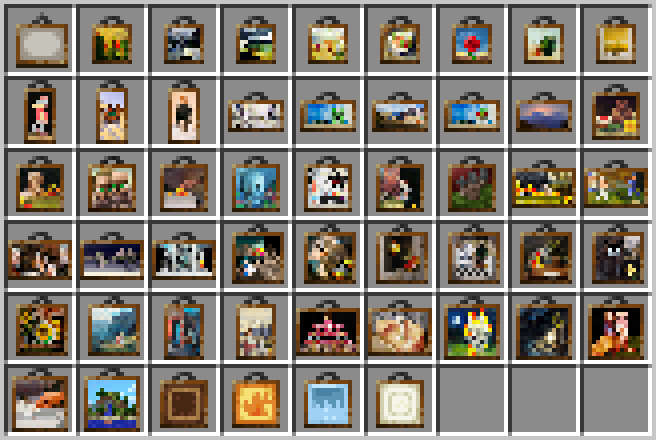 Invariable Paintings
 -
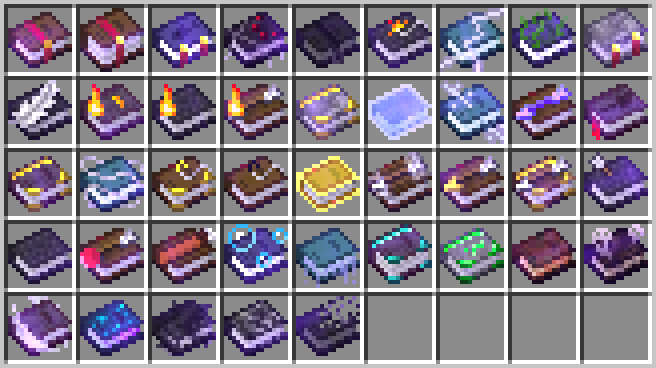 Even Better Enchants Textures from Even Better Enchants
Versions
Files
Relations
Project Relations
More like this
Similar Mods
Suggestions use data such as tags, dependencies, dependents, descriptions, titles, and more to rank how much they overlap with this mod.
On ModDex
Community snapshot
By the numbers
Statistics
Want to reach Minecraft players?
We're looking for a server hosting partner to feature here and other parts of the site. Interested? Send us a message!
Get in touchGet it on
Available Platforms
On ModDex
Community snapshot
By the numbers