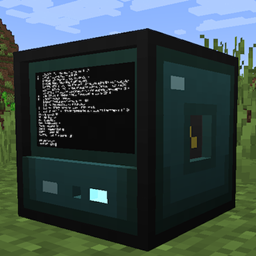
Community listing page, reviews here may not be monitored by the author.
OpenComputers II: Reimagined


No reviews yet
OpenComputers II: Reimagined is a fork of OpenComputers II ported to modern Minecraft with plans for future expansion.
Community voices
Reviews
No reviews yet. Be the first to review this project!
Get it on
Available Platforms
Compatibility
Supported Environments
Must be installed on both the client and the server.
About
Project Details
For authors
Embed Badge
If you're the author of this project, you can embed a live badge anywhere that supports HTML or Markdown. It updates automatically whenever ratings change.
Use HTML for any page that supports it, or Markdown for README files and Markdown-based descriptions.
Identifiers
Platform IDs
About
Description
OpenComputers II: Reimagined
OpenComputers II: Reimagined is a fork and continuation of OpenComputers II, originally made by Sangar, on modern versions of minecraft. The original mod was the spiritual successor to OpenComputers.
Like the original OC2, the computers are based on a RISC-V emulation layer called Sedna, which can be found in raw library form here. Sedna was written by Sangar and is written entirely in Java.
Work In Progress
This fork is still a work in progress and does still have many issues to address. We will need help to find all of the issues in order to fix them, so if you find any please report them.
Fabric Support
Currently only Forge is supported by this port, however moving to Architectury and supporting both Fabric and Forge is planned for the future!
Server Owners/Managers
To be honest I don't recommend server owners to use this mod currently without understanding a few things about it. Number one is there isn't much configuration about max resource usage currently, so if you have a lot of players or just a single player that have a lot of computers, you'll end up using lots of RAM and processing power pretty quick. Also, this mod is still in beta and isn't quite ready for use on big servers just yet.
Overview
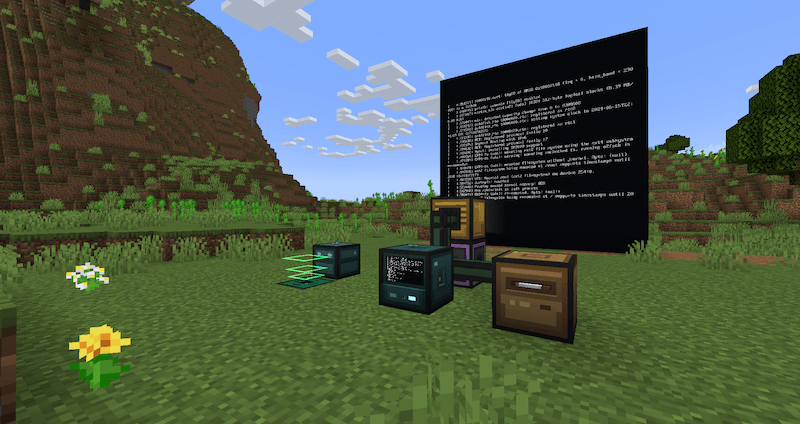
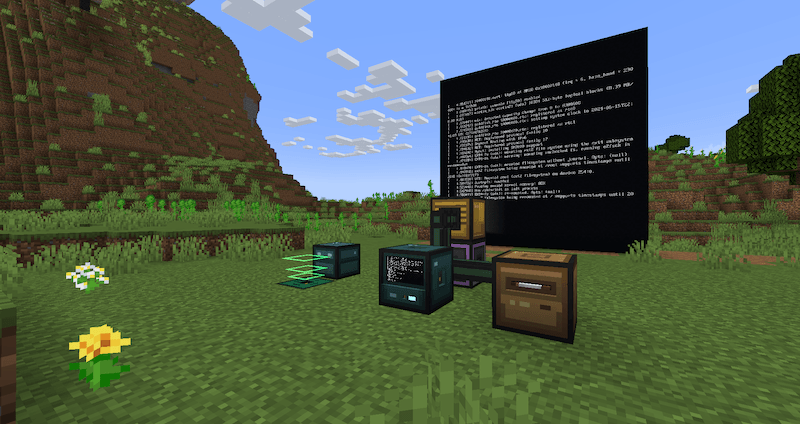
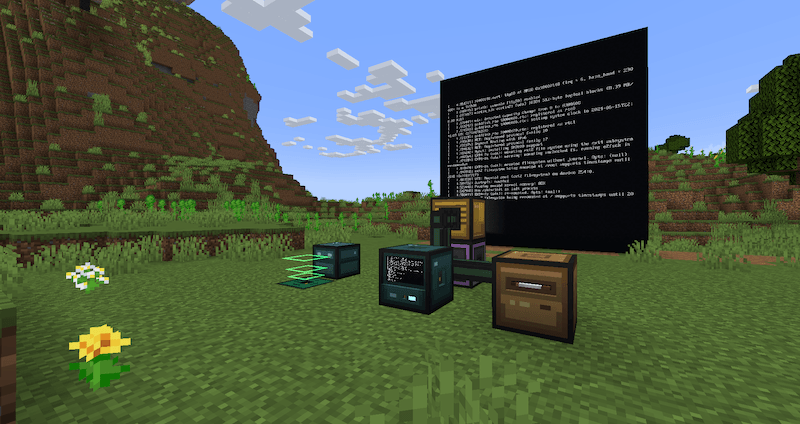
The mod provides stationary computers and mobile robots. While computers can connect to other in-world devices via bus cables and extension cards, robots can move through the world and interact with it via installed modules. Computers can communicate with each other using network cards and cables.
To get started with the mod, it is strongly recommended to craft The Computerists Handbook, an in-game manual item with information on all the blocks, how to build your first computer and so on.
By default, computers and robots consume energy (RF/Forge Energy), so it is recommended to play this mod in combination with at least one other mod that provides energy generation. An infinite energy cube is provided by the mod for testing in creative though.
Operation
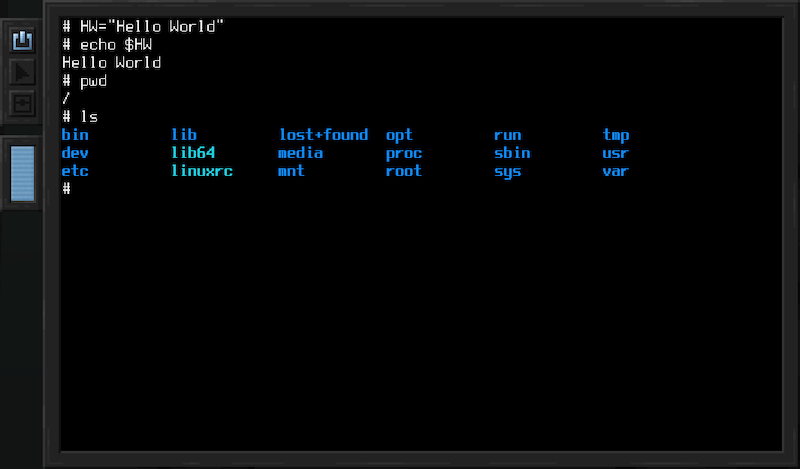
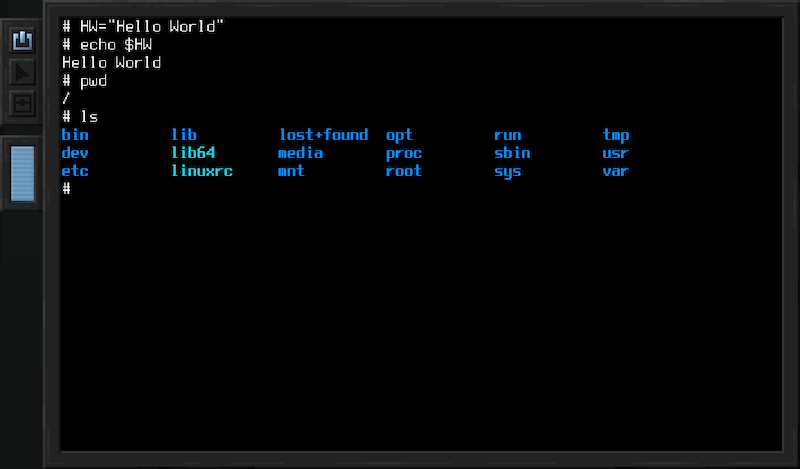
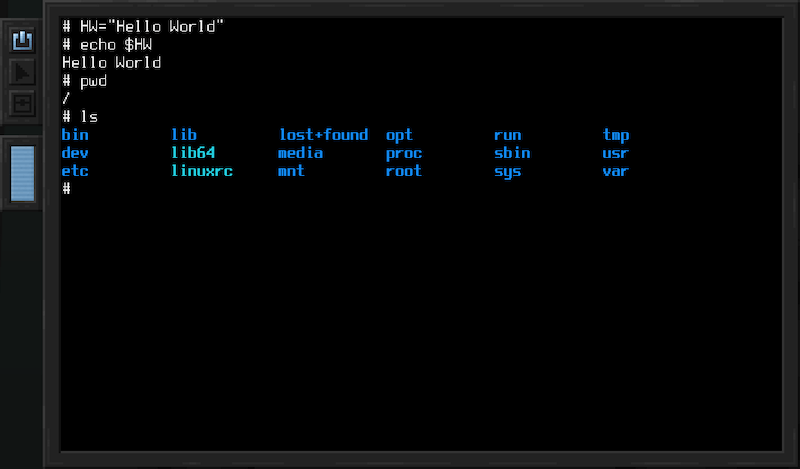
The default operating system used by the mod is Linux. It comes with a list of well-known utilities, such as the text-editors vi and nano. For those curious, buildroot is used to create the kernel and root filesystem images.
To enable easy scripting, Lua is also included. Many of the Minecraft specific devices, such as inventories, the Redstone Interface Block and general mod-interoperability use a high-level API that is intended to be used through Lua. This eases both adding integrations with other mods, as well as using these APIs when scripting in the game.
Here's an example snippet that sends a redstone signal through a Redstone Interface Device:
require("devices"):find("redstone"):setRedstoneOutput("up", 15)Modularity
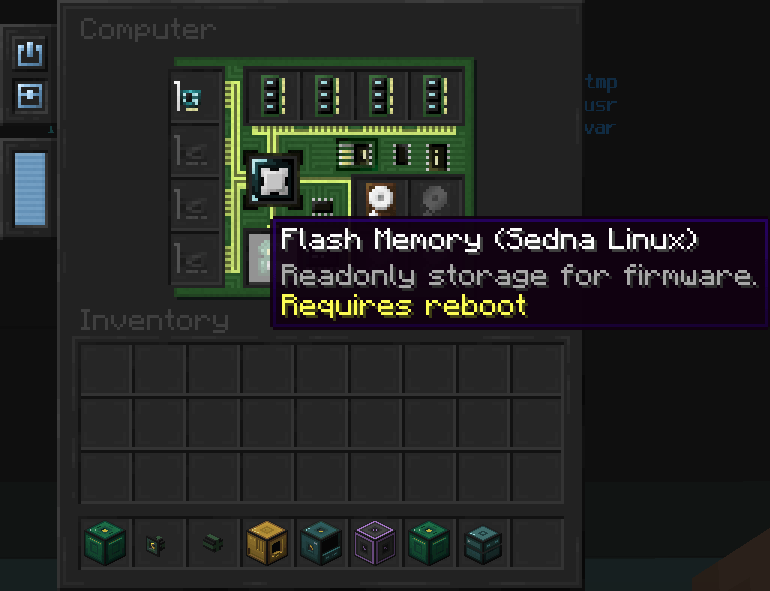
Computers and robots can be configured using various device items. Shared device types include memory (RAM), firmware, CPUs, and hard drives. Computers furthermore allow installation of expansion cards, such as the Network Interface Card, whereas robots allow installation of modules, such as the Block Operations Module, which enables robots to break and place blocks.
OpenComputers II: Reimagined
OpenComputers II: Reimagined is a fork and continuation of OpenComputers II, originally made by Sangar, on modern versions of minecraft. The original mod was the spiritual successor to OpenComputers.
Like the original OC2, the computers are based on a RISC-V emulation layer called Sedna, which can be found in raw library form here. Sedna was written by Sangar and is written entirely in Java.
Work In Progress
This fork is still a work in progress and does still have many issues to address. We will need help to find all of the issues in order to fix them, so if you find any please report them.
Fabric Support
Currently only Forge is supported by this port, however moving to Architectury and supporting both Fabric and Forge is planned for the future!
Server Owners/Managers
To be honest I don't recommend server owners to use this mod currently without understanding a few things about it. Number one is there isn't much configuration about max resource usage currently, so if you have a lot of players or just a single player that have a lot of computers, you'll end up using lots of RAM and processing power pretty quick. Also, this mod is still in beta and isn't quite ready for use on big servers just yet.
Overview
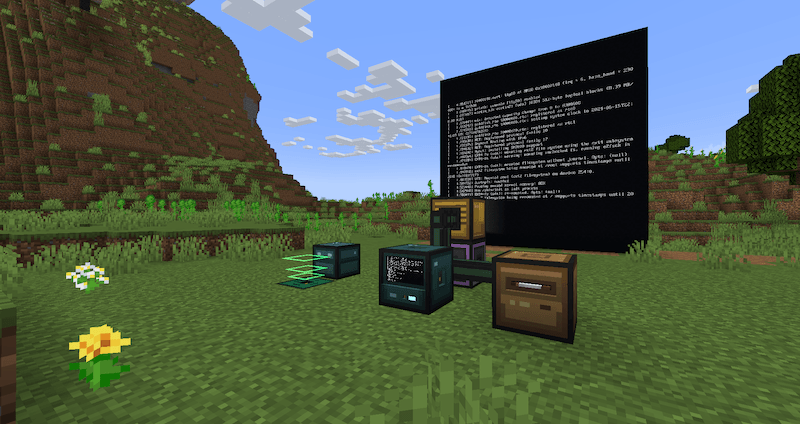
The mod provides stationary computers and mobile robots. While computers can connect to other in-world devices via bus cables and extension cards, robots can move through the world and interact with it via installed modules. Computers can communicate with each other using network cards and cables.
To get started with the mod, it is strongly recommended to craft The Computerists Handbook, an in-game manual item with information on all the blocks, how to build your first computer and so on.
By default, computers and robots consume energy (RF/Forge Energy), so it is recommended to play this mod in combination with at least one other mod that provides energy generation. An infinite energy cube is provided by the mod for testing in creative though.
Operation
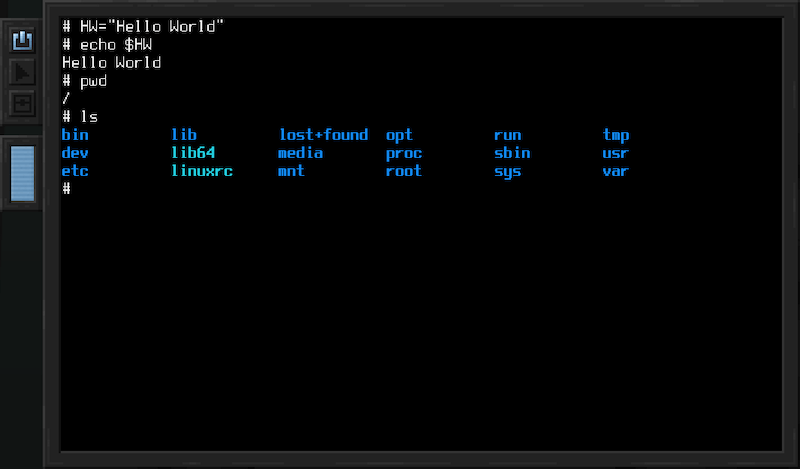
The default operating system used by the mod is Linux. It comes with a list of well-known utilities, such as the text-editors vi and nano. For those curious, buildroot is used to create the kernel and root filesystem images.
To enable easy scripting, Lua is also included. Many of the Minecraft specific devices, such as inventories, the Redstone Interface Block and general mod-interoperability use a high-level API that is intended to be used through Lua. This eases both adding integrations with other mods, as well as using these APIs when scripting in the game.
Here's an example snippet that sends a redstone signal through a Redstone Interface Device:
require("devices"):find("redstone"):setRedstoneOutput("up", 15)
Modularity
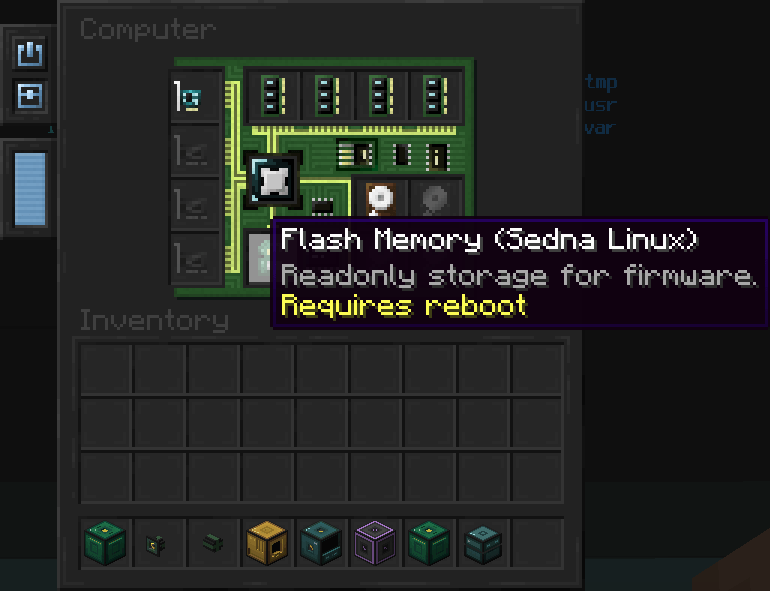
Computers and robots can be configured using various device items. Shared device types include memory (RAM), firmware, CPUs, and hard drives. Computers furthermore allow installation of expansion cards, such as the Network Interface Card, whereas robots allow installation of modules, such as the Block Operations Module, which enables robots to break and place blocks.
Screenshots
Gallery
-
 2024-06-15_14.48.35.png 2024-06-15_14.48.35.png
 -
 2024-06-15_14.46.33.png 2024-06-15_14.46.33.png
 -
 2024-06-15_14.42.47.png 2024-06-15_14.42.47.png
-
 Projector Example
 -
 Computer Interface Example
 -
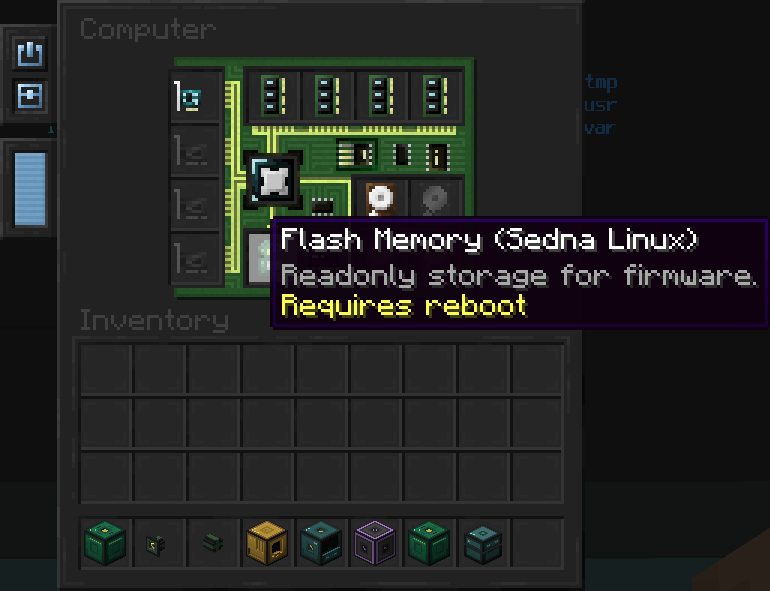 Component Selection Example
Versions
Files
Relations
Project Relations
More like this
Similar Mods
Suggestions use data such as tags, dependencies, dependents, descriptions, titles, and more to rank how much they overlap with this mod.
On ModDex
Community snapshot
By the numbers
Statistics
Want to reach Minecraft players?
We're looking for a server hosting partner to feature here and other parts of the site. Interested? Send us a message!
Get in touchGet it on
Available Platforms
On ModDex
Community snapshot
By the numbers