
Community listing page, reviews here may not be monitored by the author.
Thread Weave


No reviews yet
Async processing framework for safe multithreaded simulations
Community voices
Reviews
No reviews yet. Be the first to review this project!
Get it on
Available Platforms
Compatibility
Supported Environments
Must be installed on both the client and the server.
About
Project Details
For authors
Embed Badge
If you're the author of this project, you can embed a live badge anywhere that supports HTML or Markdown. It updates automatically whenever ratings change.
Use HTML for any page that supports it, or Markdown for README files and Markdown-based descriptions.
Identifiers
Platform IDs
About
Description
ThreadWeave is a lightweight simulation framework that allows you to move expensive logic from Minecraft thread into other threads while keeping all world modifications thread-safe
- Mod does not modify Minecraft or patch vanilla code. This is library for other mods
- All world changes are still executed on the main server thread
Isolated simulation does not have Live Level changing access due to race-conditions on threads so it only processes calculations and e.t.c. This may sound useless unless you start to make AI, reactors, computers or more complicated systems like physics Engines.
Execution changes to world like placing blocks will still depend on Minecraft Thread to not create race conditions
Minecraft mods often suffer from:
- Heavy tick logic on main thread
- Expensive calculations inside BlockEntities
- Complex systems (reactors, AI, factories)
ThreadWeave allows you to move only the computation part into async execution while keeping world safety intact
Only pure data is allowed inside simulation methods
Important limitation
Simulation methods must be pure methods:
- input DTO -> output DTO
- No side effects allowed inside async execution
How it works?
ThreadWeave works by separating what your mod does into two parts: data processing and world changes
Minecraft normally runs everything on a single thread. That means all calculations, AI, machines, and block logic compete for the same limited performance budget
ThreadWeave changes this by safely moving heavy calculations to background threads
- Minecraft Tick
- Extract data from BlockEntity
- Run simulation in background threads
- Get results (updated values)
- Apply changes back to world
Modder only defines:
- What data is used
- What calculation should happen
- How results are applied
What ThreadWeave does automatically?
- Extracts data from BlockEntity
- Runs calculations on multiple threads
- Prevents unsafe access to the game world
- Applies results back safely
- Manages tick timing (normal or accelerated simulation)
Tick modes
WORLD_SYNCED
Runs in sync with Minecraft (20 times per second)
Used for normal game logic
ISOLATED
Runs independently of Minecraft speed
Used for simulations that can run faster or slower than the game itself
Safety
- Minecraft world is never accessed from background threads
- Only simple data is used during calculations
- All world changes happen safely on the main thread
Framework prevents unsafe access to:
- Level
- Entities
- BlockEntities
- Server internals
How to use?
Installation Guide
repositories {
    maven {
        url = "https://api.modrinth.com/maven"
    }
}

dependencies {
    implementation "maven.modrinth:thread-weave:{version}"
}
Do not forget to define dependency in mods.toml or you will get minecraft crashed
[[dependencies.${mod_id}]]
modId="thread_weave"
type="required"
versionRange="[{version},)"
ordering="AFTER" // VERY important to load your mod AFTER ThreadWeave
side="BOTH"
For example you have BlockEntity (you can use custom classes. No matter it's minecraft or not)
public class ReactorBlockBE extends BlockEntity implements TickableBE {
    private int heat;
    private int fuel;

    public ReactorBlockBE(BlockPos pos, BlockState state) {
        super(ThreadBlockEntities.REACTOR_BE.get(), pos, state);
    }

    @Override
    public void tick() {
        if (level == null || level.isClientSide()) return;
        heat+=20;
        fuel-=1;
    }
}
I - You need to set what variables will be used in async-processing
public record ReactorData(int heat, int fuel) implements SimulationDelta {}II - Then you need to split your processing. Simply take all of your calculations and move it to other method. Here you need to set @SimulatedThread annotation. TickMode can be Isolated or WorldSynced. WorldSynced will run at minecraft TPS. Isolated will run at any tick speed you set without minecraft dependency
    //value = MOD_ID + ":reactor"
    //value = "my_mod:reactor"
    @SimulatedThread(value = MOD_ID + ":reactor", mode = TickMode.WORLD_SYNCED)
    public ReactorData simulate(ReactorData data) {
        int heat = data.heat() + 20;
        int fuel = data.fuel() - 1;
        return new ReactorData(heat, fuel);
    }
III - Last you need to submit your data to framework. Use static method "submit"
    @Override
    public void tick() {
        if (level == null || level.isClientSide()) return;

        Simulations.submit(this);
        System.out.println("heat=" + this.getHeat() + " fuel=" + this.getFuel());
    }
IV - Also you need set what classes that will be scanned for @SimulatedThread annotation
    public YourMainModClass(IEventBus modEventBus, ModContainer modContainer) {
        modEventBus.addListener(this::commonSetup);
        Simulations.submitScan(NavMeshSimulation.class);
        ...
    }
You can also manually control interpreter and extractor by @SimulatedInterpreter and @SimulatedExtractor annotations
For example: work ticks
    @SimulatedThread(value = MOD_ID + ":reactor", mode = TickMode.WORLD_SYNCED)
    public ReactorData simulate(ReactorData data) {
        int heat = data.heat() + 20;
        int fuel = data.fuel() - 1;
        return new ReactorData(heat, fuel);
    }

    @SimulatedInterpreter
    public void interpreter(NavData data) {
        this.heat = data.heat();
        this.fuel = data.fuel();
        workTicks++;
    }
Example above is not the best. Custom interpreter is much usable in per-region processing when you need to merge result (Baked Navmesh generation)
    @SimulatedThread(value = MOD_ID + ":navgraph", mode = TickMode.WORLD_SYNCED)
    public NavData simulate(NavProcessorData data) {
        if (processor.isEmpty()) return null;
        return processor.build(navLevel);
    }

    @SimulatedInterpreter
    public void interpreter(NavData data) {
        if (data == null) return;
        for (NavNode node : data.toRemove()) {
            navLevel.nodes.remove(node.id());
        }
        navLevel.nodes.putAll(data.nodes());
        navLevel.portals.putAll(data.portals());
        navLevel.chunkIndices.putAll(data.chunkIndices());
    }
Is this peak optimisation?
No. There is still much work to do. You can follow progress in my discord server
For example most of TickingBlockEntities is not really good with this library due to Level require (Yet)
P.S: I will post a fabric port + other versions later [1.7.10 - 26.x]
ThreadWeave is a lightweight simulation framework that allows you to move expensive logic from Minecraft thread into other threads while keeping all world modifications thread-safe
- Mod does not modify Minecraft or patch vanilla code. This is library for other mods
- All world changes are still executed on the main server thread
Isolated simulation does not have Live Level changing access due to race-conditions on threads so it only processes calculations and e.t.c. This may sound useless unless you start to make AI, reactors, computers or more complicated systems like physics Engines.
Execution changes to world like placing blocks will still depend on Minecraft Thread to not create race conditions
Minecraft mods often suffer from:
- Heavy tick logic on main thread
- Expensive calculations inside BlockEntities
- Complex systems (reactors, AI, factories)
ThreadWeave allows you to move only the computation part into async execution while keeping world safety intact
Only pure data is allowed inside simulation methods
Important limitation
Simulation methods must be pure methods:
- input DTO -> output DTO
- No side effects allowed inside async execution
How it works?
ThreadWeave works by separating what your mod does into two parts: data processing and world changes
Minecraft normally runs everything on a single thread. That means all calculations, AI, machines, and block logic compete for the same limited performance budget
ThreadWeave changes this by safely moving heavy calculations to background threads
- Minecraft Tick
- Extract data from BlockEntity
- Run simulation in background threads
- Get results (updated values)
- Apply changes back to world
Modder only defines:
- What data is used
- What calculation should happen
- How results are applied
What ThreadWeave does automatically?
- Extracts data from BlockEntity
- Runs calculations on multiple threads
- Prevents unsafe access to the game world
- Applies results back safely
- Manages tick timing (normal or accelerated simulation)
Tick modes
WORLD_SYNCED
Runs in sync with Minecraft (20 times per second)
Used for normal game logic
ISOLATED
Runs independently of Minecraft speed
Used for simulations that can run faster or slower than the game itself
Safety
- Minecraft world is never accessed from background threads
- Only simple data is used during calculations
- All world changes happen safely on the main thread
Framework prevents unsafe access to:
- Level
- Entities
- BlockEntities
- Server internals
How to use?
Installation Guide
repositories {
    maven {
        url = "https://api.modrinth.com/maven"
    }
}

dependencies {
    implementation "maven.modrinth:thread-weave:{version}"
}
Do not forget to define dependency in mods.toml or you will get minecraft crashed
[[dependencies.${mod_id}]]
modId="thread_weave"
type="required"
versionRange="[{version},)"
ordering="AFTER" // VERY important to load your mod AFTER ThreadWeave
side="BOTH"
For example you have BlockEntity (you can use custom classes. No matter it's minecraft or not)
public class ReactorBlockBE extends BlockEntity implements TickableBE {
    private int heat;
    private int fuel;

    public ReactorBlockBE(BlockPos pos, BlockState state) {
        super(ThreadBlockEntities.REACTOR_BE.get(), pos, state);
    }

    @Override
    public void tick() {
        if (level == null || level.isClientSide()) return;
        heat+=20;
        fuel-=1;
    }
}
I - You need to set what variables will be used in async-processing
public record ReactorData(int heat, int fuel) implements SimulationDelta {}
II - Then you need to split your processing. Simply take all of your calculations and move it to other method. Here you need to set @SimulatedThread annotation. TickMode can be Isolated or WorldSynced. WorldSynced will run at minecraft TPS. Isolated will run at any tick speed you set without minecraft dependency
    //value = MOD_ID + ":reactor"
    //value = "my_mod:reactor"
    @SimulatedThread(value = MOD_ID + ":reactor", mode = TickMode.WORLD_SYNCED)
    public ReactorData simulate(ReactorData data) {
        int heat = data.heat() + 20;
        int fuel = data.fuel() - 1;
        return new ReactorData(heat, fuel);
    }
III - Last you need to submit your data to framework. Use static method "submit"
    @Override
    public void tick() {
        if (level == null || level.isClientSide()) return;

        Simulations.submit(this);
        System.out.println("heat=" + this.getHeat() + " fuel=" + this.getFuel());
    }
IV - Also you need set what classes will be scanned for @SimulatedThread annotation
    public YourMainModClass(IEventBus modEventBus, ModContainer modContainer) {
        modEventBus.addListener(this::commonSetup);
        Simulations.submitScan(NavMeshSimulation.class);
        ...
    }
You can also manually control interpreter and extractor by @SimulatedInterpreter and @SimulatedExtractor annotations
For example: work ticks
    @SimulatedThread(value = MOD_ID + ":reactor", mode = TickMode.WORLD_SYNCED)
    public ReactorData simulate(ReactorData data) {
        int heat = data.heat() + 20;
        int fuel = data.fuel() - 1;
        return new ReactorData(heat, fuel);
    }

    @SimulatedInterpreter
    public void interpreter(NavData data) {
        this.heat = data.heat();
        this.fuel = data.fuel();
        workTicks++;
    }
Example above is not the best. Custom interpreter is much usable in per-region processing when you need to merge result (Baked Navmesh generation)
    @SimulatedThread(value = MOD_ID + ":navgraph", mode = TickMode.WORLD_SYNCED)
    public NavData simulate(NavProcessorData data) {
        if (processor.isEmpty()) return null;
        return processor.build(navLevel);
    }

    @SimulatedInterpreter
    public void interpreter(NavData data) {
        if (data == null) return;
        for (NavNode node : data.toRemove()) {
            navLevel.nodes.remove(node.id());
        }
        navLevel.nodes.putAll(data.nodes());
        navLevel.portals.putAll(data.portals());
        navLevel.chunkIndices.putAll(data.chunkIndices());
    }
Is this peak optimization?
No. There is still much work to do. You can follow progress in my discord server
For example most of TickingBlockEntities is not really good with this library due to Level require (Yet)
P.S: I will post a fabric port + other versions later [1.7.10 - 26.x]
Screenshots
Gallery
-
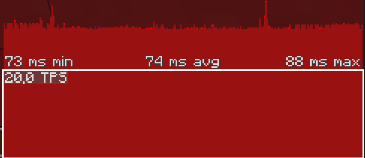 Before It's ultra heavy calculations. Normally you would never have THIS hard load
 -
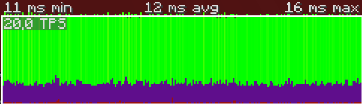 After 74 ms -> 12 ms (617% TPS Boost)
Versions
Files
Relations
Project Relations
More like this
Similar Mods
Suggestions use data such as tags, dependencies, dependents, descriptions, titles, and more to rank how much they overlap with this mod.
On ModDex
Community snapshot
By the numbers
Statistics
Want to reach Minecraft players?
We're looking for a server hosting partner to feature here and other parts of the site. Interested? Send us a message!
Get in touchGet it on
Available Platforms
On ModDex
Community snapshot
By the numbers